












If you have ever wondered how some tools browse the web as if they were thousands of ordinary people in different cities, the answer is almost always a residential proxy. Unlike the anonymous-looking addresses that come from data centers, residential proxies borrow real IP addresses assigned to real homes — which is exactly what makes them so hard for websites to spot. This guide explains what they are, how the routing actually works under the hood, how they compare to other proxy types, and how to tell a quality provider from a risky one.
What is a residential proxy?
A residential proxy is an intermediary server that routes your internet traffic through an IP address issued by an Internet Service Provider (ISP) to a genuine household. When a website looks up that IP, it sees a normal home broadband connection in, say, Chicago or Berlin — not a server farm. Your request reaches the site from that address, and the response travels back to you through the same path.
The key idea is legitimacy. Every IP address carries a reputation, and that reputation is tied to who owns the address block. Addresses that belong to residential ISPs like Comcast, Vodafone, or Orange are treated as trustworthy because that is where ordinary customers live. Addresses that belong to hosting companies — AWS, Google Cloud, DigitalOcean — are treated with suspicion because that is where bots, scrapers, and automated traffic usually originate. A residential proxy lets your traffic inherit the trust of a real home connection instead of broadcasting that it came from a server. For a quick primer on the underlying term, see our glossary entry on the residential proxy.
Think of it like sending a letter. A datacenter IP is like mailing from a giant corporate mailroom — efficient, but obviously commercial. A residential IP is like dropping the same letter in the postbox on a quiet suburban street: nothing about it stands out, so it sails through unnoticed.
How residential proxies work, step by step
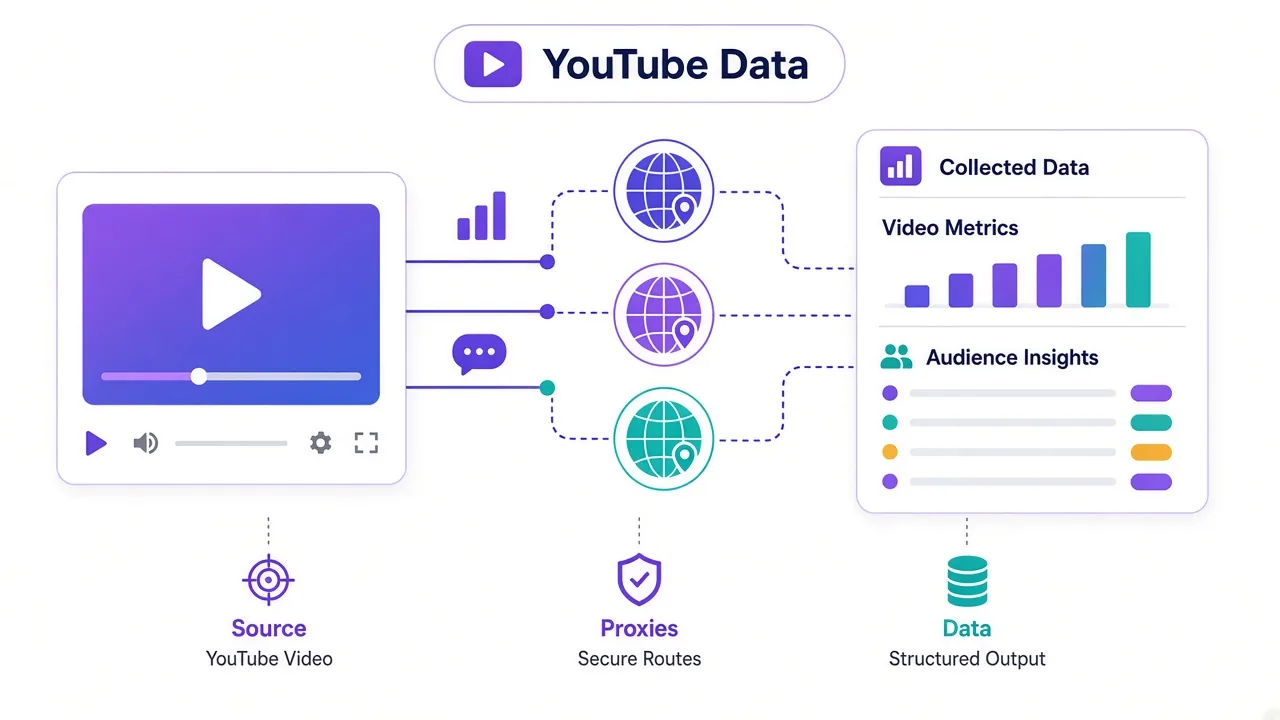
Behind the scenes, a residential proxy network sits between you and the websites you visit, and it manages a large pool of real residential IPs on your behalf. The flow looks like this:
- You send a request to the provider's proxy gateway instead of directly to the target site, usually authenticating with a username and password (or an allow-listed IP) and specifying a target country, region, or city.
- The gateway selects a residential IP from its pool that matches your targeting rules — for example, a real home connection in France — and assigns it to your session.
- Your request is relayed from that residential device out to the target website, so the site sees the home IP as the visitor rather than your own address or a datacenter.
- The website responds to the residential IP, the proxy passes the data back through the gateway, and it finally returns to you — all in a fraction of a second.
From the website's point of view, an everyday person on home broadband simply loaded a page. The fact that the traffic originated with you, somewhere else entirely, is invisible. You can confirm what a site sees about any address with a free IP lookup tool — route a request through your proxy and check that the reported IP, ISP, and location belong to the provider's network, not your home.

The two ways providers deliver IPs
Not all residential networks hand you addresses the same way, and the delivery model affects how you integrate them:
- Backconnect gateways. You connect to a single endpoint (e.g.
gate.provider.com:7000) and the network rotates the actual exit IP behind the scenes. This is the most common model — you never manage individual IPs, you just send traffic and let the gateway pick from the pool. - IP lists. Less common for residential, but some providers (especially for static/ISP proxies) give you a fixed list of
ip:portendpoints you can plug directly into a browser or scraper.
Authentication is usually one of two kinds: username/password credentials embedded in the proxy string, or IP allow-listing, where the provider only accepts connections from your server's address. Credential auth is more portable; allow-listing is handy for fixed infrastructure.
Residential vs datacenter vs mobile proxies
Residential proxies are one of several common types, and the differences matter a great deal when you are choosing a tool for a job.
| Type | Where the IP comes from | Trust level | Speed | Typical cost |
|---|---|---|---|---|
| Residential | Real homes via consumer ISPs | High | Moderate | Higher (often per GB) |
| Datacenter | Cloud and hosting providers | Low | Very fast | Cheapest |
| ISP (static residential) | ISP-registered IPs hosted in data centers | High | Fast | Mid-to-high |
| Mobile | Cellular carriers (4G/5G) | Very high | Variable | Most expensive |
Datacenter proxies are blazing fast and cheap, but their addresses are easy to identify and block in bulk — see our note on the datacenter proxy for why entire hosting ranges get flagged at once. Mobile proxies carry the highest trust because carriers use carrier-grade NAT to share a small pool of addresses among many real subscribers, making them very hard to ban without blocking legitimate users too. Residential proxies sit in the sweet spot: far more credible than datacenter IPs, and far more affordable than mobile.
What about ISP (static residential) proxies?
There is a hybrid worth knowing about. ISP proxies — sometimes called static residential proxies — are IP addresses that are registered to a consumer ISP but actually hosted on fast datacenter hardware. You get the best of both worlds: the trusted residential reputation of the address, plus the speed and stability of a server, with the same IP for as long as you keep the plan.
The trade-off is diversity. Because they live in data centers, ISP proxies come in much smaller pools and fewer locations than true peer-to-peer residential networks, and a heavily abused ISP IP can still get flagged. They shine for tasks that need a stable, trusted identity over time — managing a set of accounts, for instance — rather than high-volume rotation.
Rotating vs static residential proxies
Residential proxies come in two session styles, and picking the right one is often the difference between success and a wall of CAPTCHAs.
- Rotating proxies give you a fresh IP on every request, or every few minutes. This spreads activity across many addresses and is ideal for large-scale data collection where each request should look independent and no single IP should rack up suspicious volume.
- Static (sticky) residential proxies keep you on the same IP for a longer session — typically anywhere from one minute to 30 minutes or more, depending on the provider. These are better when you need continuity, such as staying logged into an account, completing a multi-step checkout, or holding a shopping cart.
With most backconnect networks you control rotation yourself: a parameter in the username or a different gateway port sets whether you get a new IP per request or a sticky session, and how long the session lasts. Getting this setting right for the task is one of the most common things beginners overlook.
Rule of thumb
Use rotating IPs when you want volume and anonymity per request; use sticky IPs when a task needs to look like one consistent person over time.
Where do residential IPs come from?
This is the part buyers should understand before they spend a cent. A residential proxy network is only as good — and as ethical — as the way it sources its IPs. Reputable providers build their pools through consent-based means: real users opt in via free apps or SDKs in exchange for a benefit (a free VPN, an ad-free app, in-app rewards), and they can leave at any time. Their device then occasionally relays a small amount of traffic for the network while it is idle and on Wi-Fi.
This is why residential pools are measured in the millions and span virtually every country: each pool is really a vast, shifting collection of consumer devices. It is also why availability fluctuates — an IP is only usable while the underlying device is online.
Watch for shady sourcing
Some networks have historically harvested IPs through malware or software bundles that users never knowingly agreed to. Beyond the obvious ethics problem, those pools are unstable, poorly documented, and far more likely to be flagged. Always choose a provider that publishes a clear, opt-in sourcing policy and an easy way for participants to leave.
Are residential proxies legal?
In most jurisdictions, using a residential proxy is perfectly legal. A proxy is just a routing tool, the same technology that powers corporate VPNs and content delivery networks. What matters is what you do with it. Collecting publicly available data, verifying ads, and testing how your own site appears in other countries are all ordinary, legitimate activities.
Where you can get into trouble is by breaking a website's terms of service, scraping personal or copyrighted data you have no right to, attempting to access systems you are not authorized to use, or committing fraud. The proxy does not change the legality of the underlying action. The ethical sourcing point above also matters here: buying access to a pool built on non-consensual IPs puts you downstream of someone else's wrongdoing. Stick to reputable providers and lawful use cases and you stay on firm ground.
What people use residential proxies for
Because they blend in, residential proxies are the default choice for tasks that need to look human and location-specific:
- Web scraping and data collection at scale without instant blocks — the single biggest use case, from market research to academic datasets.
- Ad verification — checking how ads actually render to users in different regions and catching ad fraud or misplacement.
- Price and SERP monitoring across countries where results, prices, and availability are geo-personalized.
- Brand and content protection, spotting counterfeit listings, leaked products, or piracy that only appears to local visitors.
- Accessing geo-restricted content for testing, QA, and research.
- Social media and multi-account management, where consistent residential or ISP IPs reduce friction and account flags — often paired with an antidetect browser.
- Sneaker and ticket buying, where many shoppers compete for limited stock and datacenter IPs are blocked outright.
Strengths and trade-offs
No proxy type is perfect. Residential proxies trade raw speed and price for credibility, and it is worth being clear-eyed about both sides.
- Strengths: high trust and low block rates; precise geo-targeting down to city or even ISP level; traffic that genuinely looks like real users; and enormous pools that make large jobs feasible without burning through addresses.
- Trade-offs: they cost more (frequently billed per gigabyte, which adds up fast on data-heavy jobs); they can be slower and less consistent than datacenter IPs because traffic hops through a real home device; and quality varies dramatically between providers, so a cheap pool can be full of dead or flagged IPs.
Common mistakes to avoid
Most disappointing results come down to a handful of avoidable errors:
- Using rotation for session-based tasks. Rotating your IP mid-login or mid-checkout looks deeply suspicious. Switch to sticky sessions for anything stateful.
- Ignoring your browser fingerprint. A clean IP does not help if your browser still screams "automation." For account work, pair proxies with a proper antidetect browser and realistic headers.
- Hammering a single target too hard. Even residential IPs get flagged if you fire thousands of requests per minute. Throttle and randomize timing.
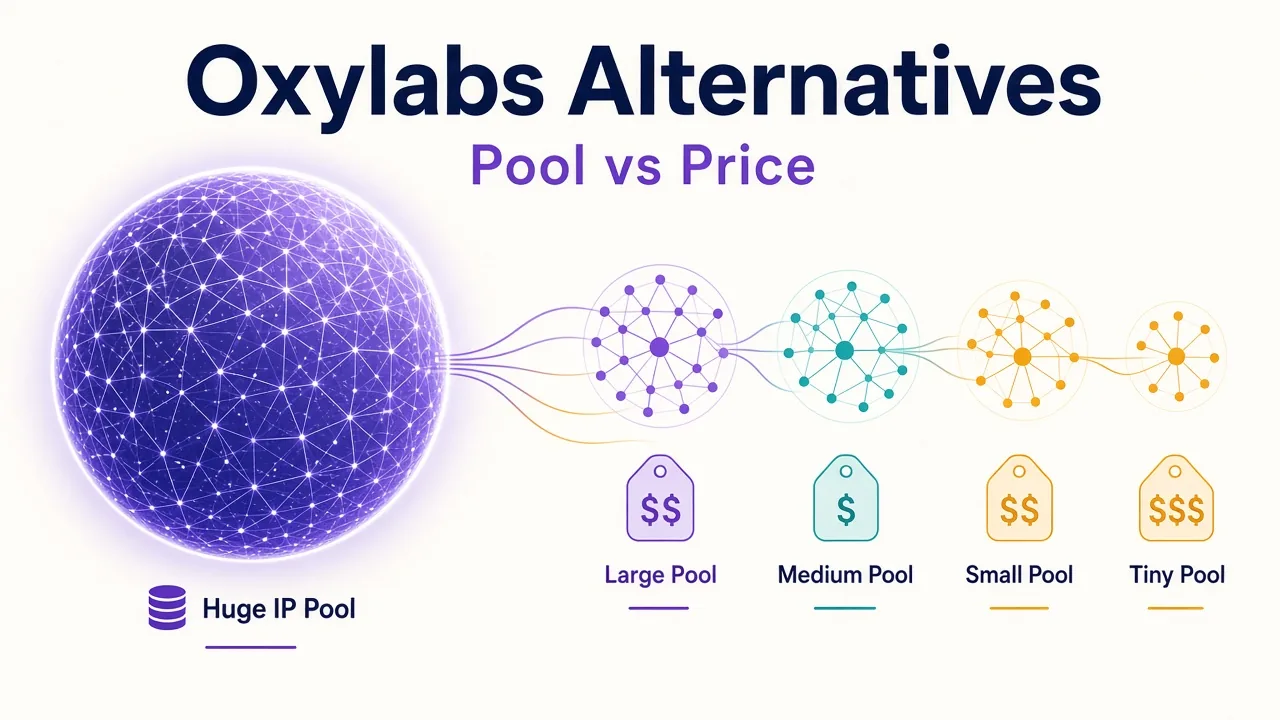
- Buying on pool size alone. Ten million IPs are worthless if they are stale. Judge a provider on success rate, not headline numbers.
How to choose a residential proxy provider
Once you understand the mechanics, choosing well comes down to a handful of checks. The single most important factor is IP quality — a large pool means little if the addresses are stale, recycled, or already flagged across the sites you care about.

Run through this checklist before you commit:
- Pool size and locations: millions of IPs across the specific countries and cities you actually need, not just a big global number.
- Ethical, opt-in sourcing: a published policy you can read and trust.
- Session control: both rotating and sticky options, with adjustable rotation timing and city/ISP targeting.
- Success rate and speed: look for transparent, real-world performance numbers, and test on your own targets during a trial.
- Fair, predictable pricing: understand whether you pay per GB, per IP, or per request, and watch for hidden minimums or expiring data.
- Support and tooling: good docs, a usable dashboard, and responsive help when a job breaks at 2 a.m.
Compare before you buy
We test and rank providers on exactly these criteria. Browse our independent proxy reviews to see how the leading residential networks stack up on pool quality, speed, and price.
How to set up and test a residential proxy
Getting started is simpler than it looks. After signing up, you will receive a gateway host, a port, and credentials. A typical proxy string looks like username:password@gate.provider.com:7000, often with targeting baked into the username (for example username-country-us-session-abc123 to request a sticky US session). Drop that into your scraper, browser, or HTTP client and you are routing through the network.
Always verify before you rely on it. Make a request through the proxy and check the result with an IP lookup: the reported IP, ISP, and country should match the provider and your chosen location — never your own home connection. If your real IP shows through, your traffic is leaking and the setup needs fixing before you run anything important.
The bottom line
Residential proxies work by lending your traffic the identity of a real home connection, which is why they slip past defenses that block obvious server IPs. They are not the cheapest or the fastest option, but for anything that needs to look authentically human and tied to a real place, they are usually the right tool. Match the session type to your task, insist on ethical sourcing and clean IPs, pay attention to your wider fingerprint, and verify your setup before you scale — do that, and you will get reliable results without the constant blocks that plague lesser proxy types.
Frequently asked questions
Yes. In most countries, using a residential proxy is legal because a proxy is just a traffic-routing tool. What matters is how you use it — collecting public data, verifying ads, and testing geo-content are fine, while breaking a site's terms, accessing systems you are not authorized to use, or committing fraud are not. The proxy does not change the legality of the underlying action.
Datacenter proxies are faster and cheaper because the IPs live on high-speed servers. Residential proxies are slower since traffic hops through a real home device, but they are far more trusted and much harder for websites to block. Choose datacenter for speed on lenient targets and residential for credibility on strict ones.
Most residential networks bill by bandwidth, commonly in the range of a few dollars up to around fifteen dollars per gigabyte, with the price dropping at higher volumes. Some providers also offer per-IP plans for static or ISP proxies. Always check for hidden minimums or data that expires at the end of the month.
It is much harder than detecting a datacenter proxy, but not impossible. Detection depends on the quality of the IP pool, how aggressively you rotate, your request volume, and your overall browser fingerprint. Clean IPs combined with realistic behavior and headers keep detection rates very low.
Rotating proxies give you a new IP on every request or every few minutes, which is ideal for high-volume scraping where each request should look independent. Static (or ISP) residential proxies keep the same trusted IP for long sessions, which suits logins, checkouts, and account management that need continuity.
Send a request through the proxy and inspect the result with an IP lookup tool. The reported IP, ISP, and location should match the provider and the region you selected — not your own home connection. If your real IP shows through, your traffic is leaking and you should fix the setup before running anything important.