







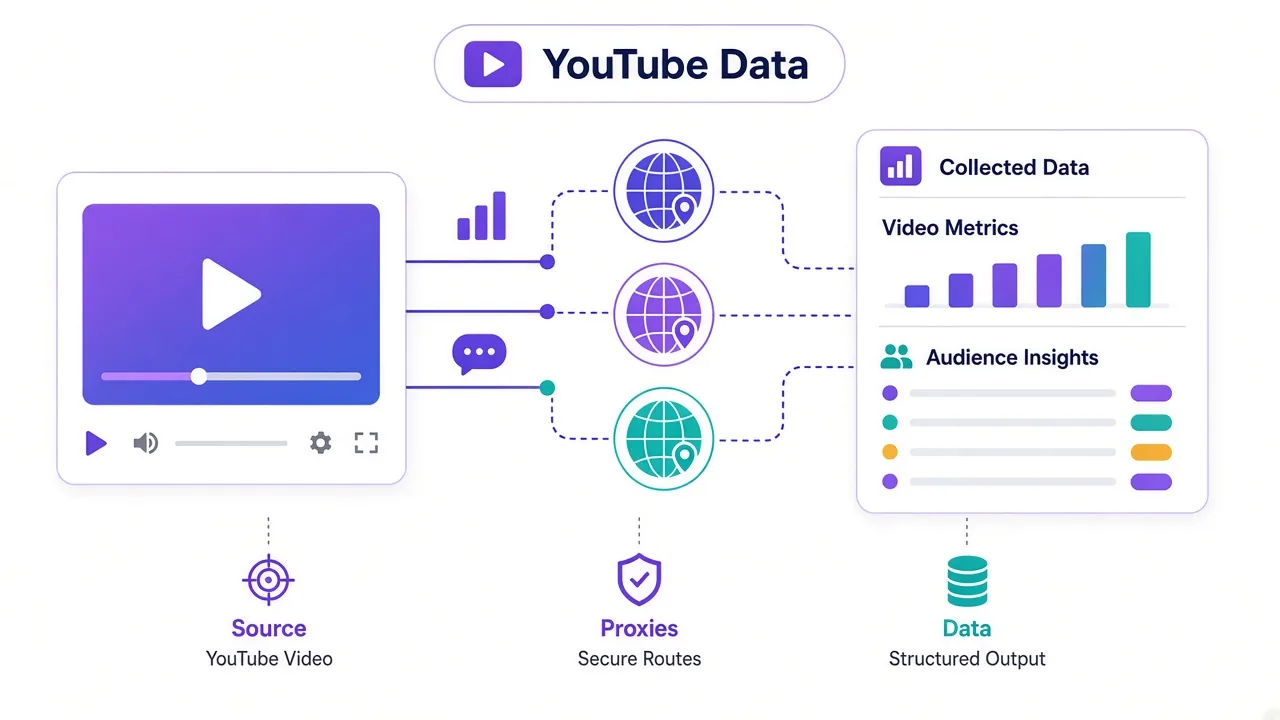
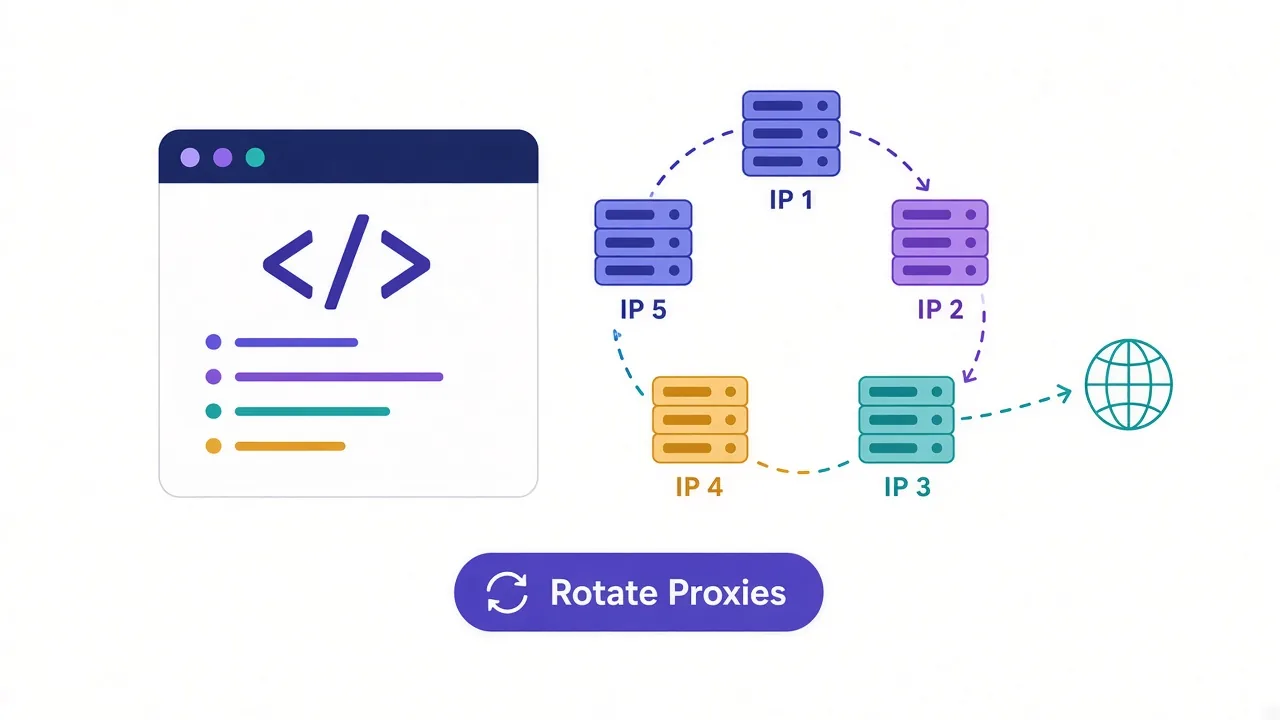

Market research runs on data — competitor prices, search rankings, product listings, customer reviews, ad placements — and almost all of it now lives on websites that don't want to be scraped in bulk. The tool that makes large-scale, accurate web-data collection possible is the proxy: it spreads your requests across many real IP addresses and locations, so you can gather public data at scale without instant blocks or geo-distorted results. This guide explains why market research needs proxies, what separates a research-grade network from a cheap one, how to budget and collect responsibly, and ranks the six providers we rate highest for the job in 2026.
Why market research needs proxies
Modern websites defend themselves aggressively. Send a few hundred requests from a single IP address and you'll hit rate limits, CAPTCHAs, or an outright ban long before you've collected a meaningful dataset. Worse, many sites personalize what they show based on your location — prices, availability, search results, and even which products appear can differ by country or city.
A proxy solves both problems at once. By routing each request through a different IP — ideally a real residential connection in the exact market you're studying — your data collection looks like ordinary people browsing from those regions. You get complete, un-blocked datasets, and you see precisely what a local customer would see. Without that, market-research data is either incomplete (because you got blocked halfway) or misleading (because it was localized to your office, not your target market).
What market researchers actually collect
"Market research" covers a wide range of data-gathering jobs, and proxies underpin most of them:
- Price intelligence — tracking competitor pricing, discounts, and stock across regions and over time.
- Search & SERP monitoring — measuring how brands and keywords rank in localized search results.
- Competitor analysis — cataloguing rivals' product ranges, features, and positioning.
- Review & sentiment mining — collecting customer reviews and ratings to gauge demand and satisfaction.
- Ad & promotion tracking — seeing which campaigns run where, and how offers vary by market.
- Trend and demand analysis — monitoring marketplaces, job boards, and social platforms for emerging signals.
Every one of these needs data that is both complete and geographically accurate — which is exactly what a good proxy network delivers.
What makes a proxy good for market research
Not every proxy is built for research-grade data collection. When we evaluate providers for this use case, five factors matter most:
- Pool size and geographic reach. Market research is location-specific, so you need millions of IPs across the exact countries and cities you're studying — not just a big global headline number.
- Success rate and clean IPs. The metric that really matters is how many requests actually return usable data. Stale or flagged IPs waste budget and leave gaps in your dataset.
- Scraping tools and APIs. Beyond raw proxies, the best providers offer scraper APIs that handle rotation, retries, and CAPTCHAs — a huge time-saver for research teams that aren't full engineering shops.
- Ethical, compliant sourcing. Reputable providers source residential IPs with genuine consent and enforce know-your-customer checks. For corporate research, that compliance is not optional.
- Reliability and support. Long-running research jobs need stable performance and responsive help when a target site changes its defenses overnight.
Which proxy type fits market research?
Three approaches dominate, and the right one depends on your targets and team:
- Residential proxies route through real consumer devices, so they blend in on defended sites and give accurate local results. They're the default for most serious market research. Our guide to residential proxies covers how they work.
- Datacenter proxies are fast and cheap, ideal for high-volume scraping of lenient sites, but easier to detect and block on well-defended targets.
- Scraper APIs sit on top of a proxy network and return parsed data directly, handling the anti-bot arms race for you. They cost more per request but slash engineering effort — perfect for research teams that want data, not infrastructure.
Rule of thumb
Use residential proxies for accuracy on defended, geo-personalized targets; datacenter for cheap high-volume runs on tolerant sites; and a scraper API when you'd rather buy clean data than build and maintain scrapers.
The best proxies for market research in 2026
These six providers lead for research-grade data collection, judged on pool quality, geographic reach, scraping tooling, and compliance. Pricing shifts often, so confirm current rates with each provider. All six come from our independent, hands-on proxy reviews.

1. ProxyEmpire — best for targeted, geo-accurate research
ProxyEmpire earns our top spot on the thing market research depends on most: seeing exactly what a customer in a specific market sees. Its targeting reaches down to country, city, carrier, and ASN across roughly 170 countries, so a pricing study in Manchester or a SERP audit in Munich is sampled from genuinely local IPs rather than a best-guess national pool. Bandwidth rollover suits the stop-start rhythm of research projects — unused traffic carries over between studies instead of expiring — and a strong rotating mobile network covers mobile-first sources and heavily defended targets. It's approachable for analysts who aren't engineers, with a free trial from $3.50/GB. Be clear-eyed about the limits: the 10M+ residential pool is smaller than the enterprise networks below, and there's no managed scraper API, so very high-volume operations may be better served further down this list. For targeted, mid-scale research, it's our first choice.

Rollover-friendly residential and mobile proxies with granular targeting
2. Bright Data — best for data breadth and tooling
Bright Data is the most complete data-collection platform on the market, which is exactly what large-scale research needs. Beyond the largest residential network anywhere (72M+ IPs), it offers a Web Scraper IDE, a Scraping Browser, and ready-made datasets you can buy outright — so you can pull structured data without building a single scraper. Its compliance and ethical-sourcing controls are the strongest in the industry, which matters for corporate and academic research. It's premium-priced with a learning curve, but for breadth and depth of data, nothing beats it.

3. Oxylabs — best for enterprise scale
Oxylabs is the go-to for research operations running at serious volume. Its 100M+ residential pool and purpose-built Web Scraper API (with an AI-driven parser) are engineered for reliability on the toughest targets, and its enterprise SLAs and support give research teams the stability that long projects demand. Like Bright Data it sits at the premium end, but for high-throughput, mission-critical data collection it's a dependable heavyweight.

Premium proxies built for enterprise scraping.
4. SOAX — best for clean, accurate geo data
SOAX shines where geographic accuracy is everything. Its ethically-sourced pool is continuously refreshed and screened, and its targeting reaches down to city, ISP, and carrier level — ideal for research that must reflect a precise local market. It's more affordable than the two giants while keeping data quality high, making it a favorite for teams that prioritize clean, well-targeted results over raw enterprise scale.

Clean, ethically-sourced residential & mobile IPs.
5. Smartproxy (Decodo) — best value for smaller teams
For research teams that want reliable data without enterprise pricing or complexity, Smartproxy (now Decodo) is the sweet spot. A 55M+ pool, the easiest dashboard in the category, ready-made scraping APIs, and a free trial make it approachable for analysts who aren't engineers. It's the provider we most often recommend to SMBs and lean research units getting a data pipeline off the ground.

Powerful proxies without the enterprise price tag.
6. Zyte — best hands-off, managed scraping
Zyte — from the team behind the open-source Scrapy framework — is built for research teams that want data, not proxy management. Its Zyte API and smart proxy management handle bans, rotation, and rendering automatically, and its automatic extraction can return structured product, article, and review data with minimal setup. If your priority is a low-maintenance pipeline that just returns clean datasets, Zyte is purpose-built for it.
Enterprise web scraping API and proxy management from the team behind Scrapy
| Provider | Best for | Scraper API | Standout strength |
|---|---|---|---|
| ProxyEmpire | Targeted, geo-accurate research | No | City/carrier/ASN targeting + rollover |
| Bright Data | Overall data breadth | Yes | Datasets + tools + largest network |
| Oxylabs | Enterprise scale | Yes | Reliability + AI parser at volume |
| SOAX | Accurate geo data | Yes | Clean pool + city/ISP targeting |
| Smartproxy | Value & ease | Yes | Easiest dashboard, free trial |
| Zyte | Managed scraping | Yes | Auto-extraction, low maintenance |
How to choose for your use case
Match the provider to your situation rather than chasing a single "best":
- Targeted, mid-scale studies with stop-start workloads? ProxyEmpire — granular city, carrier, and ASN targeting plus rollover bandwidth.
- Enterprise or academic research at scale? Bright Data or Oxylabs — deepest data, strongest compliance.
- Clean, screened IPs on a mid-range budget? SOAX — continuously refreshed pool with granular targeting.
- Small team or tight budget? Smartproxy — reliable data, gentle pricing and learning curve.
- Want data without maintaining scrapers? Zyte — managed extraction that returns structured results.
What does market-research proxy data cost?
Pricing models vary, and matching the model to your workload keeps budgets predictable. Residential proxies are almost always billed by bandwidth (per gigabyte), which suits research because scraping text pages consumes relatively little data — you can gather a lot of price or review records per gigabyte. Scraper APIs usually charge per successful request (or per thousand), bundling the proxy, retries, and parsing into one price; you pay more per record but save engineering time.
As a rough guide, residential bandwidth ranges from a few dollars up to around fifteen dollars per gigabyte depending on provider and volume, with steep discounts at scale. The trap to avoid is judging on headline price alone: a cheap plan with a low success rate can cost more per usable record than a pricier one that just works. Estimate your monthly record volume, run a small paid trial to measure real success rates on your targets, and budget from that — not from the sticker price.
Running a compliant market-research project
Good data collection is as much about method as tooling. A few practices keep your research accurate, efficient, and on the right side of the line:
- Scope your targets and geographies. Decide which sites, countries, and cities you need before choosing a plan — it determines the pool and targeting you require.
- Use residential IPs for defended, personalized targets and reserve cheaper datacenter IPs for tolerant, non-geo-sensitive pages.
- Throttle and randomize. Even great IPs get flagged under aggressive request rates. Pace requests and vary timing to stay under the radar and avoid burdening the target.
- Validate your data. Spot-check that results match the target region — a quick IP lookup confirms your exit IP is where you think it is before a big run.
- Store and de-duplicate. Research datasets get messy fast; plan for cleaning and de-duplication from the start.
Collect responsibly
Scraping public data for market research is common and generally lawful, but respect each site's terms of service, collect only public information (never personal data you have no right to), follow applicable data-protection laws, and choose a provider transparent about how it sources its IPs.
Common mistakes to avoid
- Buying on pool size alone. A huge advertised network is worthless if success rates on your targets are low. Test during a trial before committing budget.
- Using datacenter IPs on defended sites. They get blocked fast on major retailers and search engines — use residential or a scraper API there.
- Ignoring geo-accuracy. Research pulled from the wrong location produces confidently wrong conclusions. Always verify the exit region.
- Underestimating maintenance. Target sites change defenses constantly; either budget engineering time or choose a managed scraper API that adapts for you.
- Scraping too aggressively. Hammering a site wastes IPs and can harm the target. Throttle for sustainable, complete collection.
- Skipping data validation. Collection that silently drifts — a changed page layout, a wrong region — corrupts your dataset without warning. Sample and sanity-check results throughout a run, not just at the end.
Turning collected data into insight
Proxies get you the raw data; the value comes from what you do next. Plan for a cleaning stage — de-duplicating records, normalizing currencies and units, and reconciling product names that differ across sites — because scraped data is always messier than it looks. For price and demand studies, collect on a consistent schedule so you can build reliable time series rather than one-off snapshots. And resist the urge to hoover up everything: a focused dataset tied to a clear research question beats a vast, noisy dump you'll never fully analyze. The best market research pairs disciplined collection with disciplined questions.
The bottom line
For market research in 2026, the proxy layer is what separates complete, accurate datasets from blocked, geo-distorted noise. ProxyEmpire is our top pick for targeted, geo-accurate research with rollover bandwidth; Bright Data offers unmatched data breadth and tooling, Oxylabs scales to demanding enterprise workloads, SOAX delivers the cleanest geo-targeted data for the money, Smartproxy is the value choice for smaller teams, and Zyte hands you structured data without the scraper upkeep. Match the provider to your scale and how much you want to build versus buy, collect responsibly, and your research will rest on data you can actually trust. Compare them in depth in our independent proxy reviews.
Frequently asked questions
Websites rate-limit and block repeated requests from one IP, and they personalize prices and results by location. Proxies spread your requests across many real IPs in your target regions, so you can collect complete datasets at scale and see exactly what a local customer sees. Without them, research data ends up incomplete or geo-distorted.
Residential proxies are the default for accurate, un-blocked data on defended and geo-personalized sites. Datacenter proxies work for cheap, high-volume runs on tolerant targets, and a scraper API is best when you'd rather receive clean structured data than build and maintain your own scrapers.
Collecting publicly available data for research is common and generally lawful, but it comes with responsibilities. Respect each site's terms of service, gather only public information rather than personal data you have no right to, follow applicable data-protection laws, and use a provider that sources its IPs ethically.
Residential proxies are usually billed per gigabyte, commonly from a few dollars up to around fifteen dollars per GB with discounts at scale; text-heavy scraping uses little bandwidth per record. Scraper APIs charge per successful request instead. Judge value by cost per usable record, not the headline price, since a low success rate inflates the true cost.
A scraper API sits on top of a proxy network and returns parsed data directly, automatically handling rotation, retries, CAPTCHAs, and page rendering. You need one if your team wants clean datasets without building and maintaining scrapers as target sites change their defenses. It costs more per request but saves significant engineering time.
Verify your exit IP is in the intended region before a big run, throttle requests to avoid partial blocks, and sample results throughout collection rather than only at the end. Then clean and de-duplicate the data, normalizing currencies, units, and product names so your analysis rests on consistent records.