











Proxy Pool
A proxy pool is the collection of IP addresses a provider makes available to route your traffic through, from which rotating proxies draw fresh IPs.
Proxy Pool explained
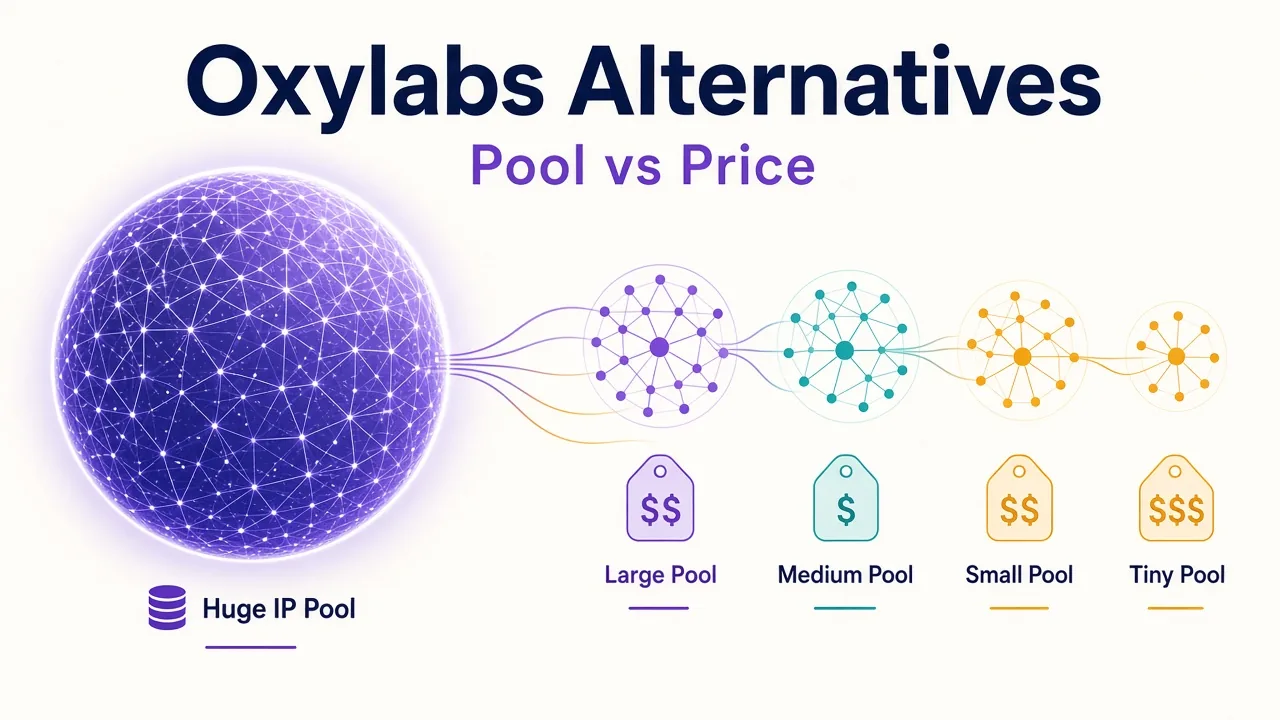
A proxy pool is the full set of IPs a network can assign to your requests. Its size and quality largely determine how well you can scale: a bigger, cleaner pool means each IP handles fewer requests, so you stay under rate limits and hit fewer blocks.
Pools vary by type (residential, datacenter, ISP, mobile) and by geography. Good providers continuously refresh their pools, remove flagged IPs, and expose targeting so you can pull addresses from a specific country or city.
Examples
- 01A network advertising 55M+ residential IPs across 195 countries
- 02Filtering a pool down to US-only mobile IPs for a campaign check
- 03Rotating through a fresh subset of the pool on every request
Common use cases
Frequently asked questions
A larger pool spreads your requests across more IPs, so each address makes fewer calls and is less likely to hit rate limits or get flagged. Bigger, cleaner pools scale better.
Ethically sourced IPs, low abuse history, broad geographic coverage, accurate targeting, and active maintenance that removes blocked or flagged addresses.
Yes. Most providers let you filter the pool by country, region, city, and sometimes carrier or ASN, so you draw IPs from exactly where you need them.
No. Some may already be flagged on certain sites, which is why success rate on your specific targets matters more than raw pool size.
Generally yes for scale and stealth, but quality and targeting can matter more. A smaller, well-maintained pool can outperform a large, abused one on tough sites.
Ready to put this into practice?
See our independently-scored picks.