











IP Rotation
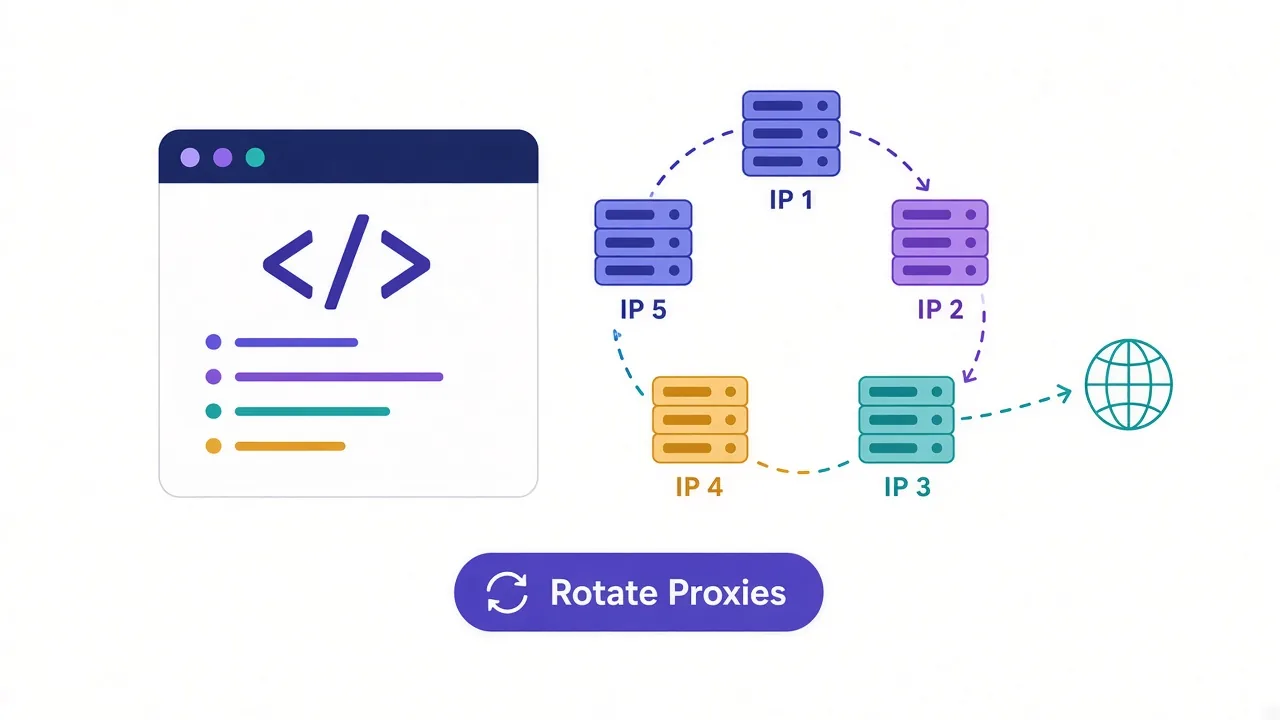
IP rotation is the practice of switching the source IP address used for outgoing requests so that traffic is spread across many addresses instead of one.
IP Rotation explained
IP rotation is the technique behind rotating proxies. Instead of sending every request from a single address, a gateway cycles through a pool, changing the IP per request, per connection, or on a timer. This makes automated traffic look like many separate users.
Rotation is the single most effective way to avoid per-IP rate limits and bans during scraping. It is usually combined with realistic headers, request pacing, and, on the hardest targets, residential or mobile IPs.
Examples
- 01Changing IP after every request to crawl a large catalog
- 02Rotating on a 10-minute timer for steady background monitoring
- 03Switching IPs automatically when a request returns a block
Common use cases
Frequently asked questions
Mainly to avoid rate limits and blocks during automated tasks by spreading requests across many IPs so no single address looks abusive.
It depends on the target site rate limits and your request volume. High-volume scraping often rotates per request, while lighter monitoring can rotate on a timer.
No. It changes the network address but sites can still track you through browser fingerprints, cookies, and behavior, so rotation is one layer of many.
Yes. Many providers support timed rotation, keeping an IP for a set window before switching, which is useful for steady, low-risk workloads.
A rotating proxy is the product that performs IP rotation for you. Rotation is the underlying technique; the proxy is the tool that automates it.
Ready to put this into practice?
See our independently-scored picks.