











Web Scraping
Web scraping is the automated extraction of data from websites, typically using scripts or tools that request pages and parse their content at scale.
Web Scraping explained
Web scraping uses software to fetch web pages and pull structured data out of them, turning content meant for humans into datasets you can analyze. It powers price monitoring, market research, lead generation, and SEO tracking.
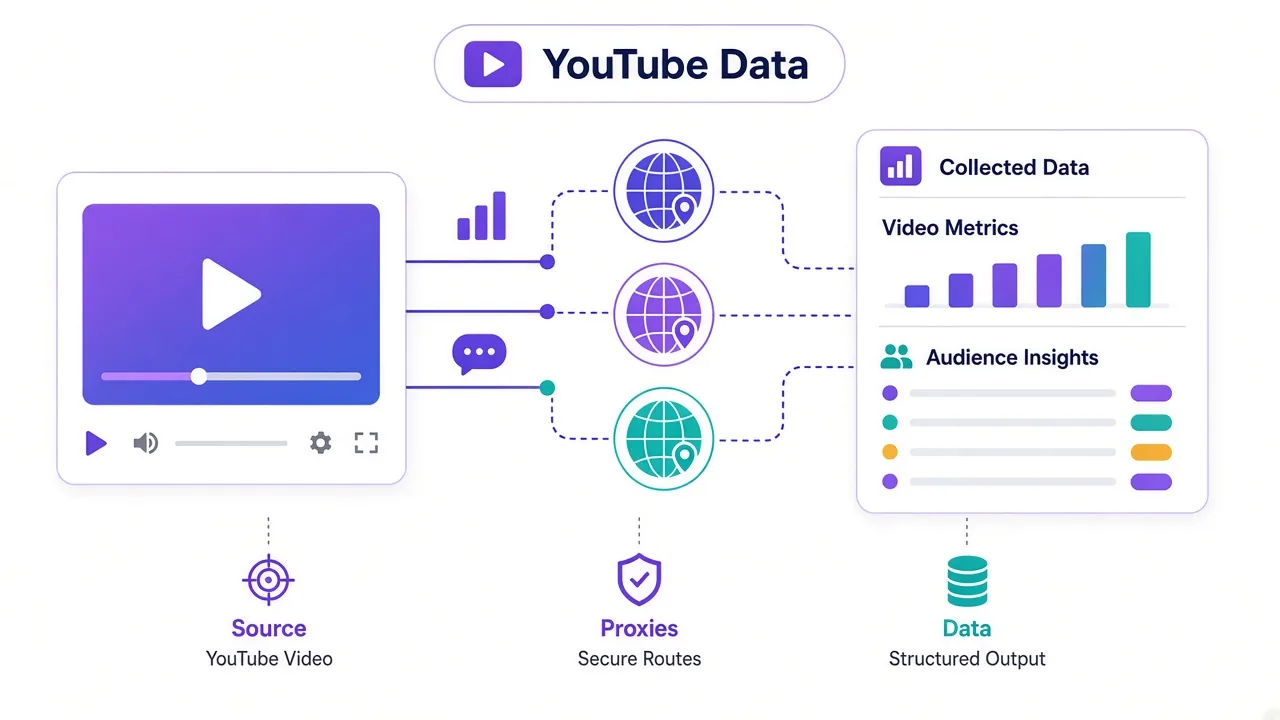
At scale, scraping runs into anti-bot defenses: rate limits, CAPTCHAs, IP bans, and fingerprinting. Proxies are the standard countermeasure, spreading requests across many IPs so the target sees distributed, human-like traffic rather than one aggressive client.
Doing it responsibly
Scrape public data, respect rate limits and robots directives where required, and follow applicable laws and site terms.
Examples
- 01Collecting competitor prices across thousands of product pages
- 02Aggregating job listings from multiple boards into one dataset
- 03Tracking search rankings for a set of keywords daily
Common use cases
Frequently asked questions
Scraping publicly available data is legal in many jurisdictions, but it depends on the data, how you use it, local laws, and the site terms of service. When in doubt, consult a lawyer.
High-volume requests from one IP get rate-limited or banned. Proxies spread requests across many IPs so the target sees distributed traffic that is far less likely to be blocked.
Rate limits, IP bans, CAPTCHAs, browser fingerprinting, and behavioral analysis. Overcoming them takes IP rotation, realistic headers, pacing, and sometimes headless browsers.
Datacenter proxies for tolerant sites and speed, residential or mobile proxies for tough targets that block hosting IPs. Many projects mix types by target difficulty.
Crawling is discovering and following links to map a site, while scraping is extracting specific data from pages. Large projects usually crawl to find pages, then scrape them.
Rotate IPs with quality proxies, randomize and pace requests, send realistic headers and user agents, handle CAPTCHAs, and avoid hammering a site faster than a human would.
Ready to put this into practice?
See our independently-scored picks.