









Best Market Research Proxies 2026
Pricing intelligence and competitor analysis.
Our top Market Research picks

From $8.00 /GB
Premium proxies built for enterprise scraping.

From $5.04 /GB
The largest proxy network on earth.
Market Research proxies: a complete overview
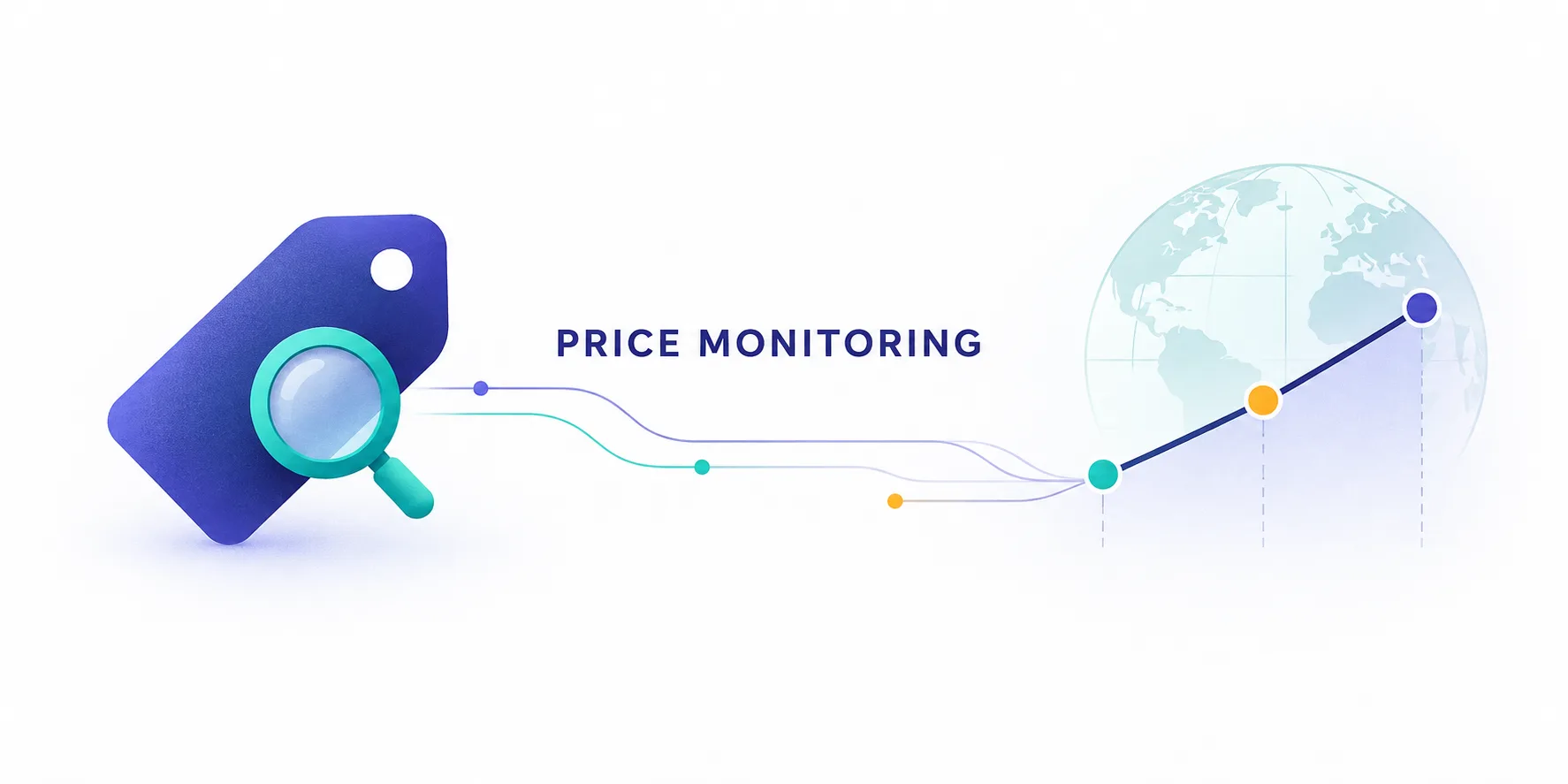
Market research through proxies means collecting accurate, localised intelligence on prices, availability, and search results as real shoppers in each region actually see them. Because retailers personalise pages and vary offers by geography, the IP you collect from directly determines whether your data reflects the market or a distorted, bot-flagged version of it. Proxy choice is therefore a data-quality decision, not just an access one.
Why proxies matter for market research
Prices, stock levels, promotions, and even search rankings shift by location, currency, and shopper profile. A request from the wrong country returns the wrong catalogue; a request from a flagged datacenter range returns a blocked page or a deliberately misleading one. To benchmark competitors or feed a pricing model you need clean, geographically precise access that mirrors a genuine local customer, gathered consistently enough to compare over time.
Which proxy type to use
Match the IP to how aggressively the source defends itself, and blend types to control cost.
- Residential: aggressive retailers, marketplaces, and personalised or logged-in pages that fingerprint visitors hard.
- Datacenter: tolerant sources, public catalogues, and high-volume collection where cost per request dominates.
- ISP (static): dashboards or accounts that must be revisited from a stable, trusted identity.
- Mobile: app-only pricing or the few targets that block everything short of a carrier IP.
What to look for
- Precise country and city targeting so localised prices and offers are captured correctly.
- A large, clean pool to spread requests and avoid rate-limit triggers on big catalogues.
- Reliable geo-accuracy — an IP that claims a location but resolves elsewhere corrupts your dataset.
- Sticky sessions for multi-step flows like carts, filters, and checkout price reveals.
- Predictable pricing that lets you mix cheap datacenter with premium residential sensibly.
Common pitfalls
The classic mistake is trusting a single IP type for every source and quietly collecting blocked or geo-wrong pages that look valid. Validate a sample against known local prices, and rotate sensibly so you are not hammering one retailer from one address.
Get the geography and trust level right and your market data becomes a dependable mirror of each region — wrong, and every downstream decision inherits the distortion.
All 10 providers for Market Research
- 5.0(1)5.0 out of 5 from 1 reviews
$8.00
/GB
- 4.8(3)4.8 out of 5 from 3 reviews
$5.04
/GB
- 4.5(1)4.5 out of 5 from 1 reviews
$4.00
/GB
- 4.4(0)4.4 out of 5 from 0 reviews
$2.95
/GB
- 4.4(0)4.4 out of 5 from 0 reviews
$0.30
/GB
- 4.4(0)4.4 out of 5 from 0 reviews
$8.00
/GB
- 4.3(0)4.3 out of 5 from 0 reviews
$0.30
/GB
- 4.0(0)4.0 out of 5 from 0 reviews
$3.00
/GB
- 4.0(0)4.0 out of 5 from 0 reviews
$1.00
/GB
- 3.9(0)3.9 out of 5 from 0 reviews
$125.00
/GB







What to look for
Key requirements
- Broad country coverage
- Reliable success on retail sites
- Rotating residential IPs
Benefits
- Localised pricing and availability
- Competitive monitoring at scale
- Clean, representative data
How we rank proxies for Market Research
Ranked on country coverage, retail success rates and overall data accuracy.
Frequently asked questions
Residential for aggressive retailers; datacenter where tolerated. Match the IP type to the target's defences.
Retailers localise prices, promotions and availability; geo-targeted IPs return the figures real local shoppers see.