








S
Sara V. Verified
May 29, 2026
5.05.0 out of 5
Industry standard
Manages hundreds of profiles without leaks. The API is rock solid.
38 found this helpful

The original enterprise antidetect browser.
$19.00
from $19.00 /mo
Multilogin is the most mature, most thoroughly tested antidetect browser on the market, and after a decade of development it shows. If your income depends on accounts staying alive, this is the safest pick in the category — and that reliability, more than any single feature, is what you are paying for.
Fingerprinting is the core job of an antidetect browser, and Multilogin's is excellent. Profiles hold up on strict platforms that flag weaker tools, the values are internally consistent, and the real-device database is updated often enough to keep pace as browsers evolve. The dual-engine approach with Mimic and Stealthfox is something most rivals simply do not offer, and the automation story — a proper local API with Selenium, Puppeteer, and Playwright support — is good enough for production scraping, not just a checkbox.
For teams, the workspace, roles, and profile-sharing system is genuinely enterprise-grade. This is where Multilogin pulls clearly ahead of the cheaper consumer-focused tools.
The obvious drawback is price. Multilogin sits at the premium end of the market, and the entry plan's profile and seat limits will push serious users toward the more expensive tiers fairly quickly. It is also heavier on system resources than lightweight competitors, so running a large number of profiles at once rewards a well-specced machine. Finally, the depth of features means a steeper learning curve than a minimalist single-engine browser.
For hobbyists or anyone managing a handful of accounts, cheaper tools such as AdsPower or the free tier of Dolphin Anty will do the job for far less. But for professionals — agencies, high-volume sellers, automation teams — a single banned account can cost more than a year of subscription. Viewed that way, Multilogin's premium is cheap insurance.
Multilogin is not the cheapest and does not try to be. It is the option you choose when reliability and stealth matter more than saving money, and it earns its reputation as the category's gold standard.
A real local API with Selenium, Puppeteer and Playwright support, suitable for production scraping.
Powerful but dense; newcomers face a steeper learning curve than lightweight rivals.
Stable with many profiles, though heavier on RAM and CPU than minimalist tools.
Premium pricing; justified for professionals but steep for casual users.
Profiles stay consistent and undetected on strict platforms; the real-device database is updated regularly.
Workspaces, granular roles and shareable cloud profiles make it genuinely enterprise-ready.
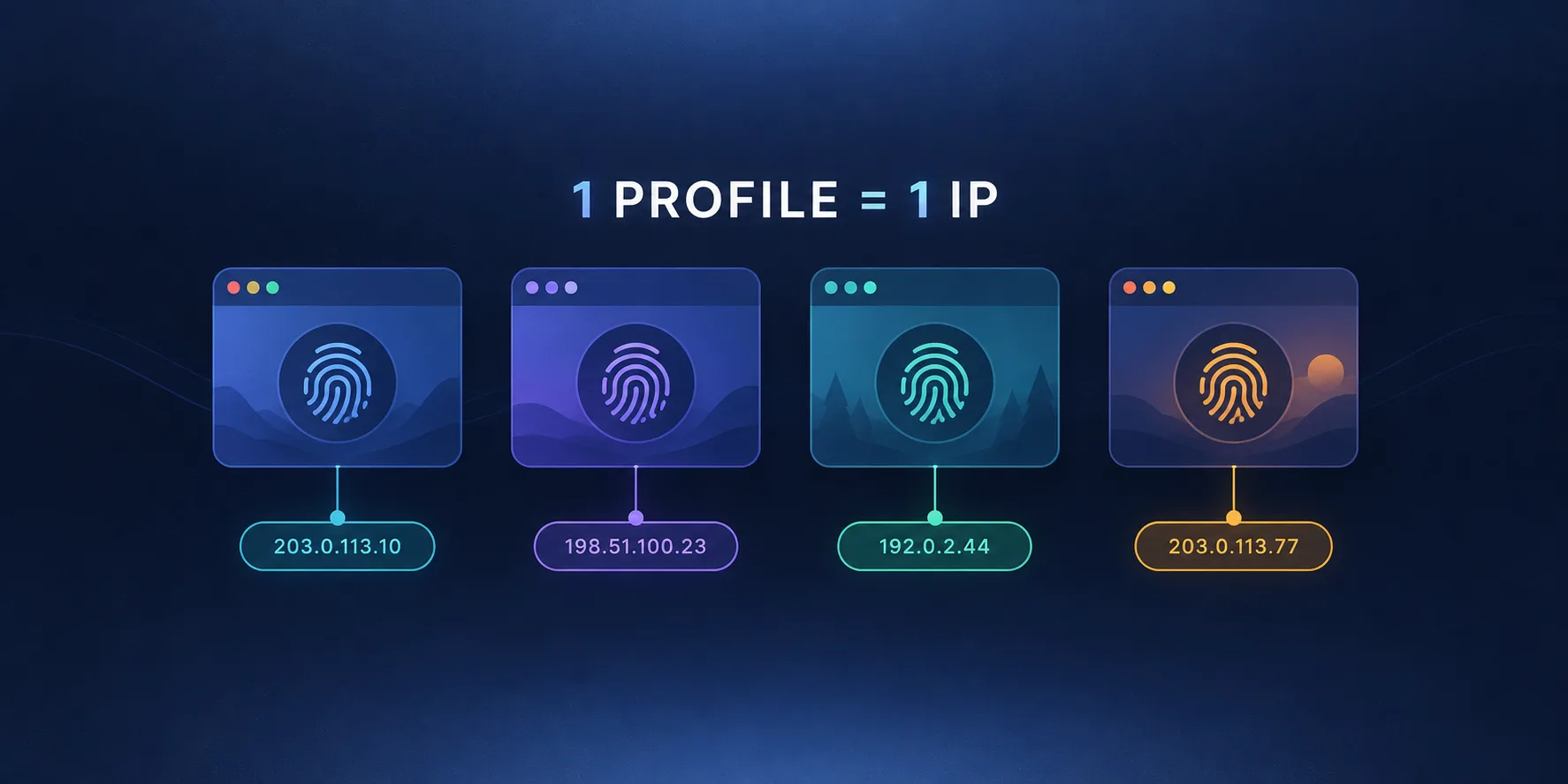
Multilogin is an antidetect browser: a desktop application that lets you run dozens or hundreds of fully isolated browser profiles on a single computer, each with its own digital fingerprint, cookies, storage, and proxy. To any website you visit, every profile looks like a separate person on a separate device — which is what makes it possible to manage many online accounts without them being linked, flagged, or banned.
It launched in 2015 and effectively created the category. A decade later it is still the reference product that newer competitors are measured against, and it remains the choice of agencies, e-commerce sellers, and automation teams that cannot afford to have accounts shut down.
Most antidetect browsers ship a single Chromium build. Multilogin maintains two separate engines, which is a meaningful advantage:
Running both engines from one dashboard lets you spread profiles across two distinct browser families, which is harder for anti-fraud systems to correlate.
A normal browser leaks a surprising amount of identifying information. Multilogin gives each profile a coherent fingerprint assembled from a database of real-device parameters, so the values it presents actually fit together — a common giveaway of cheap tools is a fingerprint whose parts contradict each other.
Parameters it controls per profile include:
Cookies and local storage are sandboxed per profile, so a login in one profile is invisible to every other.
Profiles in Multilogin are stored in the cloud, which means you can open the same profile from a different machine and your team can share it without exporting anything by hand. Profiles can be organized into folders and workspaces, bulk-created, tagged, and have cookies imported in bulk — useful when you are onboarding a large set of accounts at once.
Proxies are central to the workflow, and Multilogin treats them as a first-class setting on every profile. You can assign an individual HTTP or SOCKS5 proxy per profile, paste proxies in bulk, and test them before launch. Because timezone and geolocation can be pinned to match the proxy, a profile routed through a residential IP in Berlin will also report a Berlin timezone — removing one of the most common mismatch signals.
For teams doing scraping or repetitive multi-account work, Multilogin exposes a local automation interface that drives profiles programmatically. It integrates with the mainstream frameworks:
You launch a profile through the API, receive a connection endpoint, and then control the browser exactly as you would in a normal automation script — but with the full antidetect fingerprint applied. Headless operation is supported for server-side runs.
Multilogin was designed for organizations, not just individuals. It offers workspaces, role-based permissions, and profile sharing, so an administrator can decide exactly who can view, edit, or launch which profiles. This is the feature set that makes it viable for agencies and larger operations where several people touch the same accounts.
Multilogin runs on Windows, macOS (including Apple Silicon), and Linux. There is no native mobile app — it is a desktop tool — though profiles can emulate mobile device fingerprints.
Mimic (Chromium) and Stealthfox (Firefox) for diversity.
Real-device fingerprint database, refined since 2015.
Open from any device and share across a team.
Local API with Selenium, Puppeteer and Playwright.
Workspaces, granular roles, permissions and audit.
Bulk import and automatic timezone/geo matching.
Multilogin lets you run many isolated browser profiles on one computer, each with its own fingerprint, cookies and proxy. It is used to manage multiple online accounts — ad accounts, marketplace stores, social media profiles — without them being linked or banned, and to run stealthy browser automation.
Incognito mode and Chrome profiles separate cookies, but they all share the same underlying device fingerprint, so sites can still tell the sessions come from one machine. Multilogin gives each profile a distinct, internally consistent fingerprint (canvas, WebGL, fonts, timezone and more) on top of isolated storage, so profiles look like genuinely different devices.
They are Multilogin's two browser engines. Mimic is based on Chromium and behaves like Chrome or Edge; Stealthfox is based on Firefox. Having both lets you diversify profiles across two browser families, which is harder for anti-fraud systems to correlate.
Yes. It provides a local API that integrates with Selenium, Puppeteer and Playwright. You launch a profile through the API and then control it with your normal automation scripts, with the full antidetect fingerprint applied. Headless operation is supported.
Yes. You can assign an HTTP or SOCKS5 proxy to each profile individually, import proxies in bulk and test them before launching. Timezone and geolocation can be matched to the proxy automatically to avoid mismatch signals.
Multilogin works with any proxy provider and you can bring your own. Some plans bundle a quota of proxy traffic, but most professional users pair it with a dedicated residential, ISP or mobile proxy service for the best results.
Yes — it was built for them. Workspaces, granular roles and permissions, and shareable cloud profiles let multiple people work on the same accounts safely, which makes it a strong fit for agencies and larger operations.
Pricing starts at roughly $19 per month for an entry plan and scales up for more profiles, team seats and higher automation limits. It sits at the premium end of the category, so check the provider for current plans, as limits and prices change.
Windows, macOS (including Apple Silicon) and Linux. There is no native mobile app, though profiles can emulate mobile device fingerprints.
The software itself is legal and widely used for legitimate purposes such as managing multiple business accounts, ad verification and privacy. Whether a specific use is allowed depends on the terms of service of the sites you visit and your local laws, so use it responsibly.
Sara V. Verified
May 29, 2026
Manages hundreds of profiles without leaks. The API is rock solid.
38 found this helpful
Igor P. Verified
May 29, 2026
Roles and shared profiles keep our team organized. Pricey but worth it.
14 found this helpful

Browser
Affordable antidetect with cloud profiles.

Browser
Profiles at scale with strong automation.

Browser
Built for affiliates and media buyers.

Browser
Simple, reliable multi-account browsing.