








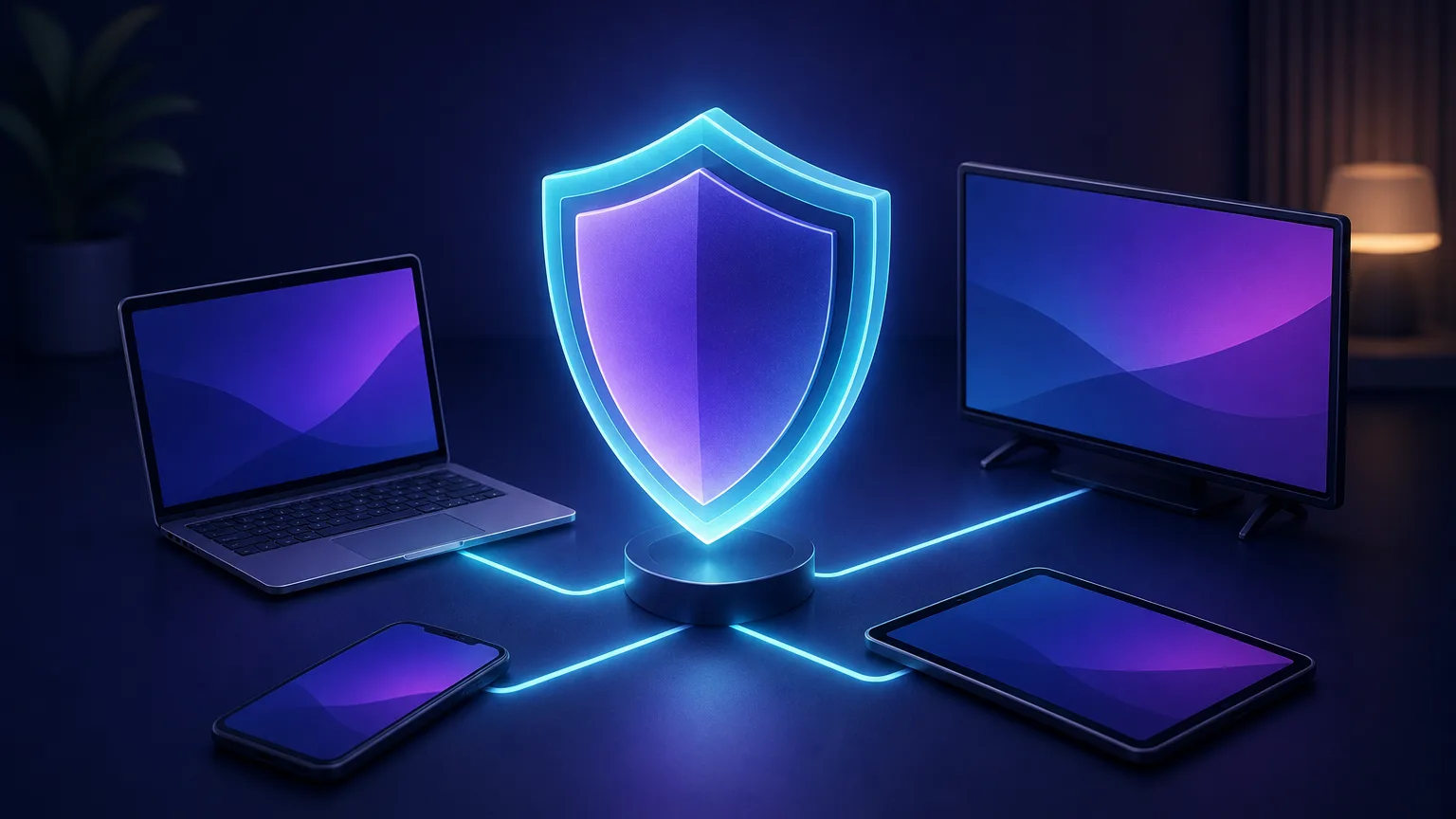
Count the devices in your home that connect to the internet: phones, laptops, tablets, a smart TV or two, maybe a games console and a work computer. For most households that's easily eight to fifteen — and every one of them deserves the privacy and security a VPN provides. The catch is that many VPNs cap how many devices you can protect at once. This guide explains how those limits work, what to look for, and ranks the five VPNs we rate highest for covering an entire household on a single subscription.
Why device limits matter more than ever
A decade ago, "your devices" meant a laptop and a phone. Today the average home is a small fleet — smartphones, tablets, work and personal laptops, smart TVs, streaming sticks, consoles, and a growing pile of smart-home gadgets. A VPN that only covers five connections forces you to choose which devices get protected and which are left exposed, or to constantly disconnect one device to free up a slot for another.
That's why simultaneous connections — how many devices can use one VPN account at the same time — has become one of the most important things to check before you buy. The best VPNs for multiple devices either allow generous limits (10 or more) or remove the cap entirely, so one subscription quietly protects everything you own.
How many devices do you really need to cover?
It's worth counting honestly, because most people underestimate. A typical two-person household adds up fast: two phones, two laptops, a tablet, a smart TV, a streaming stick, a games console, and a smart speaker or two already reaches ten before you've counted a work laptop or a smartwatch. A family of four can easily pass fifteen.
Then factor in growth. Every year the average home adds more connected gadgets, and a VPN is a multi-year purchase. A limit that feels comfortable today can feel tight in eighteen months — which is why unlimited or high-count plans age better. If your count is already near a provider's cap, either size up or plan to cover the overflow with a router install, described later in this guide.
What "simultaneous connections" actually means
Simultaneous connections is the number of devices that can be actively connected to the VPN on a single account at one time. It is not the number of devices you can install the app on — you can usually install a VPN on unlimited devices; the limit is on how many run at once.
So a 10-connection VPN lets any 10 of your devices use the tunnel simultaneously; connect an eleventh and the oldest session may drop. A VPN with unlimited connections removes that ceiling entirely, which is ideal for busy households or anyone with a lot of gear. One important nuance: setting a VPN up on your router counts as a single connection but protects every device behind it — a clever way to stretch even a limited plan, which we'll cover below.
What to look for in a multi-device VPN
Device count is the headline, but a genuinely good multi-device VPN gets several things right:
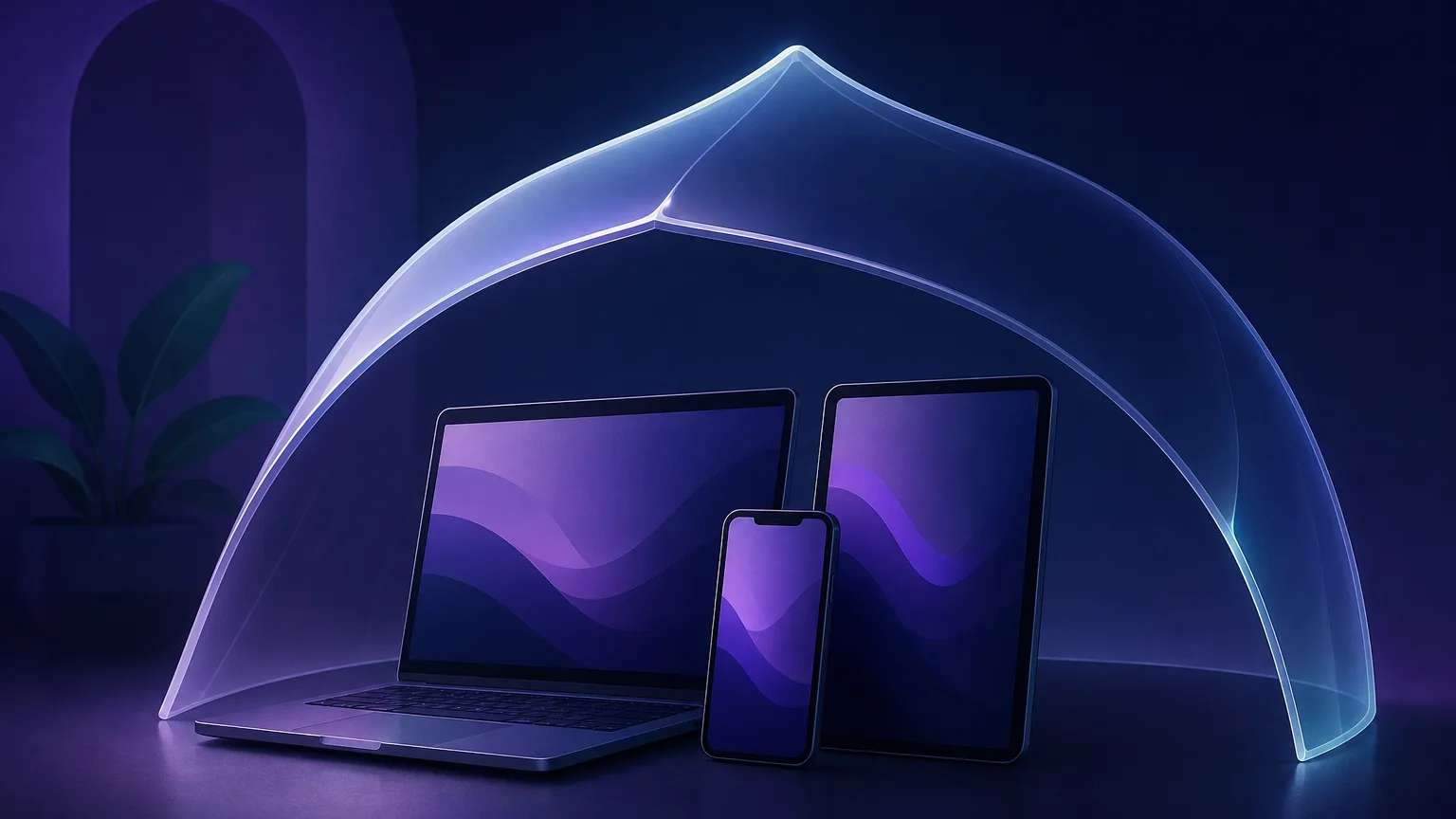
- Generous or unlimited connections. Enough slots to cover your whole household without juggling — ideally unlimited, or at least 10.
- Broad app support. Native apps for Windows, macOS, iOS, Android, Linux, and — crucially — smart-TV platforms like Amazon Fire TV and Android TV.
- Router support. The ability to install on a router covers devices that can't run VPN apps (consoles, older TVs, smart-home gear) while using just one connection.
- Consistent speed. Protecting many devices means more simultaneous traffic, so you want a fast network that won't buckle under a busy household.
- Easy management. Clear apps, one login across platforms, and simple per-device control make covering a fleet painless rather than a chore.
The best VPNs for multiple devices in 2026
These five lead for household coverage, judged on connection limits, platform support, router options, and overall quality. Pricing changes often, so confirm current rates with each provider. All five come from our independent, hands-on VPN reviews.

1. Surfshark — best overall for multiple devices
Surfshark is purpose-built for this exact need: it allows unlimited simultaneous connections on every plan, so one subscription covers every phone, laptop, tablet, and TV in the house with slots to spare. It backs that up with genuinely premium features — fast WireGuard speeds, strong security, ad and tracker blocking, and polished apps across every major platform including Fire TV. And it does all this at a budget-friendly price on longer plans. For families and gadget-heavy households, it's the clear top choice.

2. Private Internet Access — best unlimited value
Private Internet Access (PIA) also offers unlimited connections, paired with one of the largest server networks anywhere and a long, court-tested no-logs record. Its open-source apps are highly configurable for power users, it runs smoothly on routers, and it's among the cheapest premium options on multi-year plans. If you want to cover unlimited devices on a tight budget without sacrificing a serious privacy pedigree, PIA is hard to beat.

Highly configurable VPN with open-source apps and unlimited devices
3. NordVPN — fastest for a busy household
NordVPN caps at 10 simultaneous connections — plenty for most homes — and in return delivers the fastest speeds in the category via its NordLynx protocol, which matters when many devices stream and browse at once. It's feature-rich (Threat Protection, Meshnet, a huge server network) with excellent apps everywhere, and its router support lets you extend coverage further. For a fast, dependable household VPN, Nord is the premium pick.

4. Proton VPN — best privacy for the family
Proton VPN allows 10 connections and is the standout for privacy-conscious households. Built by the team behind Proton Mail, independently audited, and based in Switzerland, it backs its no-logs promise with real transparency — and it still delivers strong speeds and streaming. It even offers a genuinely usable free tier, so you can protect the family's most important devices and try the apps before committing.

Privacy-first, from the makers of Proton Mail.
5. IPVanish — unlimited connections, US-based
IPVanish rounds out the list with unlimited simultaneous connections and the distinction of owning its own server network, which gives it tight control over performance. Its apps cover all the major platforms with a straightforward interface, and it's a solid, no-frills choice for households that want unlimited coverage from a US-based provider. It's a dependable alternative if Surfshark or PIA aren't the right fit.

Self-owned network VPN with unlimited connections
| VPN | Devices | Best for | Standout strength |
|---|---|---|---|
| Surfshark | Unlimited | Overall household coverage | Unlimited devices + premium features, low price |
| PIA | Unlimited | Unlimited on a budget | Huge network, configurable, cheap |
| NordVPN | 10 | Speed | Fastest network, feature-rich |
| Proton VPN | 10 | Privacy | Audited no-logs, free tier |
| IPVanish | Unlimited | US-based unlimited | Owns its network, simple apps |
Unlimited vs 10 connections — does it matter?
For most homes, 10 connections is plenty. Go unlimited if you have a large family, an unusually gadget-heavy home, or you want to cover extended family and friends on one plan. If a capped VPN otherwise wins on speed or privacy, remember a router install covers everything behind it for a single slot.
Covering devices that can't run a VPN
Some of your most-used devices — older smart TVs, PlayStation, Xbox, Chromecast, and many smart-home gadgets — can't run a VPN app directly. There are two clean ways to protect them:
- Install the VPN on your router. This encrypts every device on your network at once and counts as just one connection, which effectively gives even a capped VPN unlimited reach at home. All five picks above support router setup to varying degrees.
- Use Smart DNS. Most of these providers include a Smart DNS feature that redirects location-sensitive traffic on devices that can't run the app — handy for streaming, though it doesn't encrypt like a full VPN.
Between native apps, router support, and Smart DNS, a good multi-device VPN can reach essentially everything in a modern home.
Setting up your VPN across platforms
One account, many device types — here's the quick lay of the land for each:
- Phones & tablets (iOS, Android). Install from the app store, sign in, and enable auto-connect so protection kicks in the moment you join any network — especially public Wi-Fi.
- Computers (Windows, macOS, Linux). Native desktop apps add features like split tunneling and a kill switch; turn the kill switch on so a dropped tunnel never exposes your traffic.
- Smart TVs & streaming sticks. Amazon Fire TV and Android TV run native apps directly; sign in and connect like on a phone.
- Consoles & other gear. PlayStation, Xbox, and Chromecast can't run VPN apps, so cover them via the router or the provider's Smart DNS.
Because your one login works everywhere, adding a new device is usually a two-minute job: install, sign in, connect.
How to choose the right one for you
Match the pick to your household rather than chasing a single "best":
- Big family or lots of gadgets? Surfshark or PIA — truly unlimited connections.
- Want maximum speed for heavy streaming? NordVPN — fastest network, 10 devices.
- Privacy is the priority? Proton VPN — audited, Swiss-based, 10 devices.
- Prefer a US-based provider with unlimited coverage? IPVanish.
- On a tight budget? PIA or Surfshark on a multi-year plan deliver unlimited devices for a few dollars a month.
Getting the most from a multi-device VPN
A few habits make household-wide protection smoother:
- Start with the router. A single router install covers the whole home network and frees up app slots for phones and laptops you take outside.
- Use split tunneling where needed. Route only the traffic that needs the VPN, so devices like a smart speaker or a local printer keep working normally.
- Enable auto-connect and a kill switch on phones and laptops, so protection follows every device onto public Wi-Fi without you thinking about it.
- Verify coverage. After setup, check a device's public IP with a quick IP lookup to confirm it's routing through the VPN rather than leaking your real connection.
- Pick nearby servers per device for the best speed, especially when several devices stream at once.
Will running it on many devices slow things down?
A common worry is that protecting a dozen devices will crawl. In practice, the VPN itself adds only a small per-connection overhead — a few percent on a fast provider — so a single device barely notices. What actually sets the ceiling is your home internet plan: the VPN shares your total bandwidth across every active device, exactly as your router already does without one. If several devices stream 4K at once and your line is slow, that's the bottleneck, not the VPN. Choosing a fast provider like NordVPN or Surfshark and connecting each device to a nearby server keeps the overhead invisible even under a busy household load.
A note on free VPNs for multiple devices
Free VPNs are a poor fit for households. They almost always impose tight device limits, throttle speeds far below what multiple streams need, and cap monthly data — and many fund themselves by logging and selling user data, which defeats the purpose. Proton VPN's free tier is the honorable exception for protecting a device or two, but for whole-home coverage a paid, multi-device plan is the only reliable option. The good news: the value picks here cost only a few dollars a month and cover everything you own.
The bottom line
Protecting a modern home means covering a lot of devices, so simultaneous-connection limits belong at the top of your checklist. Surfshark is our overall winner for pairing unlimited devices with premium features at a low price, Private Internet Access matches the unlimited coverage on an even tighter budget, NordVPN brings the fastest speeds for busy streaming homes, Proton VPN is the privacy-first family choice, and IPVanish is a dependable US-based unlimited option. Add a router install to reach the devices that can't run apps, and one subscription can quietly protect your entire household. Compare them in depth in our independent VPN reviews.
Frequently asked questions
It depends on the provider's simultaneous-connection limit. Many cap it at five to ten devices per account, while some — like Surfshark, Private Internet Access, and IPVanish — allow unlimited connections. Installing the VPN on your router counts as a single connection but protects every device behind it.
You can usually install a VPN app on as many devices as you like; the limit is on how many can be actively connected at the same time. A 10-connection plan means any 10 devices can use the tunnel simultaneously. Unlimited connections removes that ceiling entirely.
Surfshark is our overall pick because it offers unlimited simultaneous connections plus premium features at a low price. Private Internet Access and IPVanish also allow unlimited devices, while NordVPN (fastest) and Proton VPN (most private) cap at 10 — plenty for most homes.
Yes. Install the VPN on your router to cover every device on your network at once using just one connection, or use the provider's Smart DNS feature for streaming devices. Both let you protect consoles, older smart TVs, and Chromecasts that have no native app.
The VPN adds only a few percent of overhead on a fast provider, so individual devices barely notice. Your home internet speed is the real limit — the VPN shares your total bandwidth across devices just as your router already does. A fast provider and nearby servers keep it smooth even in a busy household.
Yes. A single subscription with enough simultaneous connections (or unlimited) can cover an entire family's devices, and a router install protects everyone on the home network at once. This is exactly why device limits matter when choosing a plan for a household.