











Scrapfly
Web scraping API with anti-scraping bypass and extraction tools
$30.00
from $30.00 /GB
- IP Pool
- Rotating residential pool
- Countries
- 195+
- Uptime
- 99.9%
- Avg. response
- 1.6s
- Free trial
- Yes
- Founded
- 2020
Our verdict
Scrapfly rounds out the scraping-API field with a genuinely platform-shaped offering. Residential proxies, robust anti-scraping bypass and JavaScript rendering handle the difficult parts, while the screenshot and structured extraction APIs push it beyond simply returning HTML, which saves real parsing effort. Documentation and SDK support are solid, and credit-based pricing scales predictably as long as you account for rendering-heavy jobs. It is more than teams needing only cheap raw proxies require, but for developers building durable scraping pipelines against protected targets it is a strong, well-rounded choice.
Pros & cons
Pros
- End-to-end scraping platform with extraction APIs
- Robust anti-scraping-protection bypass
- Residential proxies applied automatically
- JavaScript rendering and screenshot support
- Solid documentation and SDK support
Cons
- More than needed for simple raw-proxy use
- Credits scale up on rendering-heavy jobs
- Learning curve to use advanced features fully
Proxy types & pricing
| Type | Starting price | Pool size |
|---|---|---|
| Web Scraping API | $30.00 /mo | Rotating pool |
| Residential | $4.00 /GB | Large residential pool |
Overview
Scrapfly is a developer-focused web scraping platform combining residential proxies, anti-scraping-protection bypass and JavaScript rendering with screenshot and structured extraction APIs. It positions itself as a complete scraping toolkit, handling the hard parts of blocks and rendering while offering higher-level extraction so teams get data rather than raw HTML.
How it works
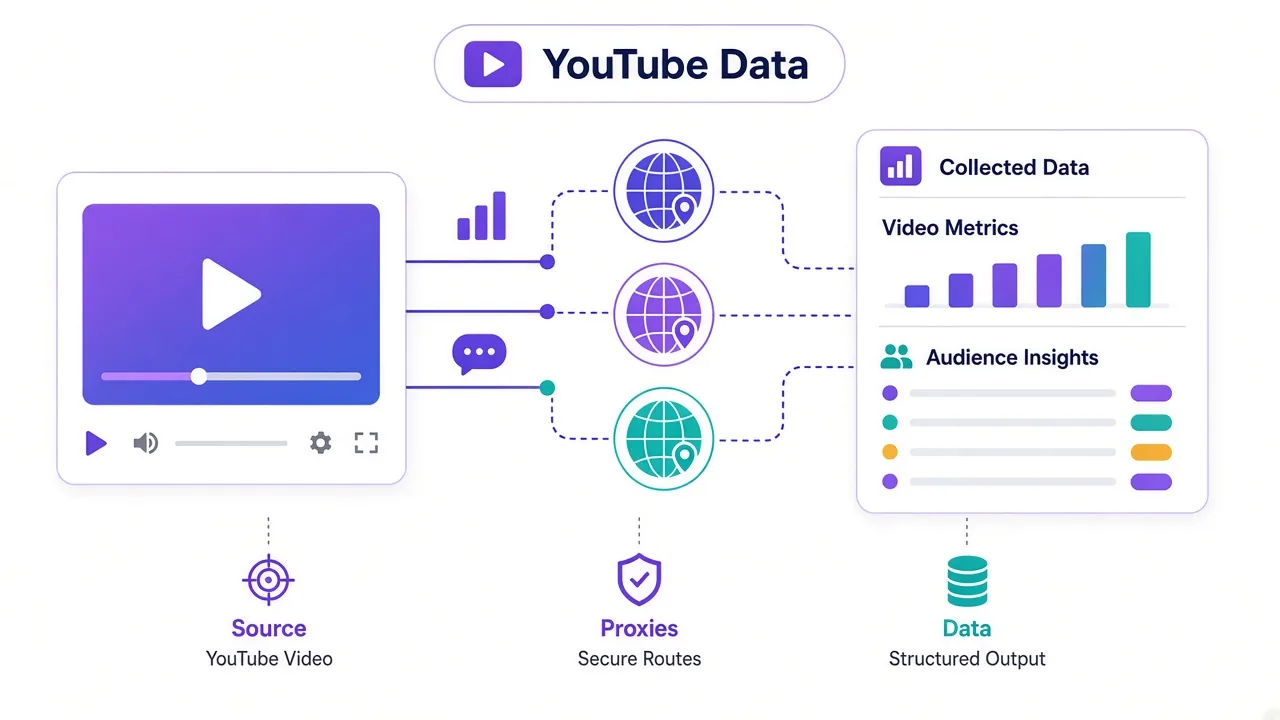
- Send target URLs to the API with residential proxies applied automatically
- Bypass common anti-scraping protections and fingerprinting
- Enable JavaScript rendering for dynamic, client-side pages
- Use screenshot and extraction APIs to capture images or structured data
- Pay with per-request credits, scaled by rendering and proxy options
Best for
Scrapfly is well suited to developers and data teams that want an end-to-end platform rather than assembling proxies, browsers and parsers separately. The extraction and screenshot APIs make it strong for structured data and monitoring use cases. Teams needing only cheap raw proxies may find it more than they need, but for serious scraping it is a capable platform.
Features & capabilities
Anti-scraping bypass
Handles protections and fingerprinting
Residential proxies
Automatically applied to requests
JavaScript rendering
Render dynamic, client-side pages
Extraction API
Return structured data, not just HTML
Screenshot API
Capture full-page images of targets
Integrations & supported tools
Privacy & compliance
Frequently asked questions
Beyond residential proxies it adds anti-scraping bypass, JavaScript rendering, screenshots and structured extraction APIs, so you receive usable data rather than only raw HTML.
Yes, JavaScript rendering can be enabled per request to handle dynamic, client-side pages, alongside optional screenshot capture.
Scrapfly uses per-request credits, with rendering and premium proxy options consuming more credits than simple requests.
User reviews (0)
No reviews yet. Be the first to share your experience.