












I became genuinely obsessed with IP pool cleanliness about six months ago, when I was trying to understand why two residential proxy providers with similar pricing and similar advertised pool sizes were producing wildly different results against the same target. The latency was comparable. The geographic coverage was similar. The price per gigabyte was within 20% of each other. But one was clearing 94% of requests against an Instagram test target and the other was clearing 71%.
The answer, once I found it, was IP pool cleanliness. And once I understood it, it changed how I evaluated every proxy provider we considered adding to the DriftProxy index. This article explains what cleanliness actually means, how we measure it, where the major providers stand after six months of continuous testing, and exactly what to ask a provider before you commit to a volume purchase.
What IP Pool Cleanliness Actually Means
IP pool cleanliness describes the proportion of IPs in a proxy provider's pool that have not been flagged, blocked, or risk-scored negatively by the targets those IPs are used against.
Every time a proxy IP sends requests to a target website — whether that is Google, Amazon, Instagram, or any other platform with bot detection — the target records information about that IP's behaviour. Send too many requests too quickly and the IP gets flagged. Send requests that match known bot patterns and it gets flagged. And if the IP was associated with scraping abuse by other users who held it before you, it arrives at the target already flagged.
Over time, IPs accumulate history. A residential IP that has been in active proxy use for six months carries far more detection history than a fresh IP added to the pool last week. Cleanliness is essentially a measure of how well a provider manages this lifecycle: how quickly they rotate flagged IPs out, how continuously they source fresh IPs in, and how carefully they filter out IPs that were already flagged before entering the pool.
Why pool size alone is misleading
A pool of 50 million IPs where 40% are already flagged by major targets effectively has 30 million working IPs. A pool of 20 million IPs where only 3% are flagged effectively has 19.4 million. The smaller, cleaner pool produces better success rates because the vast majority of its IPs arrive at target servers with no negative history.
This is why the same nominal pool size can produce dramatically different real-world performance — and why pool-size marketing numbers tell you almost nothing on their own. For the broader performance picture behind this article, see our 30-day benchmark of 50 proxy providers, which covers success rates, latency, and pricing in depth.
How We Measure IP Pool Cleanliness
Our cleanliness measurement combines three separate signals that each capture a different dimension of IP quality. No single metric is reliable on its own, but together they form a composite score that is comprehensive and hard to game.
Signal 1: Multi-service IP reputation scoring
We run every IP we receive through IPQualityScore, Scamalytics, and a third proprietary scoring service, then average the results into a single cleanliness score on a 0–10 scale. An IP that scores 9 or above across all three services is a clean, residential-origin IP with no significant detection history. An IP that scores below 7 from any service has some form of negative history that we flag.
Signal 2: 30-day detection tracking
We test every provider against our six standard target types continuously. When an IP gets blocked or CAPTCHAed by one of our targets, we record that event and track whether the provider rotates the IP out of our request stream. Providers that keep sending us the same flagged IPs in subsequent requests score lower on this dimension, because it means their rotation management is not actually working.
Signal 3: ASN analysis
We check the autonomous system number (ASN) of every IP we receive — the identifier that tells you which network infrastructure is actually hosting the traffic. Genuine residential IPs should come from ASNs operated by consumer internet service providers like Comcast, BT, Deutsche Telekom, or Jio. IPs that claim to be residential but come from ASNs operated by data centres or cloud providers are flagged as potentially fake residential. If the residential-versus-datacenter distinction is new to you, start with our guide to residential vs datacenter proxies.
| Signal | What it measures | What a bad result looks like |
|---|---|---|
| Multi-service reputation scoring | Existing detection history across IPQualityScore, Scamalytics, and a proprietary service | IPs scoring below 7 on any service |
| 30-day detection tracking | How quickly flagged IPs are rotated out of live traffic | The same flagged IPs reappearing in our request stream |
| ASN analysis | Whether "residential" IPs really come from consumer ISPs | Residential-labelled IPs hosted on datacenter or cloud ASNs |
The 2026 Cleanliness Rankings — What We Found
After six months of continuous measurement across roughly 50 providers, here is where the major names stand on our composite IP cleanliness score.
| Tier | Composite score | Providers | Best suited for |
|---|---|---|---|
| Tier 1 — Clean | 9.0–10.0 | Bright Data (9.7), NodeMaven (9.5), Oxylabs (9.4) | Instagram, LinkedIn, Cloudflare-protected retail — the hardest targets |
| Tier 2 — Good | 8.0–8.9 | Decodo, SOAX, IPRoyal, NetNut (8.1–8.9) | Most production scraping and account work |
| Tier 3 — Acceptable | 7.0–7.9 | Webshare, Proxy-Seller, several mid-tier providers | Lightly protected targets, price monitoring, SEO rank tracking |
| Tier 4 — Poor | Below 7.0 | Roughly 30% of the 50 providers we tested (unnamed) | Only targets with little or no bot protection |
Tier 1 — Clean pools (score 9.0 to 10.0)
Bright Data sits at the top of our cleanliness rankings with a composite score of 9.7. Their pool management is sophisticated enough that we rarely receive the same IP twice in close succession, and the proportion of IPs that score below 7 on any of our reputation services is consistently below 2%. The investment they have made in ethical IP sourcing — their residential IPs come from users who have explicitly opted into the Bright Data SDK installed in apps they use — appears to produce a pool where IPs are genuinely fresh and genuinely residential.
NodeMaven is the most interesting entry in the top tier at 9.5 — notably above Oxylabs despite having a significantly smaller pool at around 30 million IPs. This is the clearest evidence I have seen that pool quality beats pool size. NodeMaven's explicit focus on filtering out low-performance ASNs before IPs enter their rotation produces a pool where nearly every IP is a high-quality, genuinely residential connection. The pool is smaller, but the cleanliness is exceptional.
Oxylabs follows at 9.4. Similar story — large pool, sophisticated rotation, low repeat-IP rate, and very few datacenter-origin IPs flagged in our ASN analysis. The distinction between Bright Data and Oxylabs at this tier is more about pricing and feature packaging than pool quality.
Tier 2 — Good pools (score 8.0 to 8.9)
Decodo, SOAX, IPRoyal, and NetNut all sit in this tier with scores between 8.1 and 8.9. These are all good-quality pools that produce acceptable success rates against most targets. The cleanliness is not quite at the Tier 1 level — we see more repeat flagged IPs and a slightly higher proportion of borderline-residential ASNs — but the performance difference versus Tier 1 is only material for the most demanding targets.
IPRoyal deserves a specific call-out in this tier, because their cleanliness score is higher than I expected given their pricing position as a budget residential provider. The ethical IP sourcing model they use — where residential IP contributors are clearly informed and compensated — appears to produce meaningfully cleaner IPs than providers that source residential IPs more opportunistically.
Tier 3 — Acceptable pools (score 7.0 to 7.9)
Webshare, Proxy-Seller, and several mid-tier providers sit here. The pools are functional and the pricing reflects the quality level. For use cases that do not involve aggressive bot detection — certain types of data collection, price monitoring on targets with light protection, and SEO rank tracking against Google where the detection is manageable — Tier 3 pools produce perfectly acceptable results. For Instagram, LinkedIn, and Cloudflare-protected retail, the cleanliness gap versus Tier 1 becomes operationally significant.
Tier 4 — Poor pools (score below 7.0)
I am not naming providers here, but approximately 30% of the 50 providers we have tested fall below 7.0 on our composite cleanliness score. The common characteristics: high rates of datacenter-origin IPs in residential-labelled products, significant repeat-IP rates in rotation, and slow removal of flagged IPs from active pools. These providers typically have the lowest per-gigabyte prices and the lowest real-world success rates against anything more sophisticated than a target with no bot protection.
The cheapest gigabyte is rarely the cheapest request
Tier 4 pricing looks attractive per gigabyte, but bandwidth burned on blocked and CAPTCHAed requests is money spent on data you never receive. Always calculate cost per successful request, not cost per gigabyte.
Why This Matters More in 2026 Than It Did Two Years Ago
IP pool cleanliness was not always this decisive a factor, and it is worth understanding why it has become one — because the trend tells you where the market is heading.
Two years ago, the major bot detection systems were less sophisticated at distinguishing between residential IPs and residential-labelled datacenter IPs. A residential-range IP address was largely trusted regardless of its actual origin. The volume of proxy traffic was also lower, which meant individual IPs accumulated detection history more slowly.
Both of those conditions have changed. Bot detection systems — particularly Cloudflare's enterprise tier and the custom systems deployed by major e-commerce and social platforms — now use behavioural fingerprinting, ASN-level analysis, and machine learning models that can distinguish genuine residential traffic from masked datacenter traffic with significantly higher accuracy than two years ago.
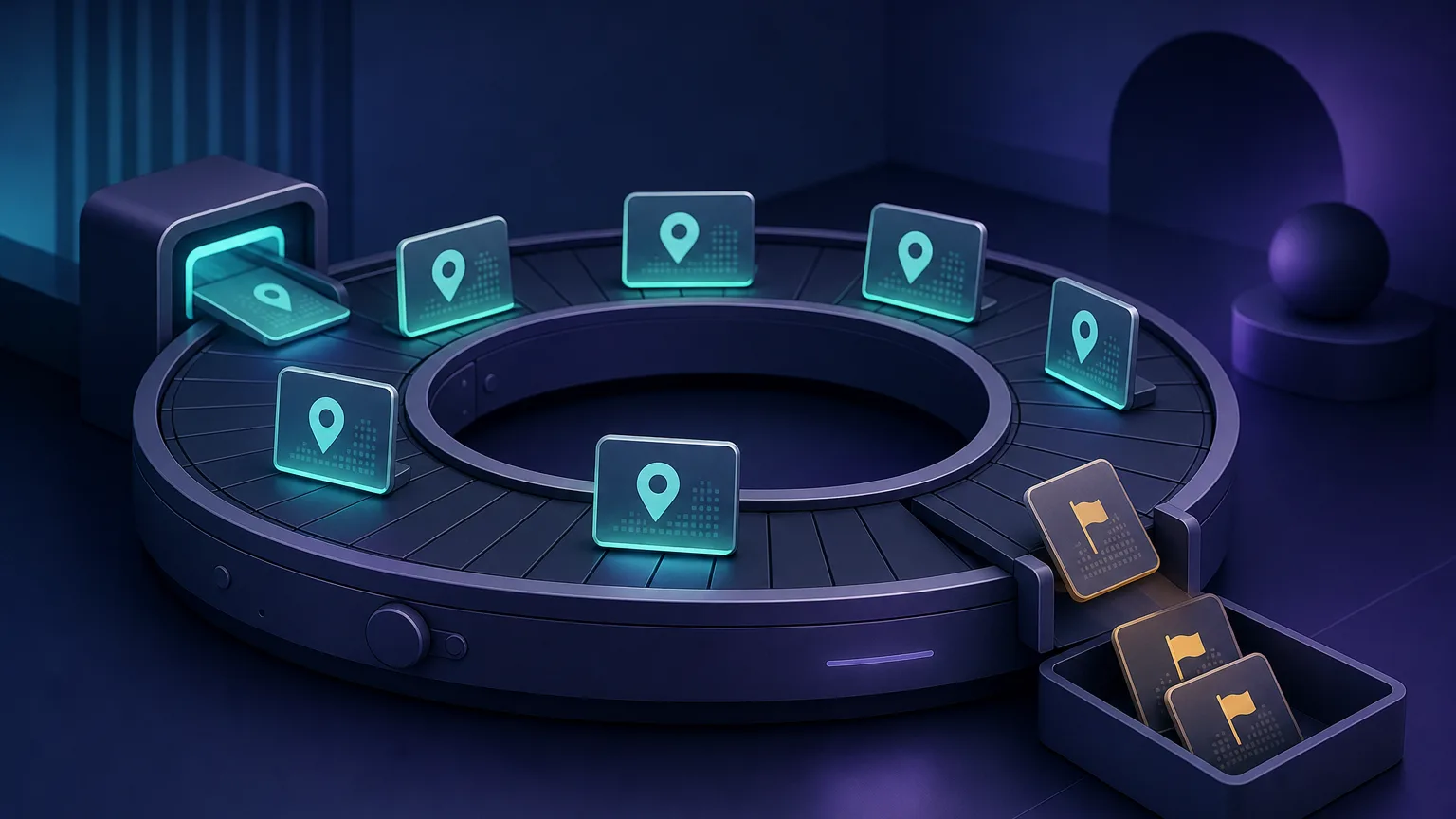
Simultaneously, the explosion of AI training data collection has dramatically increased the volume of traffic flowing through residential proxy pools. More traffic means faster accumulation of detection history. IPs that would have remained clean for months are now being flagged within days or even hours on high-value targets. This accelerated flagging cycle makes pool refresh rate — how quickly providers cycle out flagged IPs and source fresh ones — the most important operational quality metric after raw cleanliness itself.
The providers that have invested in rapid pool refresh and ethical IP sourcing are pulling ahead of those that have not, and that gap will continue to widen as detection systems improve and traffic volumes increase.
The Pre-Purchase Checklist: Four Questions to Ask Any Provider
Based on everything our testing has revealed, here is the specific set of questions I would put to any proxy provider before committing to a significant volume purchase.
- What percentage of your residential IPs are sourced through explicit opt-in from device owners? Ethical opt-in sourcing is not just a values question — it produces cleaner IPs, because the IPs come from devices that are used normally by real people between scraping sessions, which maintains their genuine residential traffic patterns.
- How frequently do you cycle flagged IPs out of active rotation? The best providers have automated systems that detect flagging signals in real time and remove IPs from rotation within minutes. Providers without this infrastructure may leave flagged IPs in rotation for hours or days.
- What is your policy on refunding bandwidth consumed by failed requests? Providers with genuinely clean pools are confident enough in their success rates to offer some form of failed-request credit. Providers with poor-quality pools typically do not, because their failure rate would make it commercially unviable.
- Can I trial against my real targets first? Almost every serious provider offers either a free trial tier or a low-cost test package. Run your specific target through their IPs before buying volume.
The 30-minute rule
The 30 minutes it takes to run a real test against your real targets tells you more about whether a provider is right for your use case than any benchmark report — including ours.
Frequently Asked Questions
What counts as a good IP cleanliness score?
On our 0–10 composite scale, anything at 9.0 or above is a genuinely clean pool suitable for the hardest targets. Scores between 7.0 and 8.9 are workable for most production use, and anything below 7.0 means a meaningful share of the pool arrives at targets already flagged.
Does a bigger proxy pool mean cleaner IPs?
No — and our rankings prove it. NodeMaven scores 9.5 with a pool of roughly 30 million IPs, ahead of providers with far larger advertised pools. What matters is the proportion of the pool that is unflagged and genuinely residential, not the headline number.
How can I tell if a "residential" proxy is really residential?
Check the ASN of the IPs you receive. Genuine residential IPs come from ASNs operated by consumer ISPs such as Comcast, BT, Deutsche Telekom, or Jio. If a residential-labelled IP resolves to a datacenter or cloud-provider ASN, it is likely fake residential — and modern detection systems will treat it accordingly.
How quickly should a provider remove flagged IPs?
The best providers detect flagging signals in real time and pull IPs from rotation within minutes. In 2026, with high-value targets flagging IPs within days or even hours, anything slower than that leaves you paying for bandwidth on IPs that are already burned.
Pool cleanliness is the metric hiding behind almost every unexplained success-rate difference between providers that look identical on paper. If you are choosing a provider right now, start from the tiers above, shortlist two or three, and run your own 30-minute trial against your actual targets — and for the full performance data behind these rankings, read our complete 50-provider benchmark.
Frequently asked questions
A clean pool is one whose IP addresses have good reputations — they have not been recently abused, blacklisted, or flagged by major websites and anti-bot systems. Clean IPs get through to target sites without instant blocks or CAPTCHAs, which is the whole point of paying for quality proxies. Cleanliness depends on how a provider sources, screens, and refreshes its addresses.
Run a trial against your actual targets and measure the real success rate rather than trusting marketing numbers. Check a sample of exit IPs against public reputation and blacklist databases, look at which ASNs they belong to, and watch how often you hit CAPTCHAs or blocks. A short, hands-on test reveals far more than headline pool sizes.
Pools get flagged when their IPs are overused, shared among too many customers, or sourced from questionable means like malware-bundled apps. Heavy abuse by other users burns an address's reputation, and you inherit that baggage when the same IP is handed to you. Providers that continuously screen and rotate their pools keep flag rates low.
No. Pool size and cleanliness are different things — a provider can advertise tens of millions of IPs while many are stale, recycled, or already blocked. What matters is the quality and freshness of the addresses you actually receive, measured by success rate on your targets, not the headline number.
No single factor guarantees access. A clean IP dramatically lowers block rates, but your request volume, rotation behavior, and browser fingerprint all still matter. Pair clean IPs with sensible pacing and proper fingerprinting for the best results.