








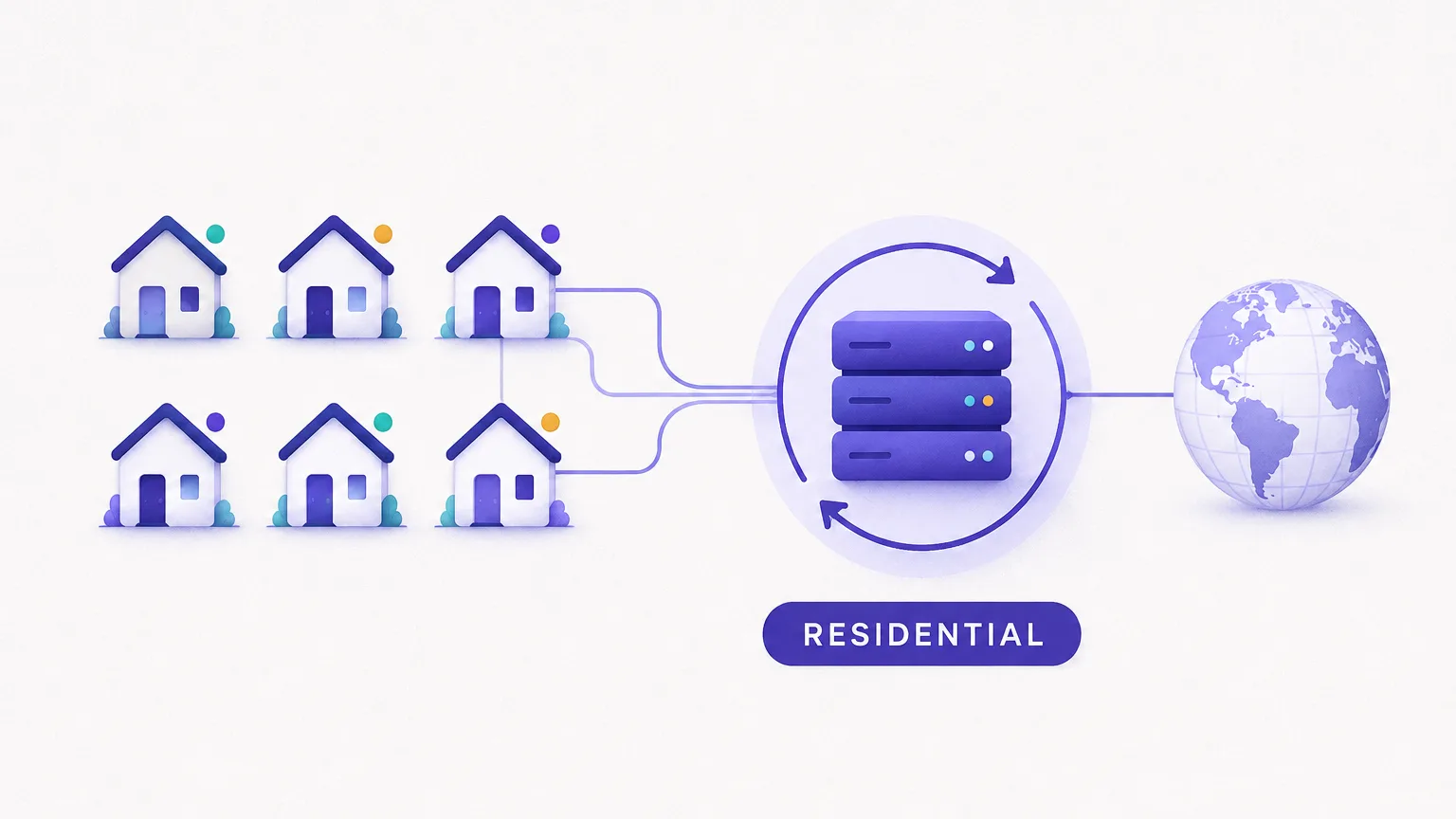
Residential proxies are the workhorse of serious web data collection. Because they route your traffic through real IP addresses assigned by real ISPs to real households, they're far harder for anti-bot systems to detect and block than datacenter IPs — which is exactly why they cost more and why choosing the right provider matters. The market is crowded with networks making near-identical claims about pool size and success rates, so this guide cuts through it: nine providers we rate highest in 2026, what each one is genuinely best at, honest pricing, and the trade-offs nobody puts on their landing page.
How we evaluated these providers
Pool size makes for good marketing but poor decision-making. A network with 200 million advertised IPs isn't automatically better than one with 30 million — what matters is how many of those IPs are clean, reachable, and in the country you actually need. We weighted these factors:
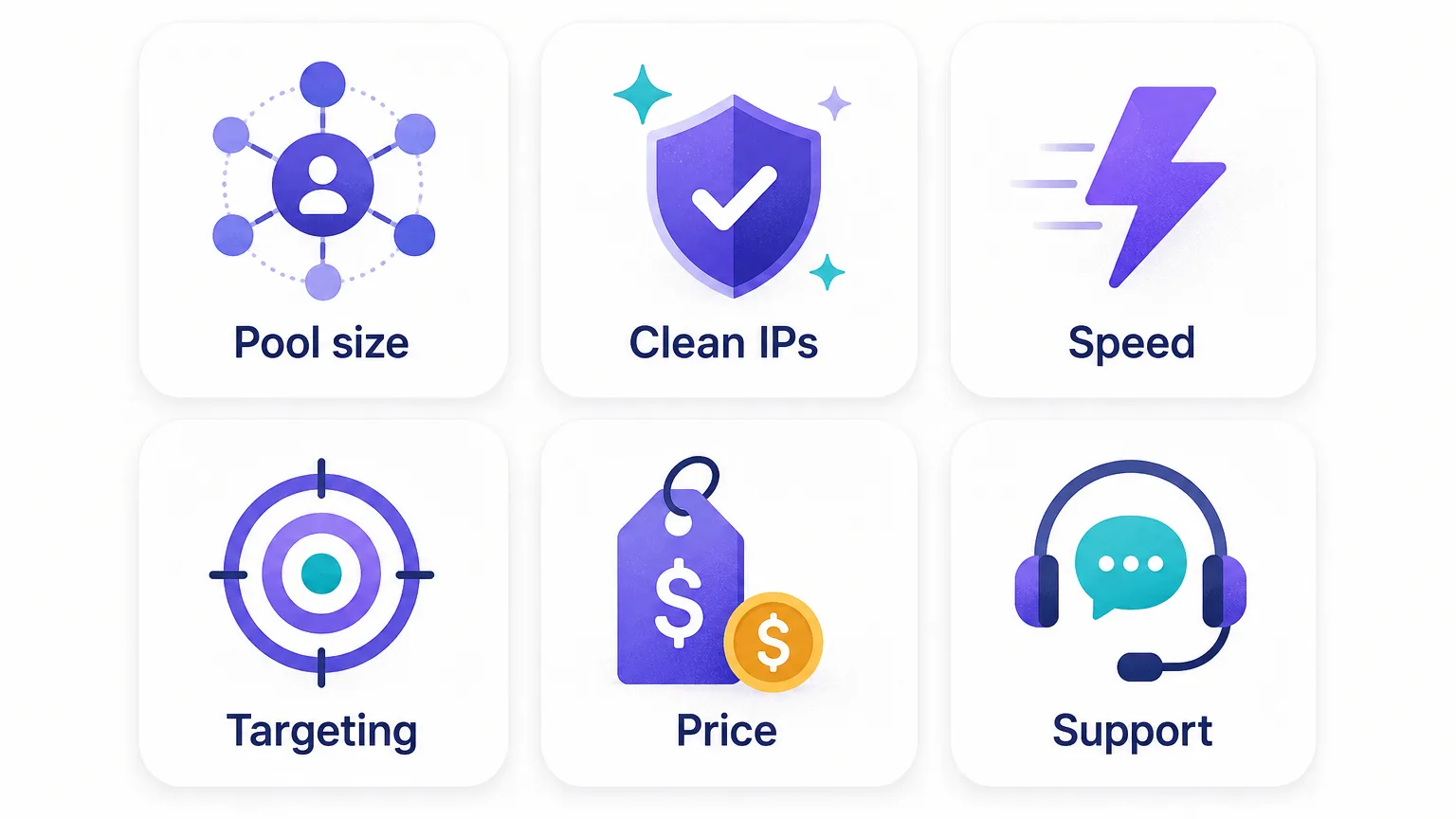
- IP quality over raw count. Clean, un-flagged IPs beat a bigger pool of exhausted ones every time.
- Success rate on defended targets — the number that actually determines your cost per useful request.
- Speed and stability, measured by average response time and session persistence.
- Targeting granularity — country, city, and ASN/carrier control.
- Honest pricing, including whether bandwidth expires and how steep the commitment is.
- Sourcing and compliance, which increasingly decides whether a vendor clears your legal review.
Quick comparison
| Provider | Pool | From | Avg. response | Best for |
|---|---|---|---|---|
| Smartproxy | 55M+ | $3.50/GB | 0.55s | Best overall |
| Oxylabs | 100M+ | $8.00/GB | 0.6s | Hardest targets |
| Bright Data | 72M+ | $5.04/GB | 0.7s | Scale & tooling |
| NetNut | 85M+ | $2.95/GB | 0.6s | Speed & stability |
| Massive | 1M+ | $5.00/GB | 0.7s | Compliance reviews |
| NodeMaven | 30M+ | $3.50/GB | <1s | Clean IPs, accounts |
| Live Proxies | 500K+ | $2.00/GB | 0.6s | Social & sneakers |
| IPRoyal | 34M+ | $1.75/GB | 0.6s | Pay-as-you-go |
| LunaProxy | 200M+ | $0.85/GB | 0.6s | Tight budgets |
1. Smartproxy — best overall
Smartproxy (now rebranding as Decodo) is the provider we most often recommend to people who don't have a strong reason to pick something else. It pairs a capable 55M+ residential network with the cleanest dashboard in the category and the fastest average response time we've measured here at roughly 0.55 seconds. Entry pricing around $3.50/GB sits in the fair middle of the market, and a free trial lets you validate it on your own targets first.
The honest trade-off: its pool is mid-sized next to the 100M+ enterprise networks, and on the very hardest anti-bot targets its success rate can trail the top tier. For the large majority of scraping, price monitoring, and multi-account work, that gap won't cost you anything — and the onboarding experience is meaningfully better.

Powerful proxies without the enterprise price tag.
2. Oxylabs — best for the hardest targets
When success rate matters more than invoice size, Oxylabs is the pick. Its 100M+ residential pool is among the largest anywhere, AI-driven proxy management reduces manual rotation tuning, and SOC 2 compliance clears most enterprise security reviews. Support with dedicated account managers is consistently well regarded.
You pay for it: entry pricing starts around $8.00/GB, the highest in this list, and the scraper APIs are billed separately, which complicates forecasting. It's built for high-volume teams and is genuine overkill for casual users. We've broken the tiers down in detail in our Oxylabs pricing guide.

Premium proxies built for enterprise scraping.
3. Bright Data — best for scale and tooling
Bright Data is the enterprise default, and the surrounding toolset is the real differentiator: Web Unlocker, SERP API, and Scraping Browser automate away unblocking and CAPTCHA handling rather than leaving you to engineer it. The 72M+ residential pool (plus 7M+ mobile) comes with targeting down to city and ASN/carrier, 99.99% uptime, and detailed logs for auditing spend.
The costs are real: premium per-GB pricing from about $5.04, a dense dashboard with a genuine learning curve, and a KYC approval process that can slow onboarding for smaller accounts. Platform products bill separately, so model your total carefully before committing.

4. NetNut — best for speed and stable sessions
NetNut takes an architecturally different route: an ISP-direct backbone rather than a purely peer-routed network. The result is low latency and unusually stable sessions across roughly 85M residential IPs, which matters enormously for workflows that need a consistent identity over minutes rather than seconds. Entry pricing around $2.95/GB is competitive for what you get, and the product range spans residential, ISP, mobile, and datacenter.
The dashboard is less polished than Smartproxy's, and the best per-unit value only unlocks at larger commitments — so it rewards teams with predictable volume more than occasional users.

ISP-backed residential proxies built for speed and stability at scale
5. Massive — best when compliance decides
Massive is the answer to a specific and increasingly common problem: your legal or security team needs to approve the vendor. Its network is fully consent-based and ethically sourced, with a SOC2-aligned posture and genuine transparency about data provenance — which makes vendor review dramatically easier than with networks whose sourcing is murky.
At around 1M+ IPs it's far smaller than the mega-networks, with fewer long-tail geo locations, and at roughly $5.00/GB it's rarely the cheapest option. If sourcing ethics aren't a gating factor for you, you can buy more raw scale elsewhere for the money — but if they are, this is the straightforward choice. We cover why this matters in our piece on ethically sourced proxy IPs.

Ethically sourced, consent-based residential proxy network
6. NodeMaven — best for clean IPs and account work
NodeMaven treats IP cleanliness as the actual product rather than a footnote, applying real-time filtering so you get a high proportion of un-flagged IPs. In practice it punches above its weight class on well-defended targets, and the long sticky sessions suit account-management workflows where dropping identity mid-task means a ban.
Two things stand out commercially: bandwidth that doesn't expire on most plans — genuinely buyer-friendly in a category that loves expiry clocks — and granular city and ISP targeting. The 30M+ pool is smaller than the incumbents and per-GB pricing from $3.50 is mid-market rather than cheap.

Sticky residential and mobile IPs with strong filtering and clean pools.
7. Live Proxies — best for social media and sneakers
Live Proxies is a boutique network that competes on IP quality instead of headline pool numbers. Its private, curated US, UK, and EU pools tend to be markedly cleaner and less flagged than shared mega-networks, which is precisely what social media automation and sneaker copping need — those targets punish recycled IPs harder than almost anything else.
The scope is deliberately narrow: around 500K IPs across roughly 40 countries, so if you need exotic long-tail geos this isn't your network. For US/UK/EU account work at $2.00/GB, the less-crowded pools deliver more consistent results than the raw numbers suggest.

Curated, private residential pools for US, UK and EU targets
8. IPRoyal — best true pay-as-you-go
IPRoyal's appeal is commercial rather than technical: genuine pay-as-you-go with non-expiring traffic, starting around $1.75/GB across a 34M+ pool covering 195 countries. If your usage is irregular — a burst of scraping one month, nothing the next — a subscription model actively punishes you, and this doesn't.
Worth knowing before you commit: there's no free trial, so your first test costs money, and it doesn't reach the success rates of the premium tier on the most aggressively defended targets. For flexible, intermittent workloads it's excellent value.

Flexible proxies with true pay-as-you-go.
9. LunaProxy — best on a tight budget
LunaProxy competes hard on price, with per-GB rates from about $0.85, optional unlimited-traffic plans for heavy steady workloads, SOCKS5 support alongside HTTP/HTTPS, and notably strong Asia-Pacific coverage that many Western-focused networks lack.
Treat the 200M+ figure with caution
LunaProxy advertises a very large residential pool, but that number is hard to verify independently — as is true of several networks making similar claims. It's a relatively young brand, and support depth can vary on complex issues. Test on your own targets before scaling up.
Large residential pool with unlimited plans, SOCKS5 and budget per-GB rates
Residential vs datacenter vs ISP proxies
Before you buy residential, it's worth confirming you actually need it — the price gap between proxy types is large, and picking the wrong one is the most common way teams overspend.
| Residential | Datacenter | ISP (static residential) | |
|---|---|---|---|
| IP source | Real household ISP lines | Hosted servers | ISP-issued, datacenter-hosted |
| Detection risk | Low | High | Low |
| Speed | Moderate | Fastest | Fast |
| Typical cost | $1–8/GB | Under $1/GB | Per IP, monthly |
| Session stability | Rotating by default | Stable | Very stable |
| Best for | Protected targets | Easy targets, volume | Long-lived logins |
The rule of thumb: try datacenter first and escalate only when you're actually blocked. Residential earns its premium on defended targets, and ISP proxies are the specialist choice when you need one stable, trusted identity held over hours rather than a rotating pool. Mobile proxies sit above all three in both price and trust, and are worth reaching for only when a target specifically demands a cellular IP.
One practical consequence of that hierarchy: many teams end up running a mix rather than a single contract. Datacenter handles the bulk of easy, high-volume fetching, residential covers the pages that fight back, and a handful of ISP addresses hold the logged-in sessions. Splitting the workload this way routinely cuts a proxy bill by more than switching provider ever would.
What residential proxy pricing actually looks like
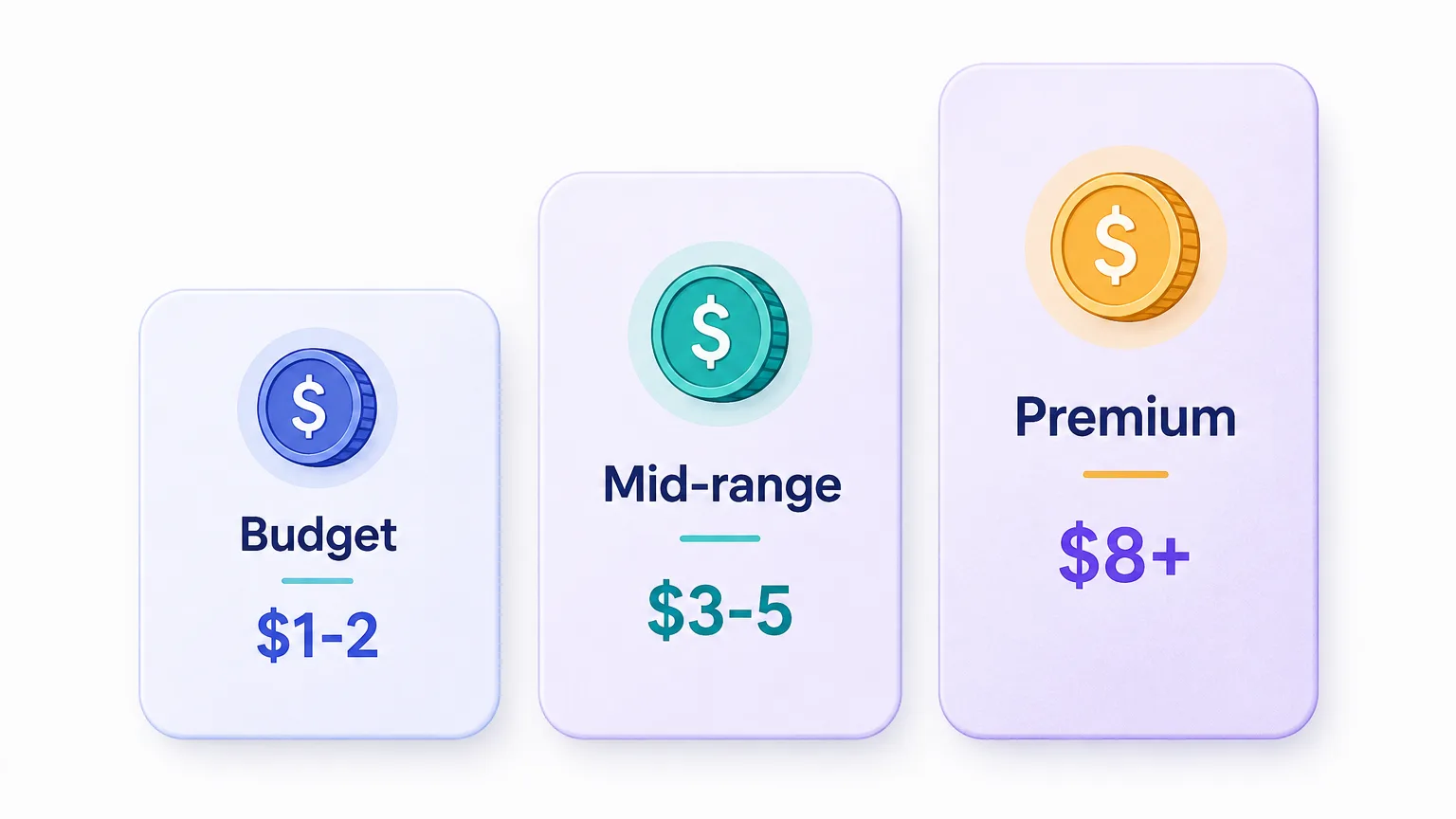
Residential proxies are almost always billed per gigabyte, and the market sorts into three fairly clear tiers.
The mistake most teams make is optimising the headline rate instead of the cost per successful request. A provider at $2/GB with an 80% success rate is more expensive in practice than one at $4/GB hitting 98%, because you pay for every failed attempt in both bandwidth and engineering time. Model the real number before you switch to save money.
A quick way to estimate your bill
With images and unnecessary assets blocked, a typical product page transfers roughly 500 KB — so one gigabyte covers about 2,000 pages. Scraping 100,000 pages a month is therefore around 50 GB, which is $175 at $3.50/GB. Halving your per-page bytes halves that bill directly.
How to choose the right one for you
- Start with your target's difficulty. Easy sites don't need residential at all — datacenter proxies are far cheaper. Escalate only when you're actually blocked.
- Match geography to your need. If you only need US and EU coverage, a curated regional network often beats a global mega-pool on IP quality.
- Check whether bandwidth expires. For irregular usage, non-expiring traffic is worth more than a slightly lower rate.
- Always use the free trial. Success rates vary enormously by target; the only test that matters is on your sites.
- Weigh compliance early. If procurement will review the vendor, sourcing transparency can matter more than price or pool size.
Red flags to avoid
The residential proxy market has a low-quality end that's worth actively steering around:
- Free proxy lists. Many are honeypots that exist to harvest the traffic of people who think they've found a bargain. Never route anything sensitive through one.
- Unverifiable pool claims. Enormous advertised numbers with no methodology behind them are marketing, not capacity.
- Opaque sourcing. If a provider won't explain how it obtained consent from the devices carrying your traffic, assume the answer isn't flattering.
- Aggressive bandwidth expiry. Traffic that vanishes in 30 days quietly raises your effective rate well above the advertised one.
- No trial. Reputable networks are confident enough to let you test first.
Test before you commit
Every provider here except IPRoyal offers a free trial. Run the same 500-request job against your real targets on two or three shortlisted networks and compare success rate, latency, and bandwidth consumed. That single afternoon of testing will tell you more than any review — including this one.
The bottom line
For most people, Smartproxy is the right default: fast, fairly priced at $3.50/GB, and by far the easiest to get started with. Step up to Oxylabs or Bright Data when success rate against hostile anti-bot systems justifies premium pricing, or to NetNut when session stability and speed are the binding constraint. Pick Massive when compliance decides the purchase, NodeMaven or Live Proxies when IP cleanliness matters more than pool size, and IPRoyal or LunaProxy when budget and flexibility lead. Whatever you shortlist, evaluate on cost per successful request rather than headline per-GB rate, and test on your own targets before committing — that's the only benchmark that reflects your actual workload. New to the category? Start with our explainer on how residential proxies work.
Frequently asked questions
For most users Smartproxy (rebranding as Decodo) is the best overall choice, combining a 55M+ pool, the fastest average response time here at around 0.55s, and fair pricing from about $3.50/GB. Oxylabs and Bright Data are stronger on the hardest anti-bot targets but cost significantly more.
Residential proxies are billed per gigabyte and sort into three tiers: budget at roughly $1-2/GB, mid-range at $3-5/GB, and premium at $8+/GB. What matters more than the headline rate is cost per successful request — a cheap proxy with a poor success rate often works out more expensive.
Only for targets that actually block datacenter IPs. Residential proxies use real household ISP addresses so they are much harder to detect, but they cost several times more and are slower. The cost-effective approach is to try datacenter first and escalate to residential only when you are blocked.
Using residential proxies is legal in most countries, and they are standard tools for price monitoring, ad verification and market research. Legality depends on what you do with them, not the proxies themselves. Choose providers with transparent, consent-based IP sourcing, since ethically sourced networks are far easier to clear through a legal or procurement review.
LunaProxy offers the lowest entry rate in this list at around $0.85/GB with optional unlimited-traffic plans, and IPRoyal is strong for irregular use at about $1.75/GB with non-expiring pay-as-you-go traffic. Be cautious with very large advertised pool figures that cannot be independently verified.
Most do. Of the nine providers covered here, every one except IPRoyal offers a free trial. Always use it — success rates vary enormously depending on the sites you target, so the only benchmark that reflects your workload is a test against your own targets.