











Antidetect Browser
An antidetect browser lets you run many isolated browser profiles, each with its own unique fingerprint, so multiple accounts can operate without being linked together.
Antidetect Browser explained
An antidetect browser creates separate, sandboxed environments, each presenting a distinct browser fingerprint: user agent, screen and hardware details, fonts, time zone, WebGL and canvas signatures, and more. Cookies and storage are isolated per profile, so sites cannot connect one account to another.
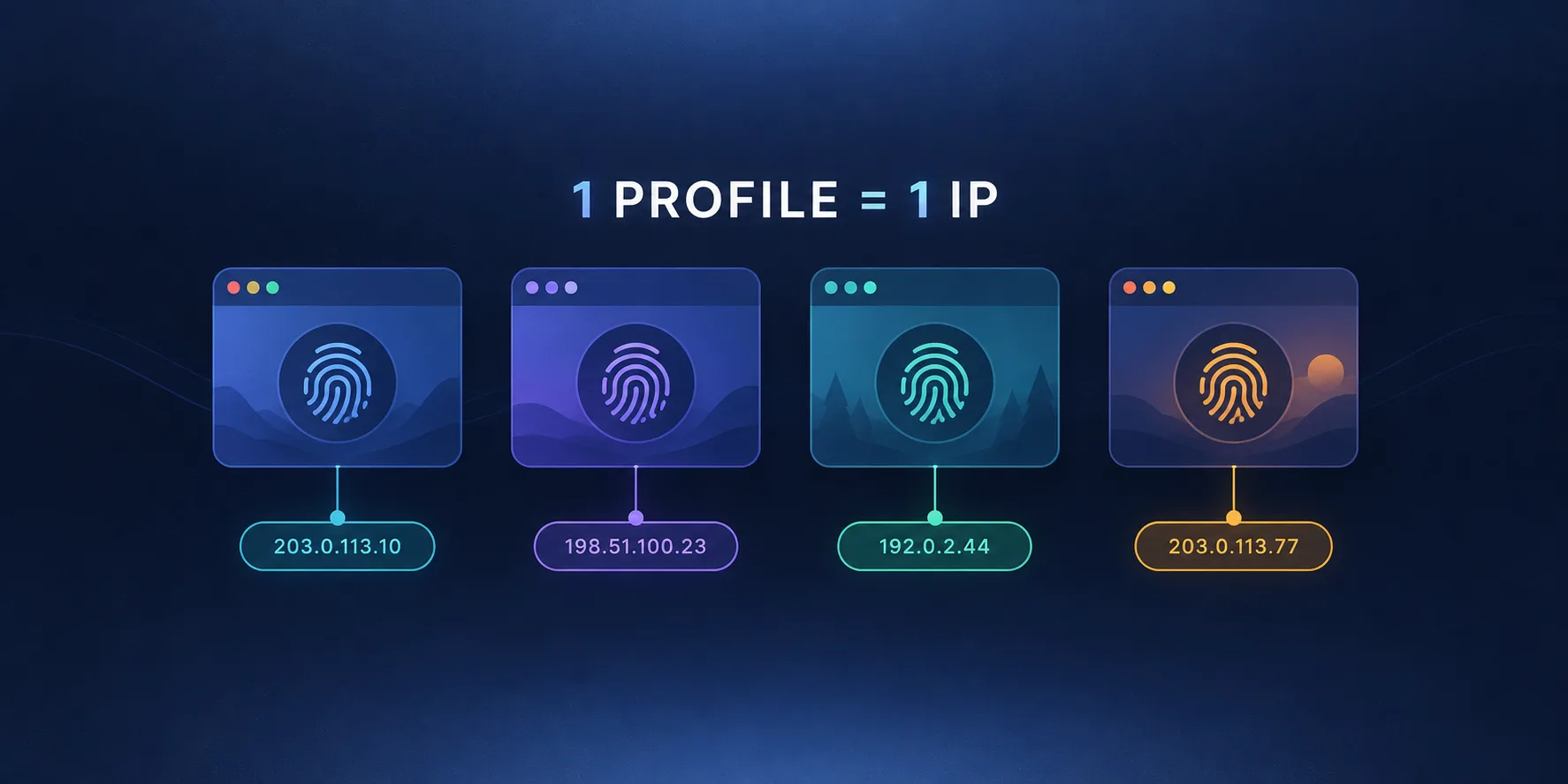
Paired with a proxy per profile, each identity appears to come from a different device and location. That combination is what makes it possible to manage dozens or hundreds of accounts on platforms that actively hunt for linked identities.
How it differs from incognito
Private windows only clear cookies locally. An antidetect browser actively spoofs the fingerprint and isolates each profile, which incognito mode does not do.
Examples
- 01Running 50 social media accounts from one machine without links
- 02Operating multiple ad accounts that ban connected identities
- 03Managing several marketplace seller accounts in parallel
Common use cases
Frequently asked questions
It runs multiple isolated profiles, each with a unique fingerprint and separate cookies, so you can operate many accounts without sites linking them to one device.
The software itself is legal. Whether a specific use is allowed depends on the platform terms of service, which often restrict multi-accounting, and on applicable law.
Incognito only clears local cookies for a session. An antidetect browser spoofs the full fingerprint and keeps each profile isolated with its own storage and identity.
Usually yes. A unique fingerprint still shares one IP without proxies, so each profile is typically paired with its own residential or mobile proxy to look like a separate device and location.
Commonly the user agent, screen resolution, hardware concurrency, fonts, time zone, language, WebGL and canvas signatures, and audio and media device details.
It depends on the tool plan and your hardware. Cloud-based options scale to hundreds, while local profiles are limited by your machine memory and CPU.
Ready to put this into practice?
See our independently-scored picks.