







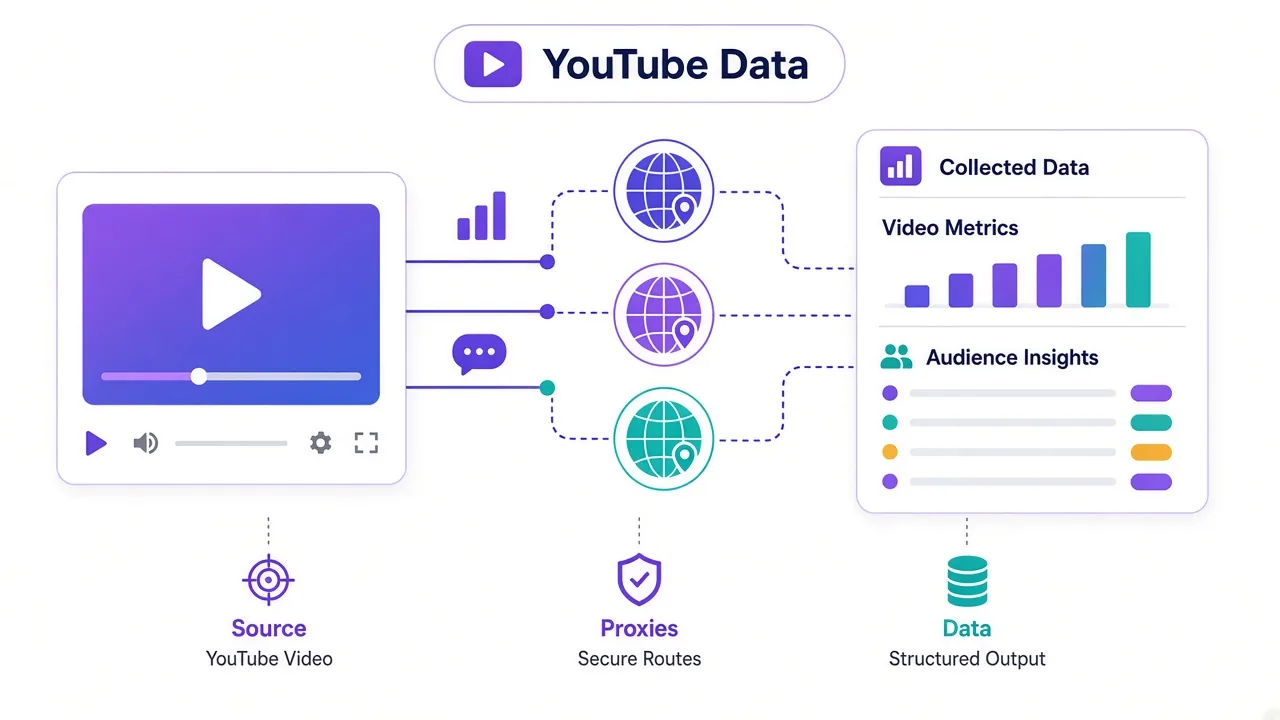

Amazon is the richest source of e-commerce data on the internet — prices, Buy Box winners, reviews, rankings, stock levels, and more — and also one of the hardest sites to scrape at scale. Its anti-bot systems watch IP behavior closely, and a single address making too many requests is throttled, CAPTCHA-walled, or banned within minutes. The tool that makes reliable Amazon data collection possible is a proxy: it spreads your requests across many clean IP addresses so your scraper blends in with normal shoppers. This guide explains why Amazon needs proxies, what to look for, and ranks the six we rate highest for the job in 2026.
Why scraping Amazon needs proxies
Amazon defends its data aggressively. Send a few hundred requests from one IP and you'll hit rate limits, then CAPTCHAs, then an outright block — long before you've collected a useful dataset. Amazon also personalizes prices, availability, and even which seller wins the Buy Box based on the visitor's location, so data pulled from a single office IP is both incomplete and geographically skewed.
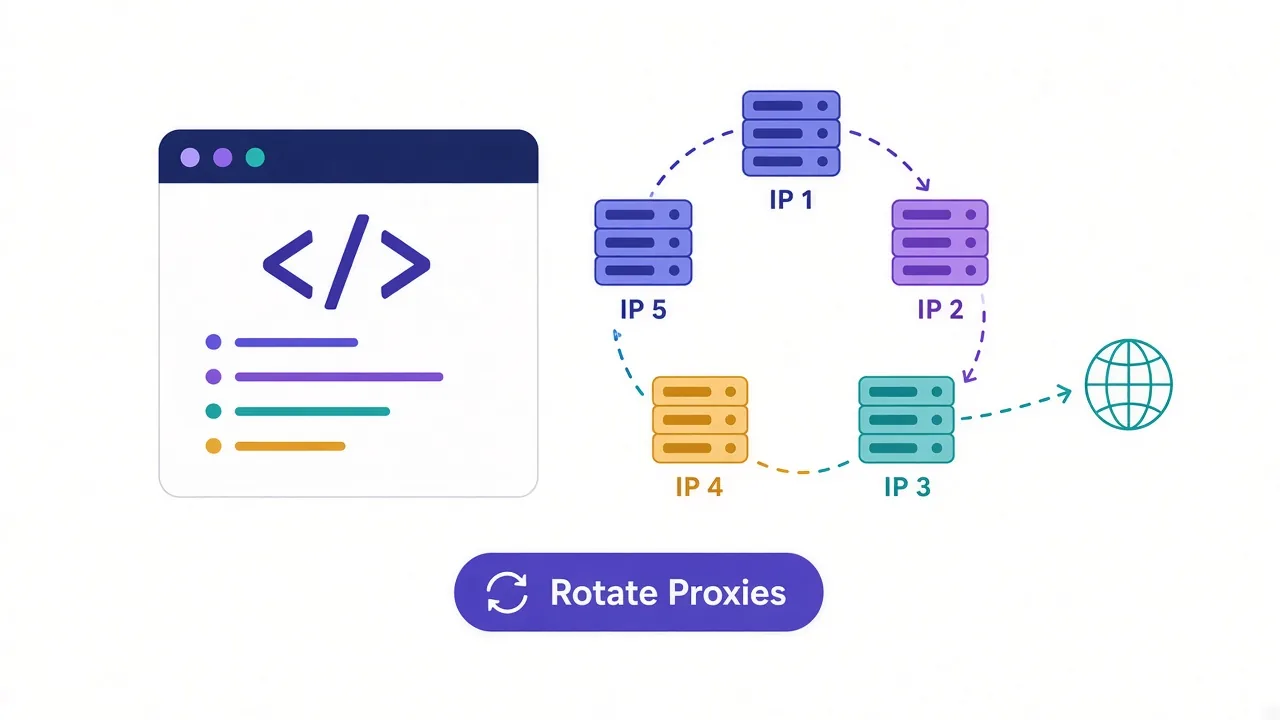
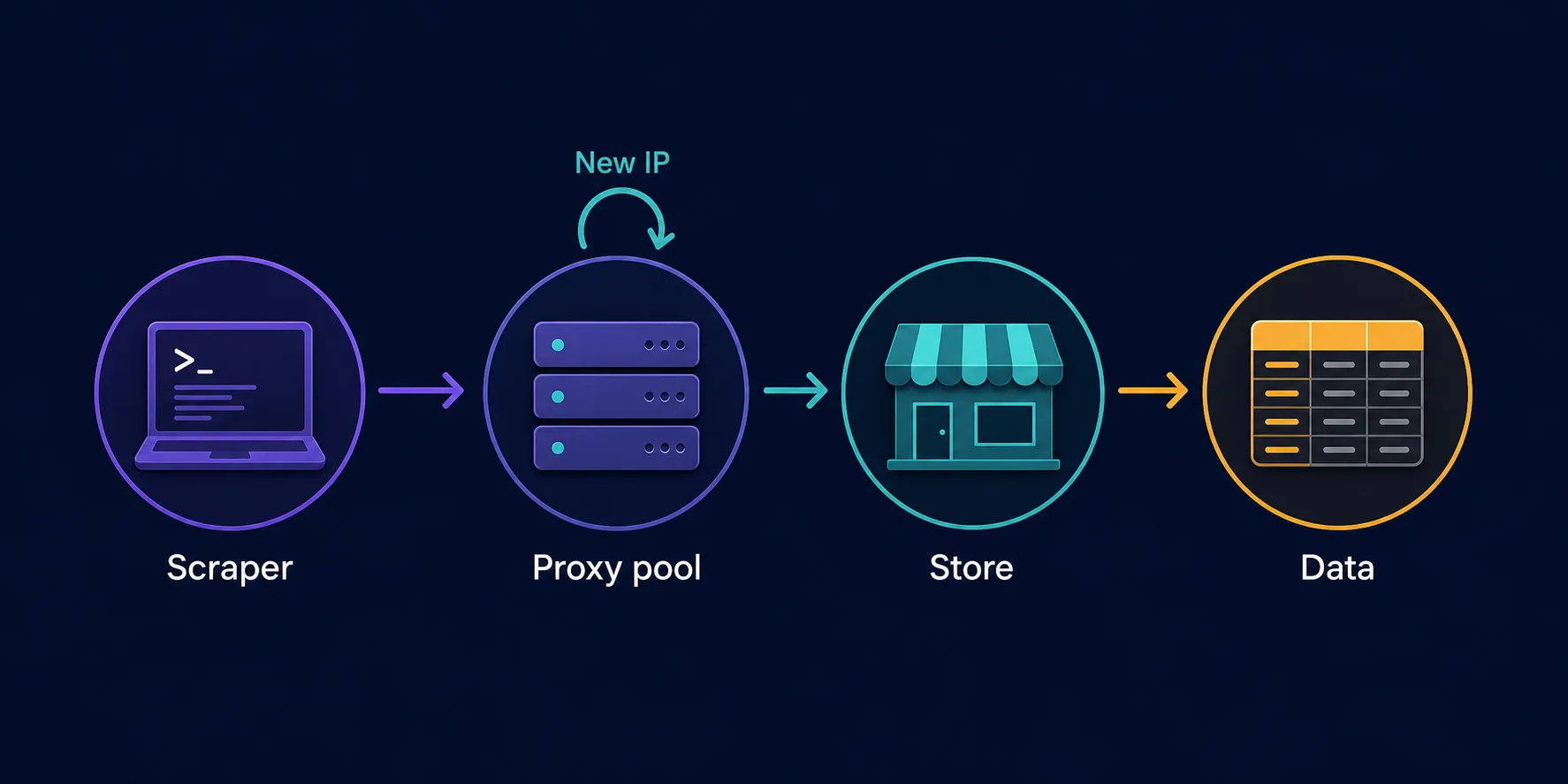
A proxy solves both problems. By routing each request through a different IP — ideally a real residential address in the market you're studying — your scraper looks like many separate shoppers rather than one machine hammering the site. You get complete, un-blocked datasets and you see exactly what a local customer would. Because rotation is central to this, it's worth understanding how proxy rotation works before you start.
What people scrape from Amazon
"Amazon scraping" covers a wide range of data jobs, and proxies underpin all of them:
- Price monitoring — tracking your own and competitors' prices across regions and over time.
- Buy Box tracking — seeing which seller wins the Buy Box for a product, and when it changes.
- Product & ASIN data — titles, descriptions, images, specs, and variations at scale.
- Review & rating mining — collecting customer sentiment and volume for research.
- Search rank & keyword tracking — measuring where products appear for given searches.
- Stock & availability — monitoring inventory and restocks for competitive intelligence.
What makes a proxy good for Amazon scraping
Not every proxy survives Amazon. When we evaluate providers for this use case, five factors matter most:
- Clean IPs and high success rate. The metric that really counts is how many requests return usable data. Stale or flagged IPs waste budget and leave gaps.
- The right IP type. Residential IPs blend in on Amazon's toughest pages; fast datacenter IPs are cheaper for high-volume work on lenient endpoints.
- A scraper API option. The best providers offer Amazon-aware scraper APIs that handle rotation, retries, CAPTCHAs, and parsing — a huge time-saver over building it yourself.
- Geo-targeting. Amazon data is location-specific, so you need IPs in the exact countries and marketplaces you're tracking (amazon.com, .co.uk, .de, and so on).
- Scale and pricing. Amazon jobs are large, so pool size, concurrency, and a pricing model that matches your volume all matter.
Residential vs datacenter proxies for Amazon
The biggest choice is which IP type to use, and the answer depends on how hard your target pages are.
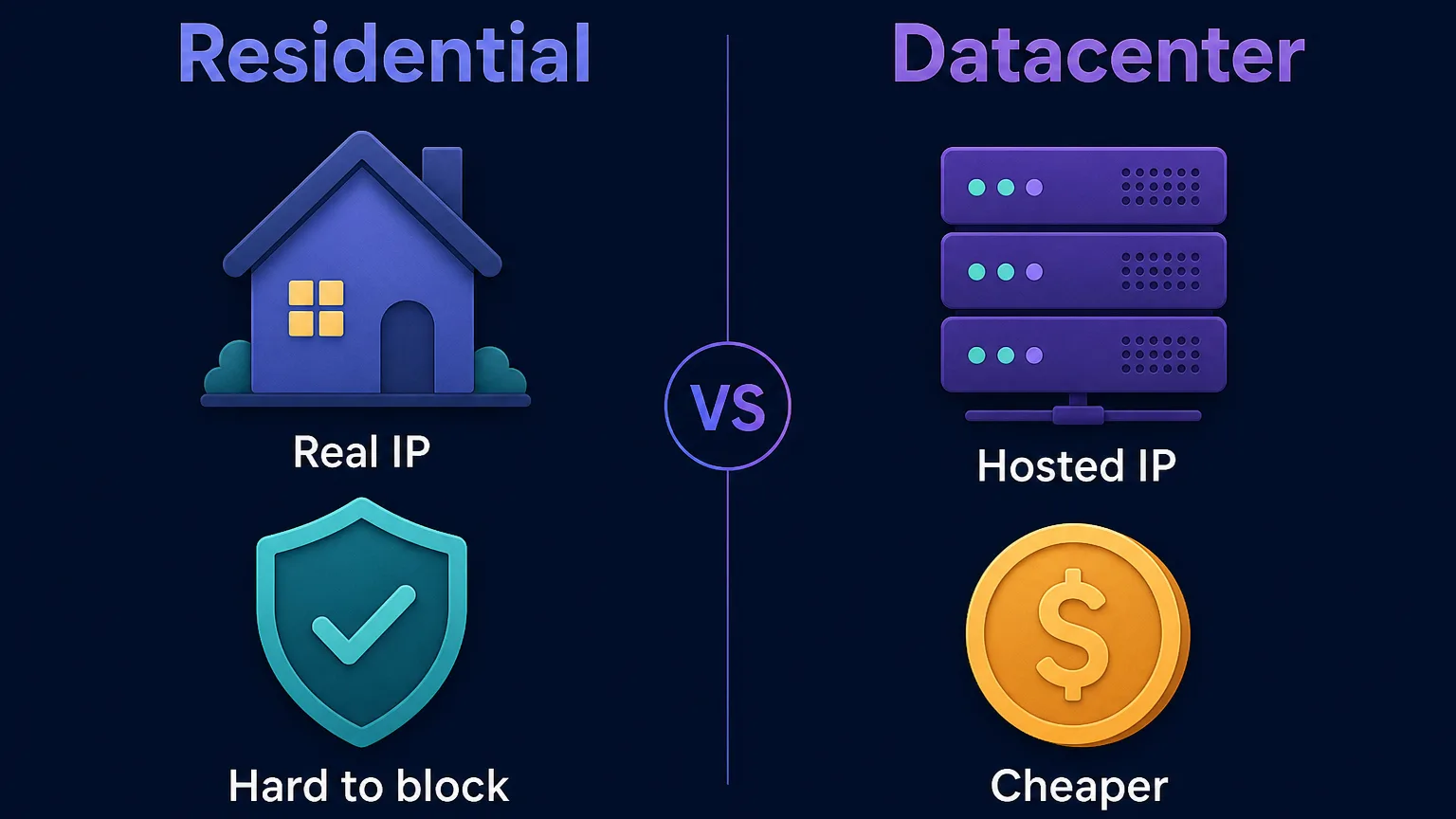
- Residential proxies route through real home IPs, so Amazon treats them as genuine shoppers. They're the default for product pages, Buy Box, and anything with strong anti-bot defenses. Our guide to residential proxies covers how these pools work.
- Datacenter proxies are fast and cheap, ideal for high-volume runs against lighter endpoints, but Amazon detects and blocks them more readily on defended pages.
- Scraper APIs sit on top of a proxy network and return parsed Amazon data directly, choosing the right IP type and handling anti-bot for you — the least-effort path to clean data.
Rule of thumb
Use residential IPs (or a scraper API) for defended pages like product and Buy Box data; use datacenter IPs to cut costs on high-volume, less-defended endpoints. When in doubt, a scraper API takes the guesswork out.
The best proxies for Amazon scraping in 2026
These six lead for Amazon data collection, judged on IP quality, scraper tooling, geo-coverage, and scale. Pricing changes often, so confirm current rates with each provider. All six come from our independent, hands-on proxy reviews.
1. ProxyEmpire — best for flexible, marketplace-targeted scraping
ProxyEmpire takes our top spot because it fits the way Amazon scraping actually runs. Amazon jobs are bursty — a heavy crawl ahead of a pricing review, then quieter weeks — and ProxyEmpire's bandwidth rollover means unused residential traffic carries into the next cycle instead of expiring. Its targeting reaches down to country, city, carrier, and ASN across roughly 170 countries, so you can pin amazon.co.uk to UK IPs and amazon.de to German ones, and trust that the prices and Buy Box winners you collect match the real local page. A strong rotating mobile network gives you an escalation path for Amazon's most heavily defended pages, and a free trial from $3.50/GB lets you measure real success rates before committing. The trade-offs are worth knowing: at 10M+ IPs its residential pool is smaller than the enterprise networks below, and it doesn't offer a dedicated Amazon scraper API, so you bring your own scraper. For teams that do, it's the most flexible option here.

Rollover-friendly residential and mobile proxies with granular targeting
2. Bright Data — best for data breadth and datasets
Bright Data is the most complete data-collection platform on the market, which is exactly what serious Amazon scraping needs. Its huge residential network (72M+ IPs) pairs with a Web Scraper IDE, a Scraping Browser, and ready-made Amazon datasets you can buy outright — so you can pull structured product, pricing, and review data without building a scraper. Its ethical-sourcing and compliance controls are the strongest in the industry. It's premium-priced with a learning curve, but for breadth and depth of Amazon data, nothing beats it.

3. Oxylabs — best for enterprise e-commerce scraping
Oxylabs is the go-to for Amazon scraping at serious volume. Its 100M+ residential pool and purpose-built E-Commerce Scraper API — with dedicated, structured endpoints for Amazon product, pricing, and review data plus an AI-driven parser — are engineered for reliability on the toughest pages. Enterprise SLAs and support give data teams the stability long projects need. Like Bright Data it sits at the premium end, but for mission-critical, high-throughput Amazon collection it's a dependable heavyweight.

Premium proxies built for enterprise scraping.
4. Smartproxy (Decodo) — best value for most teams
For teams that want reliable Amazon data without enterprise pricing, Smartproxy (now Decodo) is the sweet spot. A 55M+ residential pool, an easy dashboard, and a dedicated eCommerce scraping API that returns parsed Amazon results make it approachable for analysts who aren't engineers, and a free trial lets you test first. It's the provider we most often recommend to SMBs and mid-market teams building an Amazon data pipeline on a sensible budget.

Powerful proxies without the enterprise price tag.
5. Rayobyte — best for budget datacenter at scale
Rayobyte is a US-based provider with a large datacenter footprint, making it a strong, cost-effective choice for high-volume Amazon scraping of lighter endpoints where residential isn't required. It also offers residential and ISP proxies for harder pages, plus a scraping-focused platform and generous, flexible plans. For operators who need to keep per-request costs low without sacrificing reliability, Rayobyte delivers real value.

US-based proxy and scraping platform with a big datacenter footprint.
6. ScraperAPI — best no-code scraper API
ScraperAPI is built for teams that want Amazon data without managing proxies at all. Its API automatically handles proxy rotation, retries, CAPTCHA solving, and JavaScript rendering, with structured endpoints tuned for Amazon so you get clean results from a single call. If your priority is a low-maintenance pipeline that just returns parsed Amazon data — and you'd rather not build the anti-bot layer yourself — ScraperAPI is purpose-built for it.

Web scraping API with automatic proxy rotation, retries and CAPTCHA handling
| Provider | Best for | Scraper API | Standout strength |
|---|---|---|---|
| ProxyEmpire | Flexible geo-targeting | No | Bandwidth rollover + carrier/ASN targeting |
| Bright Data | Overall data breadth | Yes | Datasets + tools + largest network |
| Oxylabs | Enterprise scale | Yes | Amazon-specific e-commerce API |
| Smartproxy | Value & ease | Yes | Easy dashboard, free trial |
| Rayobyte | Budget datacenter | Partial | Low-cost high-volume scraping |
| ScraperAPI | No-code / hands-off | Yes | Auto anti-bot + Amazon endpoints |
How to choose for your use case
Match the provider to your situation rather than chasing a single "best":
- Running your own scraper and need marketplace-accurate data? ProxyEmpire — rollover bandwidth and city, carrier, and ASN targeting.
- Enterprise or high-volume, mission-critical? Bright Data or Oxylabs — deepest data and strongest reliability.
- Want parsed Amazon data with minimal effort? ScraperAPI or a provider's e-commerce scraper API.
- Mid-market on a sensible budget? Smartproxy — reliable residential and an easy API.
- High volume on a tight budget? Rayobyte — cheap datacenter for lighter endpoints.
Scraper API vs raw proxies: which for Amazon?
A key decision is whether to buy raw proxies and build your own scraper, or use a scraper API that returns parsed data. Raw proxies are cheaper per request and give you full control — the right choice if you have engineering resources and want to tune every detail of how you handle Amazon's pages. But you own the maintenance: rotation logic, CAPTCHA handling, parsing, and adapting when Amazon changes its layout.
A scraper API bundles all of that into a single call and returns structured Amazon data, so you trade a higher per-request price for near-zero maintenance. For most teams that just want the data, the API route works out cheaper once you count engineering time — especially given how often Amazon updates its defenses. A common pattern is to use raw residential proxies for custom, high-volume jobs and a scraper API for the fiddly, frequently-changing pages.
What does Amazon scraping cost?
Pricing depends on the model. Residential proxies are usually billed by bandwidth (per gigabyte), which suits Amazon because product pages are mostly text and consume little data — you can gather many records per gigabyte. Datacenter proxies are often billed per IP or per subscription, making them cheap for high-volume runs. Scraper APIs charge per successful request (or per thousand), bundling the proxy, retries, and parsing into one price.
The trap to avoid is judging on headline price alone. A cheap plan with a low success rate on Amazon can cost more per usable record than a pricier one that just works. Estimate your monthly record volume, run a small paid trial to measure the real success rate on your target Amazon pages, and budget from that — not from the sticker price.
How to scrape Amazon without getting blocked
Good tooling is half the battle; disciplined method is the other half. A few practices keep your Amazon jobs running:
- Rotate residential IPs on defended pages. Product, Buy Box, and search pages need clean residential addresses that change per request.
- Throttle and randomize. Even great IPs get flagged under aggressive request rates. Pace requests and vary timing so you don't look robotic.
- Match the marketplace to the geo. Scrape amazon.co.uk from UK IPs, amazon.de from German IPs, and so on, or your data won't reflect the real local page.
- Handle retries on fresh IPs. When a request fails or hits a CAPTCHA, retry on a different address rather than hammering the same one.
- Verify your exit location. A quick IP lookup confirms your requests are leaving from the country you intend before a big run.
- Cache and de-duplicate. Don't re-scrape unchanged pages; store results and only refresh what moves.
Is scraping Amazon legal?
Scraping publicly available data — prices, product details, public reviews — is common and generally lawful in many jurisdictions, and businesses do it every day for market research. That said, it exists in a nuanced area.
Scrape responsibly
Amazon's terms of service restrict automated access, so scraping can breach them even where it isn't illegal. Collect only public data (never personal information you have no right to), respect applicable laws like data-protection rules, don't overload the site, and choose a provider that sources its IPs ethically. When in doubt, consult legal counsel for your specific use case.
Common mistakes to avoid
- Using datacenter IPs on defended pages. They get blocked fast on product and Buy Box pages — use residential or a scraper API there.
- Buying on pool size alone. A huge advertised network is worthless if success rates on Amazon are low. Test on a trial first.
- Ignoring geo-accuracy. Scraping a marketplace from the wrong country returns prices and Buy Box winners that don't match reality.
- Scraping too aggressively. Hammering Amazon wastes IPs and can get your whole pool flagged. Throttle for sustainable collection.
- Building the anti-bot layer from scratch unnecessarily. If you're not an engineering shop, a scraper API is often cheaper than the maintenance of your own solution.
The bottom line
Amazon's defenses are real, so the proxy layer is what separates a complete, accurate dataset from a blocked, geo-skewed mess. ProxyEmpire is our top pick for teams running their own scrapers, pairing rollover bandwidth with marketplace-accurate city, carrier, and ASN targeting; Bright Data offers unmatched data breadth and ready-made Amazon datasets, Oxylabs scales to demanding enterprise workloads with a purpose-built e-commerce API, Smartproxy is the value choice for most teams, Rayobyte keeps high-volume datacenter scraping cheap, and ScraperAPI hands you parsed Amazon data with no anti-bot work at all. Match the tool to your scale and targets, lean residential (or a scraper API) for defended pages, collect responsibly, and your Amazon data will be something you can actually trust. Compare them in depth in our independent proxy reviews, or see our guide to the best proxies for market research for the wider data-collection picture.
Frequently asked questions
Amazon rate-limits and blocks IPs that make too many requests, and it personalizes prices and the Buy Box by location. Proxies spread your requests across many clean IPs so your scraper looks like many separate shoppers, and let you collect accurate data for specific marketplaces. Without them, Amazon data is either blocked or geographically skewed.
Residential proxies are best for defended pages like product and Buy Box data because they use real home IPs that Amazon trusts. Datacenter proxies are cheaper and faster for high-volume runs on lighter endpoints. A scraper API is the easiest option, choosing the right IP type and handling anti-bot for you.
Collecting publicly available data like prices and public reviews is common and generally lawful in many jurisdictions, but it is a nuanced area. Amazon's terms of service restrict automated access, so scraping can breach them even where it is not illegal. Collect only public data, respect applicable laws, avoid overloading the site, and consult legal counsel for your specific use case.
Residential proxies are usually billed per gigabyte, and since product pages are mostly text you get many records per GB. Datacenter proxies are cheaper, often billed per IP or subscription, while scraper APIs charge per successful request. Judge value by cost per usable record on Amazon, not the headline price, since a low success rate inflates the true cost.
Raw proxies are cheaper per request and give full control, which suits teams with engineering resources who want to tune everything. A scraper API bundles rotation, CAPTCHA handling, and parsing into one call for near-zero maintenance, which often works out cheaper once you count engineering time. Many teams use raw residential proxies for custom jobs and an API for fiddly pages.
Use rotating residential IPs on defended pages, throttle and randomize your request timing, and match the marketplace to the right country's IPs. Retry failed requests on fresh addresses rather than hammering one, verify your exit location before a big run, and cache pages so you do not re-scrape unchanged data.