







You picked SOAX for its mobile IPs and its sharp targeting. Now something is off.
Maybe the bill grew faster than your project. Maybe your scraper needs more parallel sessions than the pool comfortably gives. Or maybe you just want to know what else is out there before you renew.
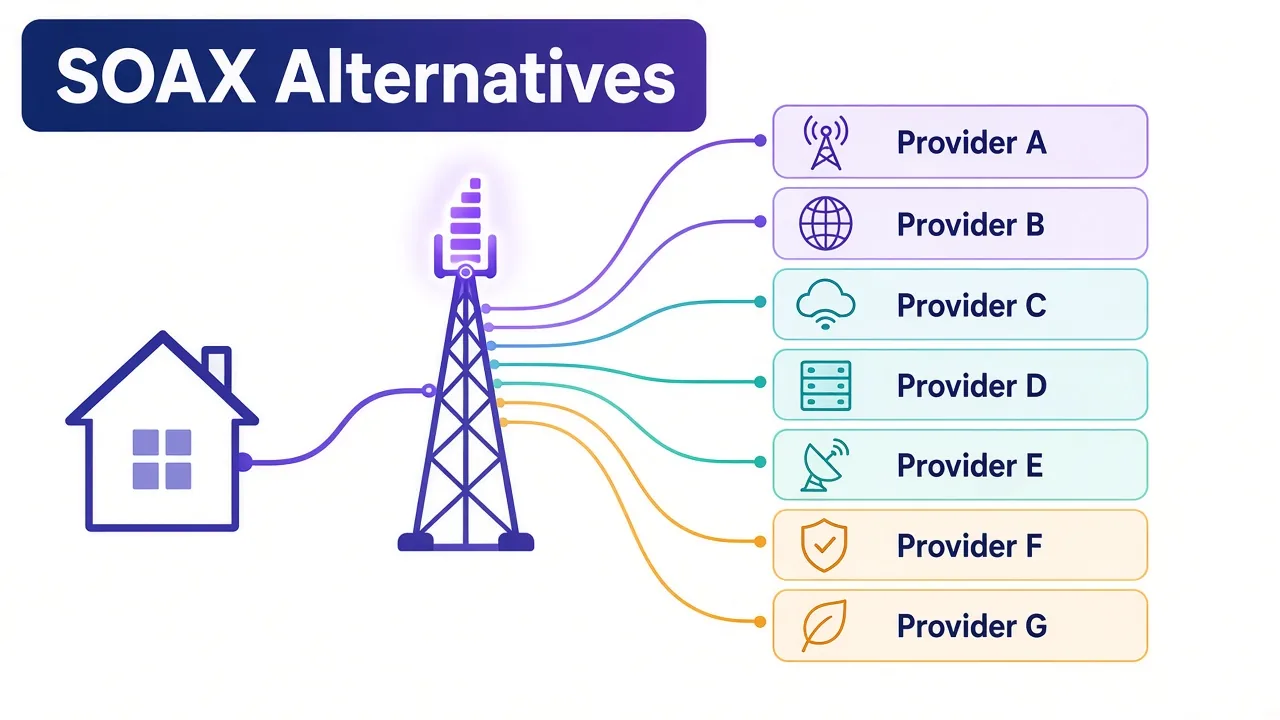
Good news: there are solid SOAX alternatives for both residential and mobile work. For most people, Decodo (formerly Smartproxy) is the easiest swap, and Bright Data is the pick when mobile IPs matter most.
But "better than SOAX" depends on one thing most comparison posts never ask about. We'll get to it. First, let's be clear about what you'd be giving up.
What does SOAX actually do well?
It's worth being fair before you leave. SOAX isn't a bad provider. It's a specialist.
In our directory, as of November 2026, SOAX carries an editor rating of 3.9 out of 5. Its strengths are real:
- Geo-targeting down to city, ISP and mobile carrier
- A strong mobile proxy network for tough social and app targets
- A clean, regularly refreshed IP pool
- A free trial and 99.9% listed uptime
If you run a handful of social accounts in specific cities, that's a great fit. Carrier targeting is something many cheaper providers simply don't offer.
So why are you reading an alternatives post?
Why people start looking for a SOAX alternative
Usually it's one of three things.
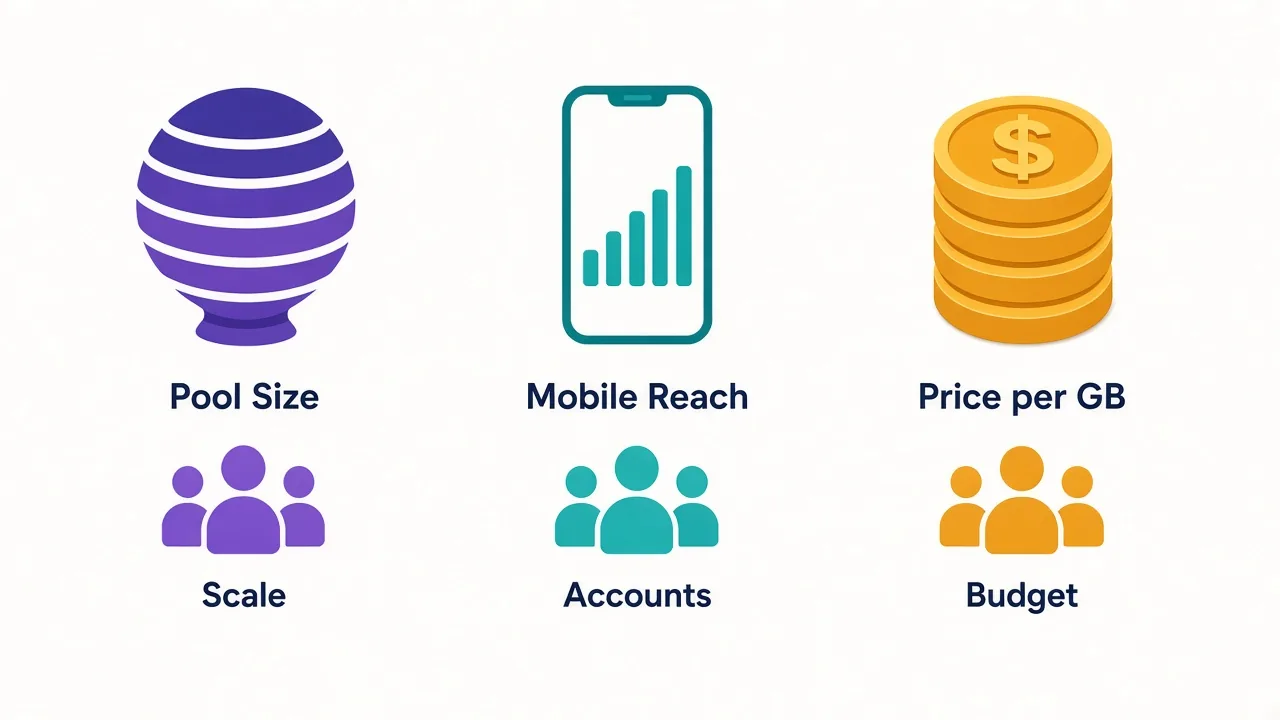
The pool is small for its price. Our listing shows SOAX at 8.5M+ residential IPs. Every one of the seven picks below lists a bigger residential pool than that.
A smaller pool isn't automatically worse. Clean IPs can beat a huge, tired pool. But if you run hundreds of parallel threads on the same country, you'll feel it.
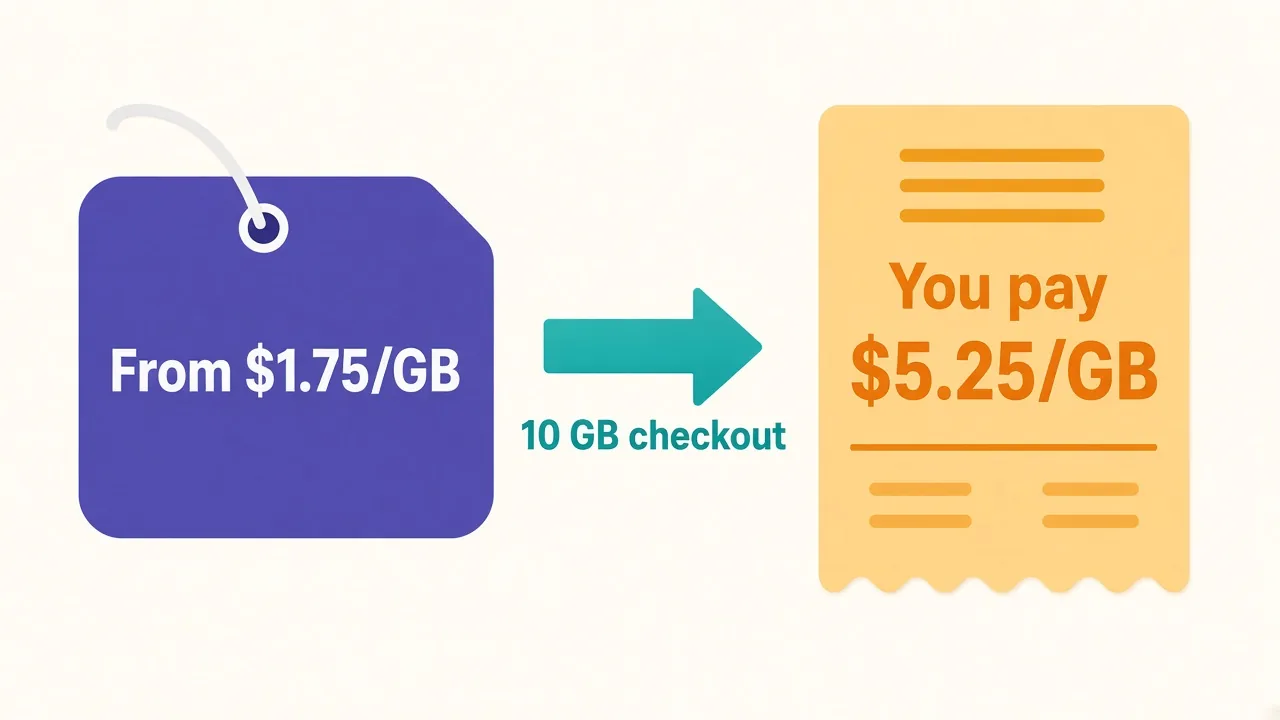
The price isn't cheap. Our directory lists SOAX from about $4.00 per GB. That's mid-to-upper range. Several rivals start well below it.
The billing takes work to understand. SOAX bills in credits, geo tiers and plan fees. We broke that down in our SOAX pricing guide, and it's worth a read if cost is your main complaint.
Before you switch
If price is your only issue, check whether a bigger SOAX plan lowers your per-GB rate. Sometimes the cheapest move is staying put.
The question that decides which alternative fits
Here's the part most lists skip.
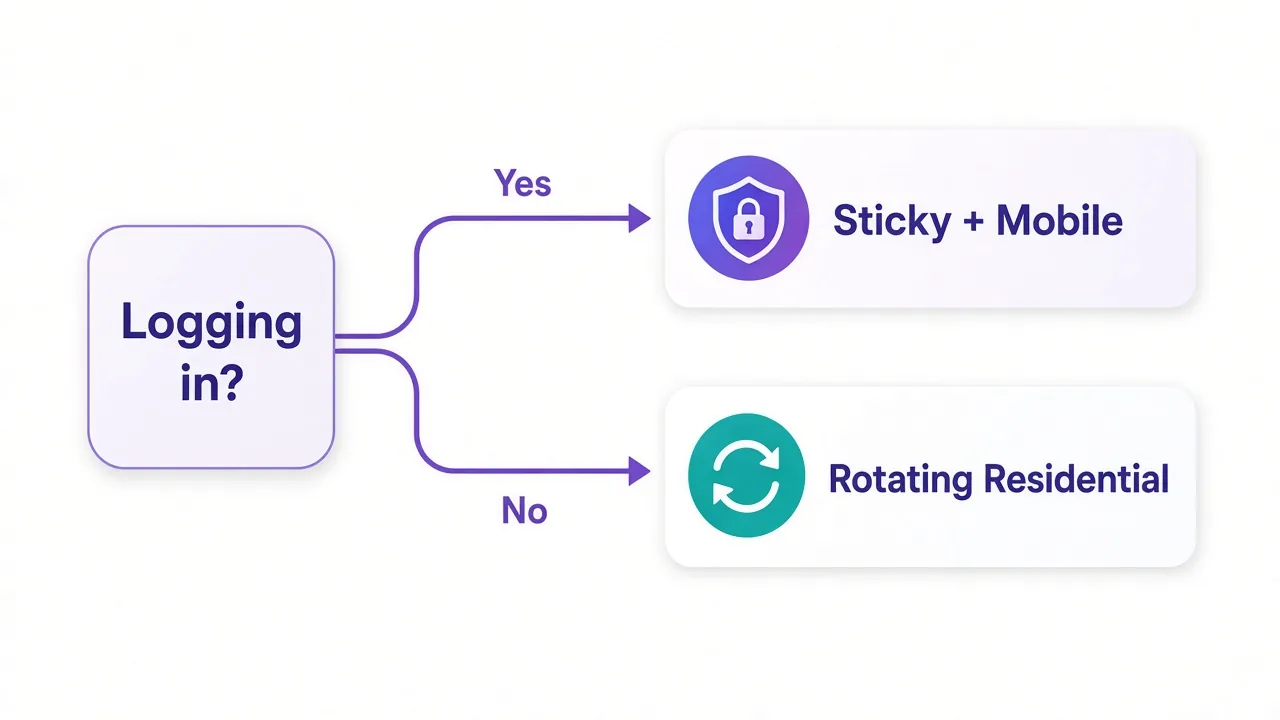
Before you compare pool sizes, ask this: are you logging in, or just reading pages?
That single answer splits the field in two.
If you log in to accounts, you care about trust and session length. You want the same clean IP for as long as the session lasts. Mobile and sticky residential IPs shine here.
If you only read public pages, you care about volume and success rate. You want fresh IPs on every request and a pool big enough to spread the load. Pool size and price per GB matter most.
SOAX is built for the first group. Most people who leave it belong to the second, or need both. Keep that in mind as you read the picks.
The 7 SOAX alternatives at a glance
Here's the short list, with what each one does best. Live prices sit in the provider cards below each write-up.
| Provider | Best for | Residential pool (listed) | Free trial |
|---|---|---|---|
| Decodo (Smartproxy) | Easiest all-round switch | 55M+ | Yes |
| Bright Data | Mobile IPs at scale | 72M+ (plus 7M+ mobile) | Yes |
| Oxylabs | Enterprise scraping | 100M+ | Yes |
| IPRoyal | Budget, non-expiring traffic | 34M+ | No |
| NodeMaven | Long sticky sessions for accounts | 30M+ | Yes |
| Froxy | City and ASN targeting on a budget | 10M+ | Yes |
| Proxy-Seller | Every proxy type in one account | 15M+ | Yes |
Pool figures and trial status come from our directory listings, as of November 2026. Providers change them often, so check the card before you buy.
1. Decodo (Smartproxy): the easiest swap for most people
Decodo is the provider we'd point most SOAX users to first.
It lists a 55M+ residential pool across 195 countries, with city and ASN targeting. That covers most of what SOAX users reach for, with far more IPs behind it.
The dashboard is where it really wins. It's one of the friendliest in the category, and the docs are full of examples. If you've ever stared at SOAX's credit table wondering what you'll pay, that clarity is a relief.
Our listing puts its average response at about 0.55 seconds, among the quickest we track.
The catch? Our listing doesn't show SOAX-style carrier targeting for it. Its success rate can also trail the very top providers on the hardest sites.
One more thing. The rename from Smartproxy to Decodo confuses people at first. It's the same company.

Powerful proxies without the enterprise price tag.
2. Bright Data: when mobile IPs are the whole point
Leaving SOAX but still need mobile? Start here.
Bright Data lists 72M+ residential IPs and 7M+ mobile IPs. That's the biggest mobile number in our directory, and its targeting reaches down to city and carrier.
It also ships tools SOAX users often end up building themselves. Web Unlocker, a SERP API and a Scraping Browser all handle blocks and CAPTCHAs for you.
Now the honest downside. Bright Data is one of the most expensive providers per GB. The dashboard is dense, and small accounts can wait on KYC checks before they get going.
So it's a power tool. Great if mobile is critical and the budget is there. Overkill for a side project.

3. Oxylabs: the enterprise answer to a small pool
If SOAX's pool size is what hurts, Oxylabs is the opposite extreme.
It lists 100M+ residential IPs, the largest of our seven picks. That depth matters when you hammer the same country with thousands of requests an hour.
Success rates on hard targets are strong, and its Web Scraper API takes much of the rotation work off your plate. Teams also get dedicated account managers and SOC 2 compliance, which helps with vendor reviews.
The trade-off is price. Our listing shows it from about $8.00 per GB, double SOAX's entry rate. For casual use, it's simply too much.
Think of Oxylabs as the pick when your scraper is a business, not an experiment.

Premium proxies built for enterprise scraping.
4. IPRoyal: cheaper, and your traffic doesn't expire
Here's a SOAX frustration that rarely gets named: paying for gigabytes you never use.
IPRoyal fixes that. Its residential traffic doesn't expire, and it runs true pay-as-you-go with no forced monthly plan. If your projects come in bursts, that alone can save real money.
It's also one of the cheapest options we list, from about $1.75 per GB. The pool is 34M+ IPs across 195 countries, with country, state and city targeting.
The weak spots are clear. There's no free trial, so you'll test with a small paid top-up instead. Its success rates can also trail premium providers on the toughest sites.
For sneakers, ticketing and everyday account work, it's a strong value pick.

Flexible proxies with true pay-as-you-go.
Pro tip
Test any new provider on your real target, not a speed-test site. A proxy that looks fast on a blank page can still fail on the one site you care about.
5. NodeMaven: built for account work
Remember the question from earlier? Logging in, or just reading?
If your answer was "logging in", NodeMaven deserves a close look. It's the pick here most clearly built for the same job SOAX does well.
It sells residential and mobile IPs, with long sticky sessions for account workflows. Real-time IP filtering screens out flagged addresses before you get them. That's exactly what you want when an account is on the line.
Bandwidth doesn't expire on most plans, and targeting goes down to city and ISP. The pool is 30M+ IPs, more than three times SOAX's listed figure.
The downsides? Pricing is mid-market, not cheap. It also has a shorter track record and fewer enterprise integrations than older rivals.
Sticky residential and mobile IPs with strong filtering and clean pools.
6. Froxy: SOAX-style targeting for less
Froxy is the closest thing to a budget SOAX on this list.
It offers residential and mobile IPs, around 10M+ in total, with targeting down to city and ASN. It supports both rotating and sticky sessions. Our listing starts it at about $2.00 per GB.
That mix makes it a natural fit for local SEO rank tracking and city-level research. Those are jobs where you need precise locations more than a giant pool.
Be realistic about the limits, though. The pool is only a little bigger than SOAX's, so it won't solve a scale problem. There's also no datacenter tier for cheap, low-risk tasks.

Residential and mobile proxies with city and ASN targeting
7. Proxy-Seller: one account for every proxy type
Sometimes the real problem isn't SOAX. It's that you need more than residential and mobile.
Proxy-Seller covers datacenter, ISP, residential and mobile in one account. It also sells dedicated per-IP options, not only per-GB traffic. That helps when one project needs static IPs and another needs rotation.
It lists 15M+ residential IPs across about 200 countries, with an entry price around $2.40 per GB and volume discounts on top.
The dashboard feels dated, and some setup steps assume you know what you're doing. Support quality can also vary depending on how you reach them.

Versatile all-rounder spanning datacenter, ISP, residential and mobile.
Residential or mobile: which do you really need?
A lot of people moving off SOAX pay for mobile IPs they don't need.
Mobile IPs come from phone carriers. Thousands of real users share each one, so sites are slow to block them. That makes them great for social apps and other platforms that punish anything suspicious.
They're also the priciest IPs to buy. That's the trade-off you're paying for: trust, not speed.
For plain web scraping, residential IPs usually do the job at a fraction of the cost.
Here's a simple rule. Use mobile IPs when the target is a mobile-first app or a platform that bans accounts fast. Use residential for almost everything else.
Not sure where your work fits? Our guide on mobile vs residential proxies walks through it case by case.
How to switch without breaking your setup
Changing providers sounds scary. In practice, it's mostly a change of host, port and login.
Here's how we'd do it:
- Pick one alternative and start a free trial or a small top-up.
- Copy one real job, like a single scraper or one account, onto the new proxy.
- Match your session type. If you used sticky sessions on SOAX, set the same length on the new provider.
- Run both providers side by side for a few days and compare success rates.
- Move the rest of your traffic only once the numbers look good.
Want a quick way to confirm the new proxy works at all? Our guide on checking if a proxy is working covers it in a few minutes.
Watch your accounts
Don't move every logged-in account to a new IP on the same day. A sudden location jump on many accounts at once can look suspicious to the platform.
What about cost? A quick reality check
It's tempting to sort by price per GB and pick the lowest. That often backfires.
A cheap proxy that fails a third of its requests can cost more than a pricier one that succeeds. You pay for every failed request's bandwidth, plus the retries.
Say a cheap plan wins 6 of every 10 requests and a pricier one wins 9. The cheap plan needs half again as much traffic to get the same data.
So compare cost per successful result, not cost per GB. Run the same job on two providers and divide what you spent by what you actually got.
Want the full breakdown of how providers bill? Our post on residential proxy pricing models explains pay-per-GB, pay-per-IP and unlimited plans.
So, which SOAX alternative should you pick?
Go back to that one question: logging in, or just reading?
Running accounts? Pick NodeMaven, or Bright Data if mobile IPs are a must. Scraping at volume? Pick Decodo for the easiest switch, or Oxylabs if scale is the whole job. Watching every dollar? IPRoyal is the safe budget call.
You don't need the biggest network. You need the one built for your kind of traffic.
Still weighing them up? Compare every proxy provider in our directory side by side.
Pick one, test it on your real target, and decide from there.
Frequently asked questions
For most people, Decodo (formerly Smartproxy) is the easiest switch from SOAX. It lists a much bigger residential pool, a friendly dashboard and a free trial. If mobile IPs matter most, Bright Data is the stronger pick.
Bright Data is the strongest mobile alternative in our directory, with 7M+ mobile IPs listed. NodeMaven, Froxy and Proxy-Seller also sell mobile IPs at lower entry prices, with smaller networks.
Yes. IPRoyal starts from about $1.75 per GB in our directory, and its residential traffic doesn't expire. Froxy and Proxy-Seller also start below SOAX's listed entry rate of about $4.00 per GB.
Most switch because of pool size, price or billing complexity. SOAX lists 8.5M+ residential IPs, smaller than many rivals, and bills in credits and geo tiers that take time to understand.
Use mobile proxies for mobile-first apps and platforms that ban accounts quickly. For general web scraping, residential proxies usually do the job for much less money.
Test one real job on the new provider first, match your old session settings, and compare success rates for a few days. Then move the rest of your traffic gradually, especially logged-in accounts.