








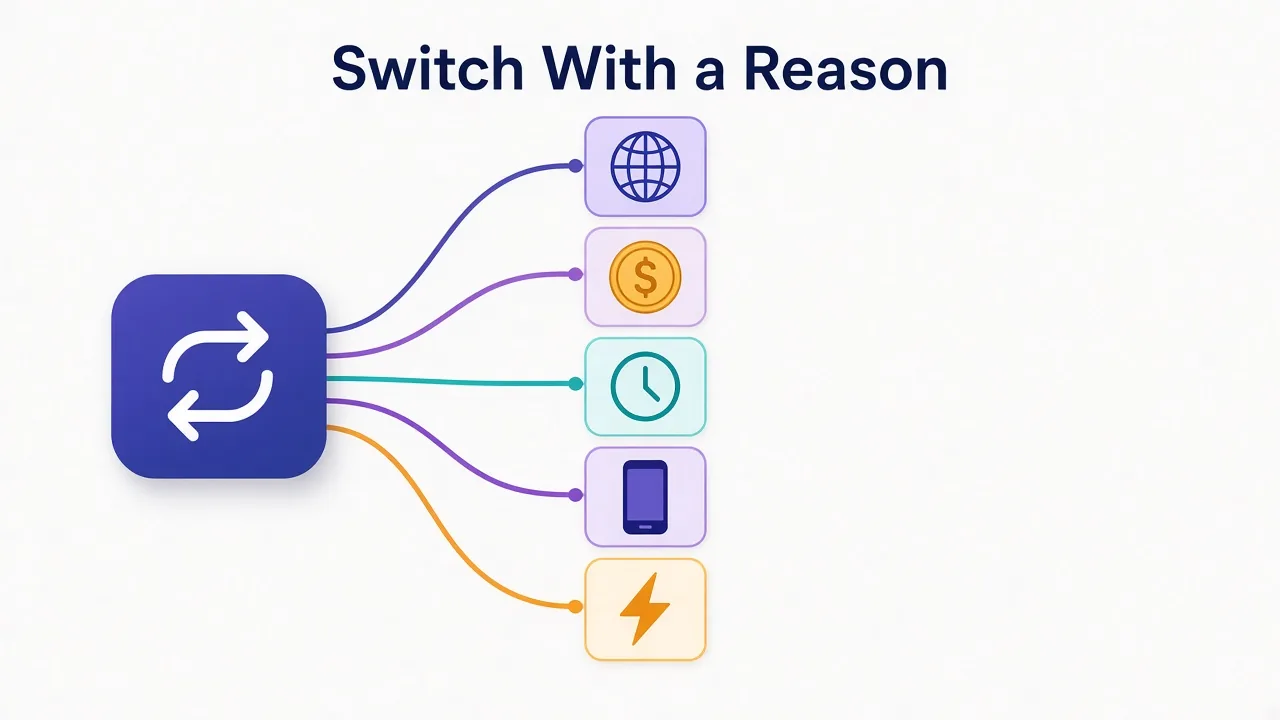
Decodo is a good proxy provider. So why are you reading about leaving it?
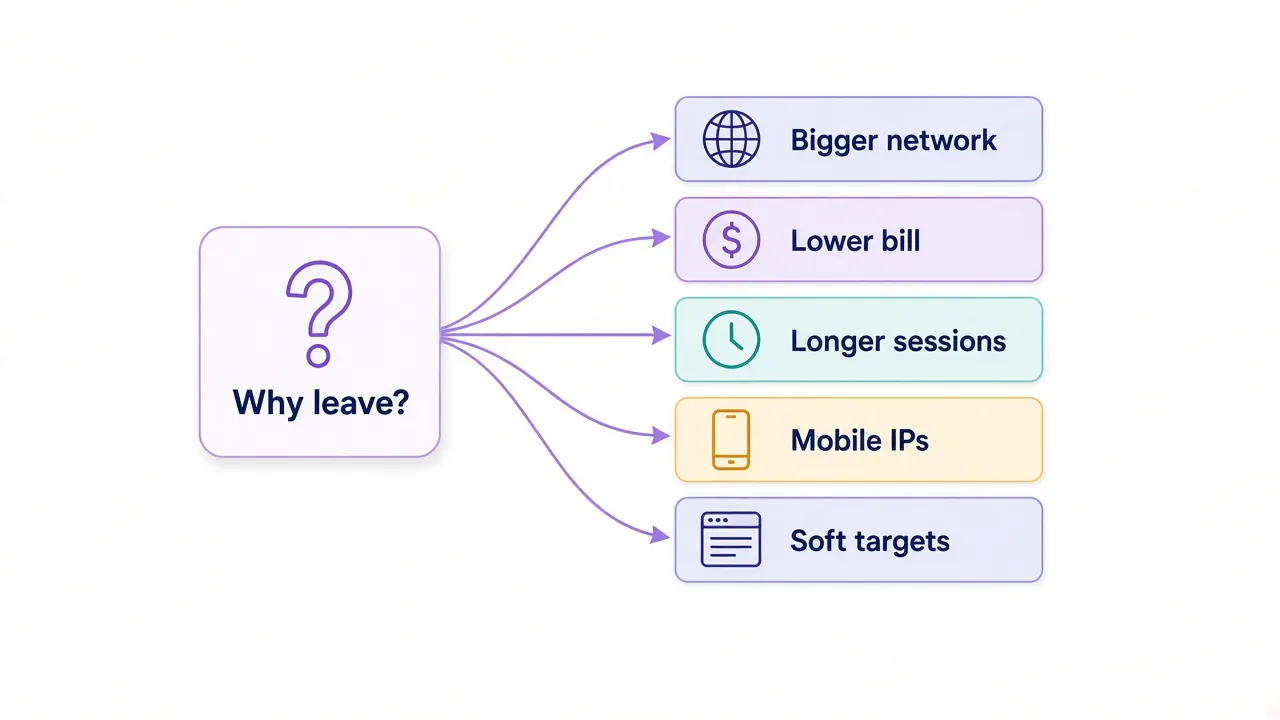
Maybe a sticky session dropped mid-login at minute 30. Maybe you paid for 25 GB and used nine. Or a hard target started throwing CAPTCHAs that your old setup never saw.
Here's the short version of the best Decodo (Smartproxy) alternatives. Bright Data if you've outgrown it. DataImpulse if you're paying for traffic you never use.
The other six win on one specific gap each. And there's one reason to switch that has nothing to do with price or pool size. Most lists skip it entirely.
First, let's pin down what's pushing you out.
Why are you leaving Decodo in the first place?
Decodo is the new name for Smartproxy. The company rebranded on 22 April 2025, and accounts moved over on their own. Same team, same network, new logo.
So if your old Smartproxy login now opens a Decodo dashboard, nothing broke. You're shopping because something about the service no longer fits.
From Decodo's own pricing page, as of October 2026, these are the limits people bump into most:
- Sticky sessions hold one IP for up to 30 minutes.
- The free trial is 3 days and 100 MB.
- Pay As You Go costs $4/GB and can't run beside a monthly plan.
- Refunds need a first purchase, no trial, and under 20% of traffic used.
None of those are scandals. They're normal terms for a mid-market provider. But each one points at a different kind of alternative.
A 30-minute cap hurts account managers. A monthly bucket hurts people with bursty jobs. And a hard target hurts scrapers, whatever the price.
That's why we sorted this list by the reason you're leaving, not by a single score.
Is a cheaper Decodo alternative still cheaper in 2026?
This is the part most "alternatives" lists get wrong.
Decodo dropped its residential prices hard. The smallest monthly plan is 3 GB for $11.25, or $3.75/GB. The 100 GB plan is $2.75/GB, and enterprise volume reaches $2/GB.
So a lot of "cheaper" rivals aren't cheaper at small volume. Some cost more.
| Provider | Smallest residential option | What you get |
|---|---|---|
| Decodo | 3 GB monthly, $3.75/GB | $11.25 a month |
| IPRoyal | 1 GB, $7/GB | Traffic never expires |
| Oxylabs | $30/month Starter plan | Residential from $6/GB |
| Bright Data | Pay as you go, $8/GB list | No monthly commitment |
| NodeMaven | 2 GB monthly for $8.50 | Unused traffic rolls over |
| DataImpulse | Pay as you go, $1/GB | Traffic never expires |
Prices come from each provider's public pricing page in October 2026, before VAT and promo codes. They drift, so check the live cards below each write-up.
Notice anything? Only one name on that list clearly undercuts Decodo per gigabyte at low volume.
That changes the question. If price is your only complaint, you have one real option. If something else is bugging you, price is a side issue.
The real cost is per success
A $1/GB plan that fails half its requests can cost more than a $4/GB plan that doesn't. Compare cost per successful page, not the sticker.
Want the full Decodo math first? Our Smartproxy pricing breakdown walks every tier.
Where do your new provider's IPs actually come from?
Remember that reason to switch that isn't price? It's sourcing.
Every residential IP belongs to someone's phone, laptop or router. Good providers get that person's clear consent, usually through an opt-in app or a paid sharing program.
Others stay vague about it. Security researchers have tied some residential networks to malware-infected devices whose owners never agreed to anything.
That's your problem too, not just theirs. When a network like that gets taken down, every brand reselling it can go dark overnight, and your jobs go with it.
So what does this mean when you pick a replacement?
- Be wary of a brand-new name with a giant pool and a tiny price.
- Ask where the IPs come from, and how users agree to share them.
- Prefer providers that name their sourcing app or program.
- Watch for sudden drops in success rate. They can mean the pool behind your brand changed.
We can't audit anyone's network for you. What we can do is leave the riskiest bargains off this list.
For more on the sourcing question, read how many proxy providers use ethically sourced IPs.
A pool claim is not proof
A "90M+ IPs" headline tells you nothing about consent. If a provider can't explain its sourcing in one paragraph, keep looking.
Need a bigger network or tougher unblocking than Decodo?
Some people leave because Decodo starts losing on the hardest sites. Big retailers, search engines and ticket pages fight back hard.
That's where the two enterprise giants come in. They cost more at small volume. But they bring unblocking tools Decodo's proxy plans don't include.
Bright Data: the heavyweight for hostile targets
Bright Data says it has 400M+ residential IPs a month across 195 countries. Country, state, city and ZIP targeting are free on its residential plans.
Its edge is the tooling around the proxies. Web Unlocker handles CAPTCHAs and retries for you, and the Scraping Browser runs the browser side. If you're losing a fight against a defended site, that's the reason to pay up.
The catch? Price and paperwork. Pay as you go lists at $8/GB, monthly plans start at $499, and residential access needs a short KYC check first. That can include a video call.
Pick it when success rate on a hostile site matters more than your bill. Our Bright Data pricing guide shows where the tiers break.

Oxylabs: one subscription, every product
Oxylabs changed how it sells. You now buy one subscription that covers residential, mobile, ISP and datacenter proxies, plus its scraping tools. The Starter plan is $30 a month, and new accounts get $5 in welcome credits.
Residential starts at $6/GB on small usage and falls to $2.50/GB past 1,000 GB. Oxylabs lists a 0.6s average response and support for HTTP3 alongside SOCKS5.
Here's the honest drawback. Oxylabs blocks some targets on its residential network, including ticketing, streaming, banking and some Google domains. Self-service purchases are also non-refundable.
If your targets are on that list, skip it. If they aren't, it's the cleanest enterprise upgrade from Decodo. Read our Oxylabs pricing notes before you commit.

Premium proxies built for enterprise scraping.
Tired of paying for traffic you don't use?
Decodo's monthly plans reset. Buy 25 GB, use 9 GB, and the rest is gone when the cycle ends.
That's fine for steady work. It's painful for jobs that spike one week and sleep for three. The fix is a provider whose traffic doesn't expire.
DataImpulse: the one that's cheaper per GB
This is the price-led switch that holds up. DataImpulse sells residential traffic pay as you go at $1/GB, and $0.80/GB past 1 TB. There's no subscription, and the traffic never expires.
It advertises 90M+ residential IPs in 195 countries, with mobile from $2/GB and datacenter from $0.50/GB. Country targeting is free. Sticky sessions default to 30 minutes and can run up to 120.
So what's the catch? City, state, ZIP and ASN targeting cost a small extra fee. The feature set is lean, and there's no scraping API or unblocker layer.
For indie developers and small teams on moderate targets, it's hard to beat. Just test success rates before you move a big job.

Transparent pay-as-you-go residential proxies with no minimums
IPRoyal: no expiry, plus sessions that last days
IPRoyal's pitch is flexibility. Residential traffic never expires, and you can hold one sticky IP for up to 7 days. You can also auto-rotate every 1, 10 or 30 minutes.
It advertises 64M+ residential IPs across 195+ countries. Our listing notes it sources IPs through its own Pawns.app, which pays users to share bandwidth.
Now the price surprise. IPRoyal's famous $1.75/GB applies from 10 TB. Small buys cost more: 1 GB is $7/GB, and 10 GB is $5.25/GB. There's no free trial, either.
So IPRoyal beats Decodo on flexibility, not on small-volume price. Our IPRoyal pricing guide shows where the tiers cross.

Flexible proxies with true pay-as-you-go.
Running accounts that need longer, cleaner sessions?
Say you manage 15 client accounts on one platform. Each one logs in, posts and checks messages over an hour.
With a 30-minute sticky cap, the IP can change mid-session. To the platform, that can look like a login from a new place. That's how you earn a verification prompt.
Two providers in our directory build for this kind of work. If sessions are new to you, start with sticky vs rotating proxies.
NodeMaven: filtered IPs and 24-hour sessions
NodeMaven treats IP quality as the product. It filters each IP in real time against fraud scores and blacklists before handing it to you.
Sticky sessions last up to 24 hours. Unused traffic rolls over to the next month. You get 30M+ residential and 250K mobile IPs on one plan.
The downside is a smaller pool and no free trial. You can test with a $3.50 paid trial that includes 750 MB. The cheapest monthly plan is 2 GB for $8.50.
Pick NodeMaven for social accounts, marketplaces and stubborn targets where a clean IP is worth a little more per GB.

Sticky residential and mobile IPs with strong filtering and clean pools.
Live Proxies: private pools for US, UK and EU work
Live Proxies takes a different route. Instead of a huge shared pool, it allocates private residential IPs, so fewer other customers touch your addresses.
Rotating residential plans include 60-minute sticky sessions and rollover for unused data. Our listing notes its coverage centers on the US, UK and EU.
The trade-off is cost and reach. Rotating residential plans start at $70, and exotic countries are thin. Its static residential plan also showed as unavailable when we checked in October 2026.
If your accounts live on Western platforms and trust matters most, it's a strong fit.

Curated, private residential pools for US, UK and EU targets
Need mobile IPs or sharper geo-targeting?
Some platforms trust mobile carrier IPs more than home broadband. Many phones share one carrier IP, so blocking it hurts real users too.
Decodo sells mobile proxies. But if mobile is your main traffic, a provider that prices it the same as residential can make life simpler. Our mobile vs residential guide covers when that's worth it.
SOAX: one rate for residential and mobile
SOAX moved to credit-based plans. Residential and mobile share one rate, and that rate depends on the country your exit IP sits in.
The US is in the priciest tier, and India sits in a cheaper one. On the $200/month Builder plan, tier 1 traffic runs $3/GB. A free Sandbox lets you buy top-up credits at $5/GB with no subscription.
Targeting goes down to region, city and ISP on every plan. ASN and ZIP targeting start on the higher Scale plan.
The catch is that credits expire 60 days after they land, and there's no free trial. Payments are generally non-refundable. Pick SOAX if mobile or precise geo matters more than pool size.

Clean, ethically-sourced residential & mobile IPs.
Only scraping soft targets? You may not need residential at all
Here's an honest one. Plenty of people pay residential rates for sites that never block a datacenter IP.
Public catalogs, news pages and many review sites barely fight back. For those, datacenter proxies do the job for a fraction of the price.
Webshare: the free way to find out
Webshare gives you 10 datacenter proxies free. After that, 100 proxies cost $2.99 a month, and the per-proxy price keeps falling with volume.
That makes it the cheapest test you can run. Point your scraper at Webshare for a day. If the target doesn't care, you just cut your bill.
The drawback is detection. Datacenter IP ranges belong to hosting companies, so tough sites spot them fast. Webshare's residential plan is less of a standout than its datacenter one.
Use it for soft targets and testing. Keep residential for the sites that push back. Our best datacenter proxy providers list has more options.

The most affordable way to start with proxies.
How do you test a Decodo alternative without wasting a month?
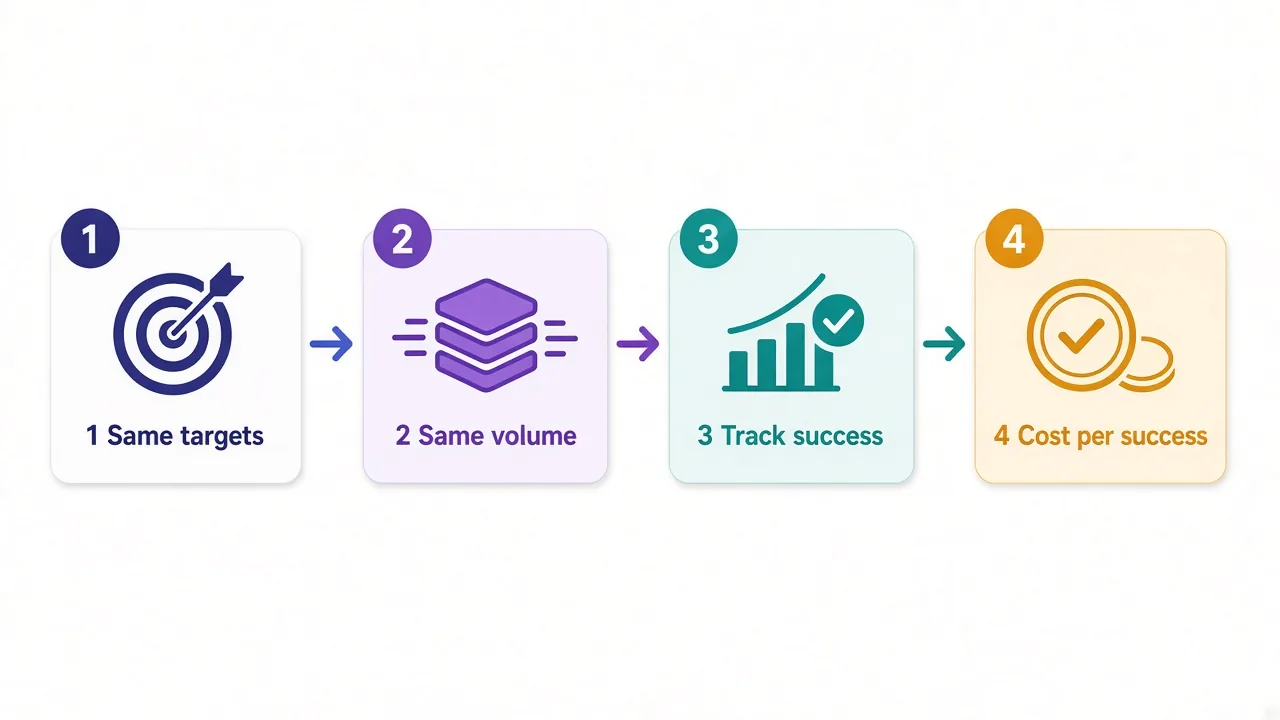
Don't migrate everything on day one. Run a small bake-off first.
Most providers make this cheap. As of October 2026, 33 of the 44 proxy providers in our directory list a free trial. Others, like NodeMaven, sell a small paid test instead.
- Pick three real targets from your own workload.
- Send the same number of requests through Decodo and the new provider.
- Log success rate, CAPTCHAs and average response time.
- Divide what you spent by the number of successful pages.
That last number is the one that counts. It turns "$1/GB vs $4/GB" into "cost per page that worked".
Don't sort by country count while you're at it. 24 of the 44 providers we list claim 190+ countries, so it rarely separates them.
What about checking the IPs themselves? Our guide to checking if a proxy is working shows quick leak and location tests.
Should you stay on Decodo after all?
Sometimes the best alternative is a smaller change.
Decodo still has one of the friendliest dashboards in the market. Its residential pricing is now among the lowest of the mid-market names. It advertises 115M+ IPs in 195+ locations, plus city, ZIP and ASN targeting.
So before you leave, check two things. Are you on the right plan size for your real monthly use? And would Pay As You Go fix a bursty month?
If a plan change fixes it, stay. Switching providers costs you setup time, new credentials and fresh testing.

Powerful proxies without the enterprise price tag.
So, which Decodo alternative should you pick?
Name the gap first. Then the choice gets simple.
Losing on hard targets? Go Bright Data or Oxylabs. Wasting monthly traffic? DataImpulse, or IPRoyal if you need days-long sessions. Managing accounts? NodeMaven or Live Proxies. Mobile-heavy? SOAX. Soft targets only? Try Webshare free.
And skip any bargain that can't explain where its IPs come from.
Ready to compare side by side? Browse every provider in the proxy directory and run your first bake-off this week.
Pick the gap, then the provider.
Frequently asked questions
Yes. Smartproxy rebranded to Decodo on 22 April 2025, keeping the same company, team and proxy network. Existing accounts, subscriptions and settings moved over automatically, so no migration was needed.
DataImpulse is the cheapest residential option we cover, at $1/GB pay as you go with traffic that never expires (October 2026). Decodo's own small plans still undercut several rivals, and for soft targets Webshare's datacenter proxies cost less again.
Bright Data is the strongest pick for heavily defended sites, because Web Unlocker handles CAPTCHAs and retries on top of a very large residential network. Expect higher prices and a KYC check before residential access.
IPRoyal holds a sticky IP for up to 7 days and NodeMaven for up to 24 hours, versus Decodo's 30-minute cap. Live Proxies offers 60 minutes, and DataImpulse up to 120 minutes.
Ask where its residential IPs come from and how device owners agree to share them. Trustworthy providers name their opt-in app or sharing program and explain it plainly. If they can't, keep looking.
Yes. Decodo offers a 3-day residential proxy trial with 100 MB of traffic for new users. Using the trial makes you ineligible for its 14-day money-back option, so pick one route.