







Octo Browser is good at one thing above all else: fingerprints that hold up under scrutiny.
So why are you shopping around? Maybe the euro bill grew faster than your account count. Maybe you wanted a free plan to test with, or a no-code way to automate the boring clicks.
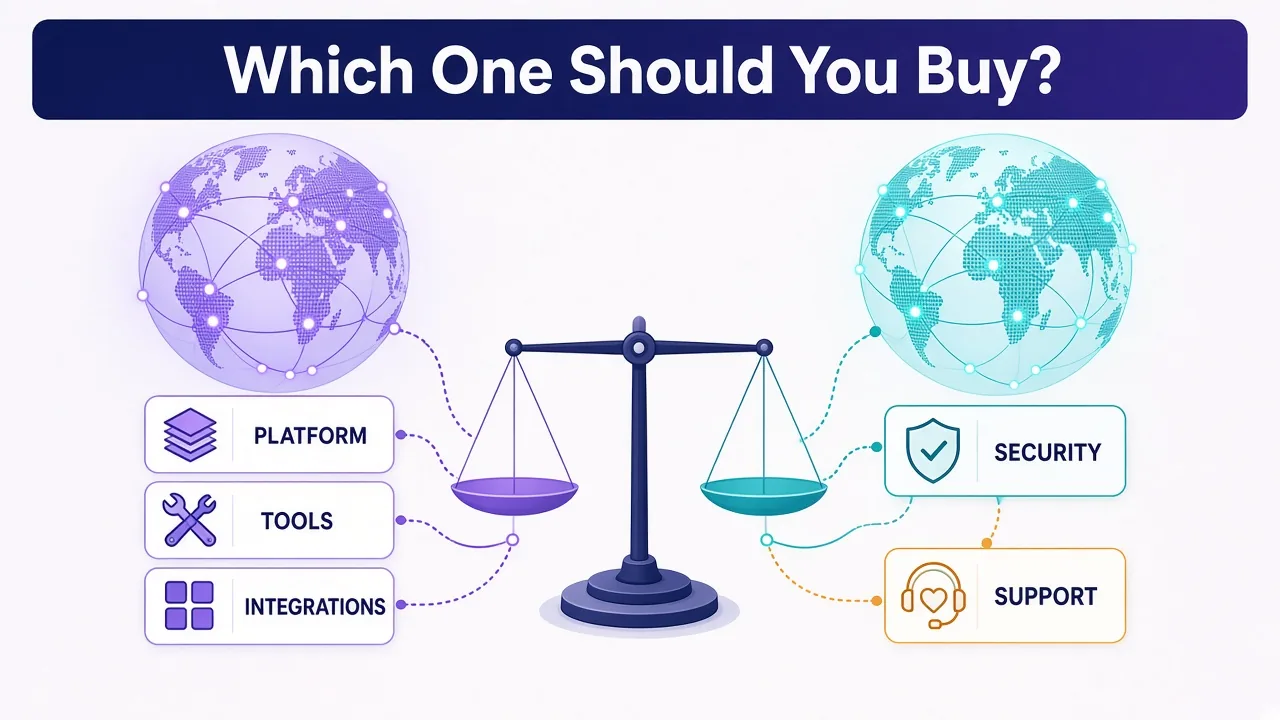
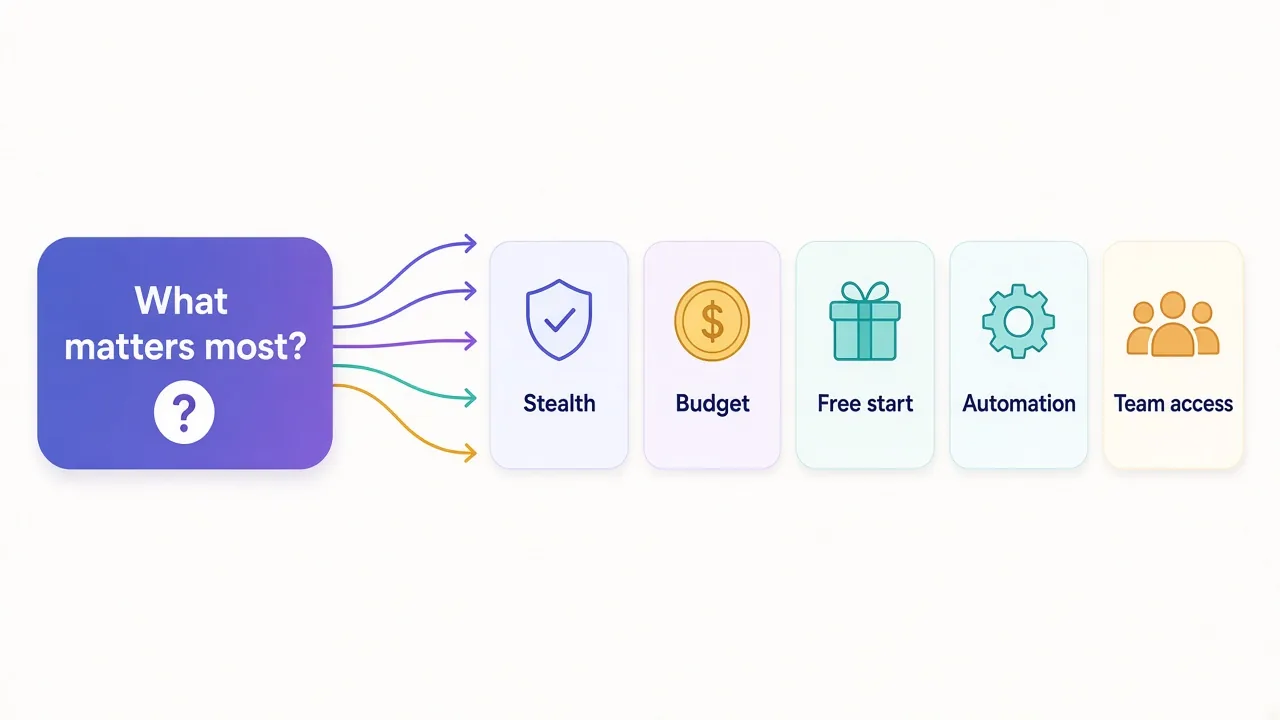
Here's the short version. For like-for-like stealth, look at Multilogin. For the lowest cost per profile, look at AdsPower or Dolphin Anty. The other four picks below each win one specific job.
There's also a mistake people make on switch day that burns more accounts than any weak browser. We'll get to it near the end.
Why do people leave Octo Browser in the first place?
It's rarely the stealth. In our antidetect browser directory, Octo's profiles are built from real device configurations and stay consistent across sessions. That consistency is what keeps a long-lived account alive.
The reasons people leave are more practical than that.
- There's no free plan, so you pay before you learn anything.
- Pricing is in euros and climbs steeply as your profile count grows.
- Automation is code-only. There's no visual robot for people who don't script.
- The interface is dense. It rewards experience more than first impressions.
- Proxies aren't included, so you're still buying those separately.
None of those are deal-breakers for a seasoned team on hard platforms. For a solo seller with 15 shops, though, a couple of them add up fast.
So the right replacement depends on which of those five problems is yours.
What should an Octo Browser alternative get right?
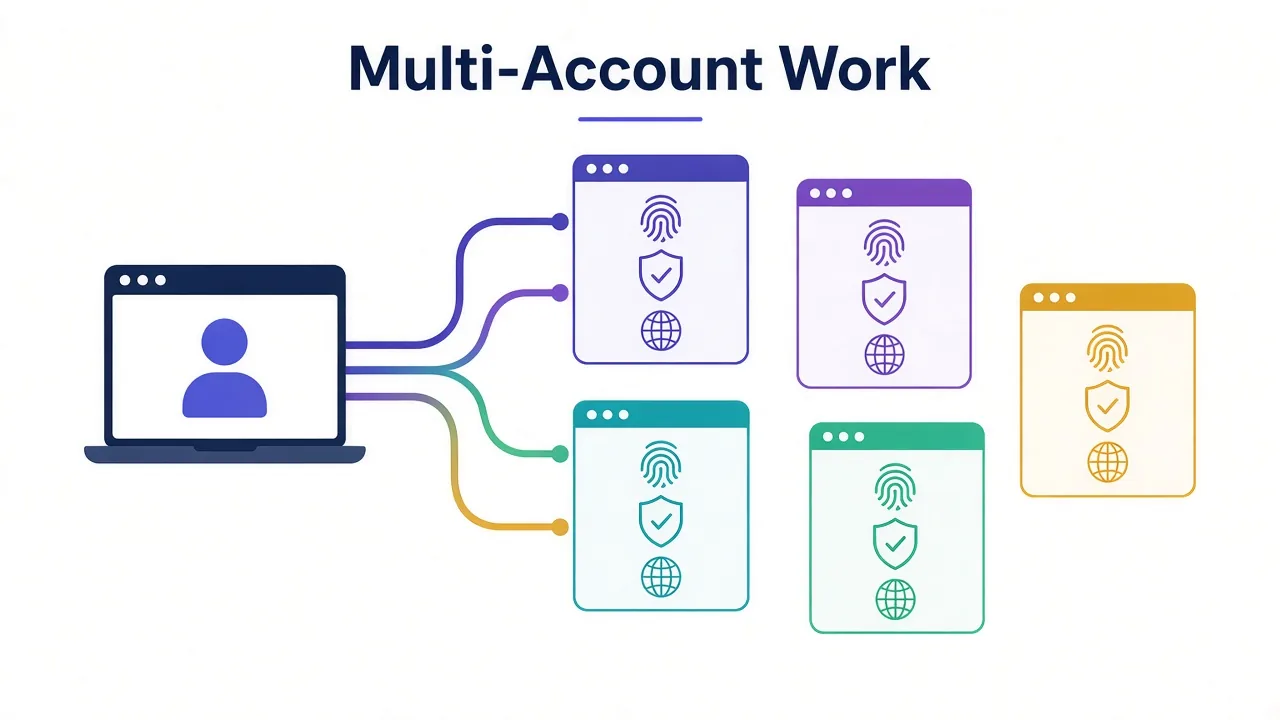
An antidetect browser runs many isolated browser profiles on one machine. Each profile keeps its own cookies, storage, device fingerprint and proxy.
To a website, two profiles look like two people on two different computers. That's the whole product.
When you compare tools, four things matter more than the feature list.
- Fingerprint consistency: does the profile look like the same device every time it logs in?
- Proxy binding: can you lock one proxy to one profile, with HTTP and SOCKS5 support?
- Automation: do you need an API for scripts, a no-code robot, or neither?
- Team access: do other people need to open the same profiles from their own machines?
Fingerprint consistency is the one people underrate. A random fingerprint that changes on every launch looks stranger to a platform than a boring one that never changes.
If you want the mechanics, our guide to how browser fingerprinting works walks through what a site actually reads from your browser.
Our 7 Octo Browser alternatives at a glance
Here's the shortlist before the detail. Prices change often, so the provider cards below each write-up show the live numbers from our directory.
| Browser | Best for | Free plan | Operating systems |
|---|---|---|---|
| Multilogin | Like-for-like stealth on hard platforms | No | Windows, macOS, Linux |
| GoLogin | Distributed teams and phone access | Trial only | Windows, macOS, Linux, Android |
| AdsPower | No-code automation on a budget | Yes, 5 profiles | Windows, macOS |
| Dolphin Anty | Media buyers and Linux users | Yes, 10 profiles | Windows, macOS, Linux |
| Kameleo | Developers driving profiles from code | No | Windows |
| MoreLogin | Repeating one task across many windows | Yes, small | Windows, macOS |
| Incogniton | Solo operators who tune fingerprints by hand | Yes, 10 profiles | Windows, macOS |
Price per profile isn't the whole story, either. Say a cheap tool needs three paid seats for your team. It can end up costing more than a pricier tool that includes them.
So count profiles and seats together before you compare plans. That one habit saves a lot of awkward upgrades later.
Notice anything about that table? Only three of the seven run on Linux. If your team works on Linux, your shortlist is already down to Multilogin, GoLogin and Dolphin Anty.
Multilogin: the closest match if stealth is the job
If Octo's fingerprinting is the reason you picked it, Multilogin is the one tool that plays in the same league. It has been refining fingerprints since 2015, longer than anyone else in our directory.
You get two separate engines: Mimic, built on Chromium, and Stealthfox, built on Firefox. That gives you engine variety without leaving the app.
Cloud profiles, team roles and a local API with Selenium, Puppeteer and Playwright support are all there. In practice it covers almost everything Octo does.
The catch is cost. Multilogin sits among the most expensive antidetect browsers. Its entry plans have profile and seat limits that push serious users up a tier.
It's also heavier on RAM when many profiles run at once.
Want the full price picture first? Our Multilogin pricing breakdown lays out where the jumps happen.

The original enterprise antidetect browser.
GoLogin: best when your team isn't in one room
GoLogin's pitch is that a profile lives in the cloud, not on one laptop. A teammate in another city opens the same account and picks up where you left off.
It's also the only tool on this list with a native Android app. That's handy when you need to check an account from your phone between meetings.
It runs on Windows, macOS, Linux and Android, which is the widest spread we list. The Orbita browser, a Chromium build, keeps fingerprints consistent and configurable.
Two downsides. Free access is a trial, not a permanent free tier. And the cloud-first model means you depend on GoLogin's servers being up when you need them.
Torn between this and the previous pick? We compared them directly in GoLogin vs Multilogin.

Affordable antidetect with cloud profiles.
AdsPower: the budget pick that automates without code
This is the answer to Octo's biggest gap. AdsPower ships a no-code RPA robot, a visual tool that records and replays repetitive tasks, so non-developers can automate too.
Say you post to 40 marketplace listings every morning. With AdsPower, you build that routine once and let the robot run it across profiles.
It also has a Synchronizer that mirrors your actions across many windows. Add a free plan with 5 profiles and some of the lowest per-profile pricing in the category.
What's the trade-off? Profiles live on your machine rather than in the cloud. The interface is busy for beginners, and some compliance-minded companies weigh the fact that it's a China-origin vendor.
See how its plans scale in our AdsPower pricing guide.

Profiles at scale with strong automation.
Dolphin Anty: free to start, built for ad accounts
Dolphin Anty spread through paid-traffic circles for one reason: 10 fully working profiles at no cost. You can run real campaigns before you spend anything.
It was built with media buyers in mind. Account warming and bulk actions are tuned for Facebook, TikTok and Google ad accounts.
It runs on Windows, macOS and Linux, and team members can share profiles with roles. Fingerprints are realistic and internally consistent rather than randomly shuffled.
Where it falls short is depth of automation. Next to AdsPower's robot and Synchronizer it feels lighter, and it leans hard toward paid-social work.
Can't decide between the two budget options? Our Dolphin Anty vs AdsPower comparison settles it by use case.
Kameleo: for people who run browsers from scripts
Some teams never click a profile at all. Their profiles start, do the work and shut down inside a Python job.
That's who Kameleo is for. It has a local REST API with official SDKs for C#, Python, Java and Node, plus first-class Selenium, Puppeteer and Playwright support.
Its other standout is genuine mobile profiles. Rather than swapping a user-agent string, it runs profiles through an emulated Android environment.
The deal-breaker for many is that the desktop client is Windows-only. There's no free plan either, and its euro pricing sits upper-middle for the category.
If you're scripting, our walkthrough on using a proxy with Playwright pairs well with an API-first browser like this.

API-first antidetect with real mobile profiles.
MoreLogin: when you do the same thing in 20 windows
MoreLogin sells two things: low prices and synchronised windows.
The synchroniser mirrors what you do in one leader window across many follower windows. For identical account setup, that turns an afternoon of clicking into a few minutes.
There's a free tier to test with, bulk import and tagging for large sets, and team accounts with shared profiles. Paid plans start low compared with most of the category.
Be honest with yourself about the targets, though. Fingerprinting is adequate on mainstream platforms, but against the strictest ones Octo or Multilogin hold up better.
It's also a 2022 entrant with no Linux client, and the free tier only covers a couple of profiles.

Cheap profiles with synchronised windows.
Incogniton: a calm, hands-on choice for solo operators
Not everyone needs team roles or a cloud. Some people run a dozen accounts alone and want to see exactly what each profile reports.
Incogniton gives you manual control over Canvas, WebGL, WebRTC, fonts and audio. The interface is clean and the learning curve is gentle.
Its free plan covers 10 profiles, and the Selenium and Puppeteer API handles basic scripting when you outgrow clicking.
What's missing is collaboration. There's no shared-profile system with roles, and no Linux client, so treat it as a single-operator tool.

Simple, reliable multi-account browsing.
How do you switch from Octo without losing accounts?
Remember the mistake from the start? People rebuild every account in the new browser on day one, with fresh fingerprints and new proxies. Then they log in to all of them at once.
To a platform, that looks like every account suddenly moved house and bought a new computer on the same afternoon.
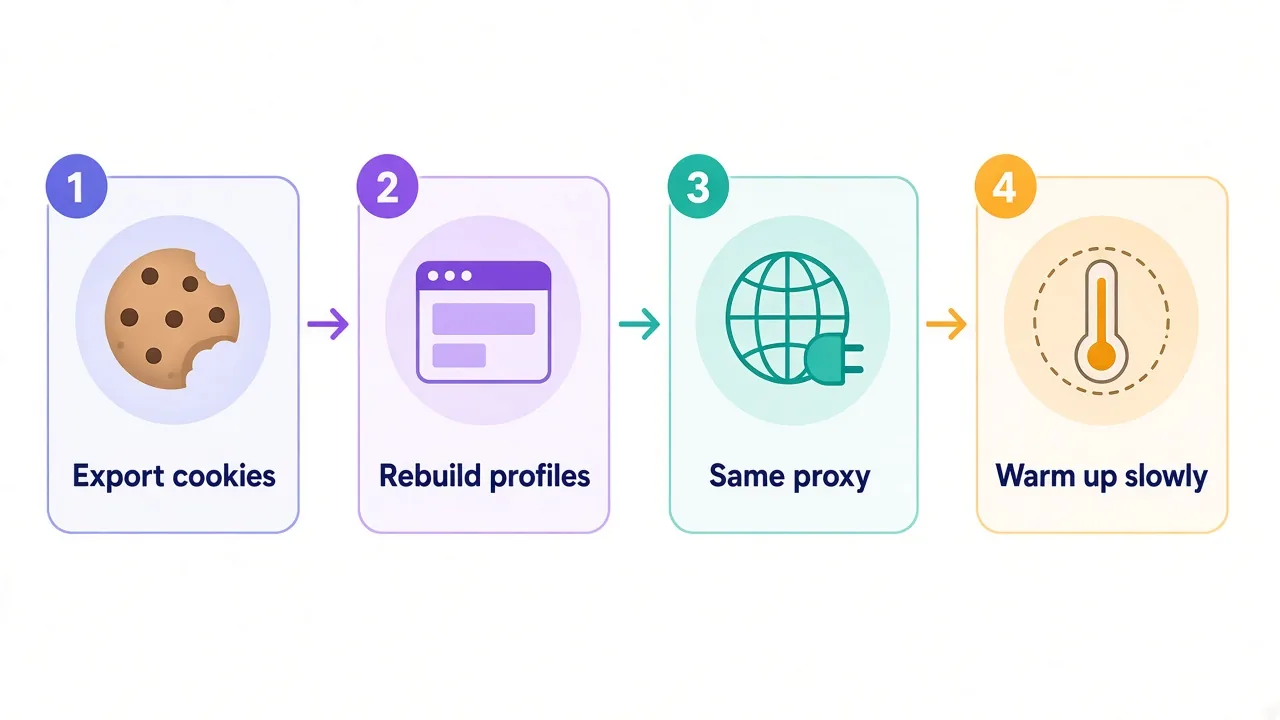
Here's a calmer way to move.
- Export each profile's cookies from Octo, so the platform still sees a known session.
- Rebuild one profile at a time in the new tool, matching the operating system and screen size where you can.
- Bind the same proxy, or at least an IP from the same city, to the same account.
- Move a few low-value accounts first. Give them a week of normal use before you move the rest.
Keep the IP stable
The fingerprint will change no matter what you do. Don't let the IP change at the same time. A sticky residential or ISP proxy keeps one variable steady while the browser changes.
Not sure which proxy type fits? Our sticky vs rotating proxies explainer covers why account work needs sticky sessions.
Which proxies pair best with these browsers?
None of these seven tools include proxies by default, Octo included. So your proxy bill stays roughly the same whichever browser you pick.
For long-lived accounts, residential or ISP proxies with sticky sessions are the usual choice. Datacenter IPs are cheap, but platforms can spot hosting ranges quickly.
Whatever you pick, check each profile's exit IP before logging in. Our free IP lookup tool shows what a site sees, and the fingerprint checker shows what your browser gives away.
For specific provider picks, read our guide to the best proxies for antidetect browsers.
One account, one IP
Never share a proxy between two profiles that log in to the same platform. Shared IPs are one of the fastest ways to link accounts you meant to keep apart.
Is Octo Browser still the right call for some people?
Yes, and it's worth saying plainly before you switch.
Say your accounts sit on platforms that fingerprint hard, and your team is happy writing code. Then Octo is hard to beat. Its real-device fingerprints, cloud profiles and granular permissions fit agencies running high-value accounts.
The same goes if your pain is only the interface. A dense app gets easier with a week of use, while a weaker fingerprint never gets better.
So switch for a reason you can name: budget, a free start, no-code automation, Linux or a scripting-first workflow. Don't switch just because a rival's landing page looks friendlier.
So, which Octo Browser alternative should you pick?
Start with the thing you can't compromise on.
Need the same level of stealth? Go with Multilogin. Running a remote team? GoLogin. Want cheap profiles and no-code automation? AdsPower. Want to start free on ad accounts? Dolphin Anty.
Developers should look at Kameleo, mass-setup work suits MoreLogin, and solo tinkerers will like Incogniton.
Still weighing them? Compare every antidetect browser we've reviewed in our best antidetect browsers guide. Then move one account first.
Frequently asked questions
For like-for-like stealth, Multilogin is the closest match. If budget or no-code automation matters more, AdsPower is the stronger pick, and Dolphin Anty is the best free starting point.
Yes. Dolphin Anty and Incogniton each offer 10 free profiles, and AdsPower offers 5. Octo Browser itself has no free plan, so these are the easiest ways to test before paying.
Multilogin, GoLogin and Dolphin Anty all have Linux clients. AdsPower, MoreLogin and Incogniton cover Windows and macOS only, and Kameleo's desktop client is Windows-only.
You can move cookies, but not the fingerprint itself. Export each profile's cookies, rebuild it in the new tool, keep the same proxy, and migrate a few low-value accounts first.
None of the seven picks include proxies by default. Plan for a separate proxy provider, ideally sticky residential or ISP proxies for long-lived accounts.
They're close on stealth, and both offer cloud profiles, team roles and a local API. Multilogin adds a second Firefox-based engine, but it usually costs more as you scale.